

Some of the loudest events in industry last a fraction of a second. A drop hammer, a press, a nail gun, a pile driver or a forging operation produces a sudden pressure rise that a worker cannot anticipate and that does not show up in a noise average in any meaningful way. Managing that exposure needs a different assessment from the one used for a continuously noisy production hall, and the difference starts with what gets measured.
The Hazard First, the Product Second
Steady noise is characterised by a level that persists, so the exposure is the product of the level and the time spent in it. Impulse noise is characterised by a rise to a high peak and a rapid decay, so the exposure depends on the peak, on how often events occur and on how many of them a worker experiences during a shift. The two patterns load the ear differently, and a protector that performs well against continuous noise is not automatically selected on the basis of that performance alone.
The exposure pattern also changes between tasks. A worker standing at a press experiences every cycle; a worker who enters the same area twice a shift to check a gauge experiences a handful of events. Both exposures matter, but they call for different protection decisions and different controls: one is managed by protecting a person who is present all day, the other by finding out why anyone needs to be in the area at all.
What the Risk Assessment Has to Establish
Occupational noise requirements in the United States sit in 29 CFR 1910.95, which sets out exposure limits, monitoring, hearing protection and hearing conservation obligations; European buyers work within the noise requirements of the framework that applies to them along with the PPE Regulation. In both systems the assessment is the employer’s, and for impulse sources it has to describe the event rather than only the average.
- The source or sources, and the peak levels they produce, measured with equipment and a method appropriate to an impulsive event.
- How often each event occurs and how the worker’s position relative to it changes during the shift.
- The duration of the presence in the area, since intermittent exposure is often underestimated.
- Whether several sources operate together, because simultaneous machines can raise both the level and the number of events.
- What the worker must still hear: speech for instructions, alarms, vehicle movement or warning signals from the machine itself.
- The other equipment worn, because a helmet or face shield affects how muffs fit and whether they can be worn at all.
The last two items decide whether the specification is practical. Over-protection in an impulse environment can isolate a worker from the sounds that keep them safe, and a protector that cannot be worn with the helmet they already use will be substituted for something else on the day.
Which Hazards This Category Covers and Which It Does Not
It is worth separating the auditory from the practical consequences, because the second drives behaviour. A worker in a high-peak area who cannot hear a forklift or a crane signal has a safety problem that the noise assessment did not create and the protector did not solve. Communication arrangements, hand signals, warning lights and clear rules about vehicle movement belong in the same specification as the protector, and the combination is what makes the protection usable rather than merely available.
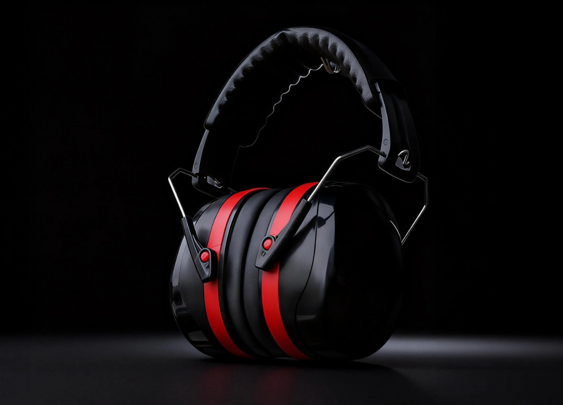
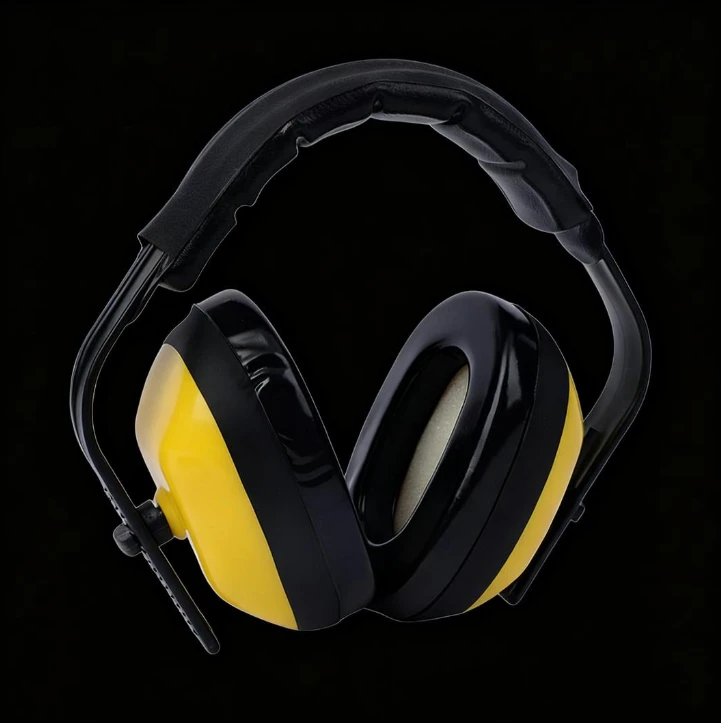
Hearing protection in this range covers ear muffs, including versions designed to be mounted on a helmet, and the earplugs and banded protectors used with them. The products sit inside the eye and ear protection range, alongside the eye protection issued for the same tasks.
Three boundaries are worth stating. Hearing protection does not reduce the noise: it reduces what reaches the ear, so the source remains and the exposure continues for anyone unprotected nearby. It does not address the non-auditory effects of the environment, such as vibration transmitted through the body or the physical effects of working in a high-noise area. And it does not replace engineering controls, which in impulse applications are usually the more effective measure: enclosing a press, damping a tool, isolating a machine from the structure or changing the process to reduce the number or energy of events.
Matching Task to Protection Level
One practical question decides much of the specification: is the worker present when the event happens, or does the event sometimes happen while they are there? Where the timing is predictable, protection and procedure can be matched to it. Where it is not, the requirement moves toward protection that is worn continuously in the area, because a protector that has to be reached for will be missing at the one event that mattered. That is why the assessment has to describe the event pattern and not just the level.
| Situation | What the assessment tells you | Protection that follows | What to verify |
|---|---|---|---|
| Continuous presence at a press, hammer or forging line | High peak levels repeated many times per shift | Protector selected against the peak and the exposure duration, often plugs and muffs together | Combined use procedures and insertion training for plugs |
| Intermittent entry for inspection or adjustment | Few events, but unpredictable timing | Protection kept at the point of access and worn before entry | Access procedure and protection availability |
| Pneumatic and powered tools | Repeated impulsive events close to the head | Protector selected for the tool and the task duration, plus tool maintenance and exhaust design | Tool condition and the noise contribution of the tool itself |
| Demolition, piling and impact machinery | Very high peaks with long gaps | Protector used for the working period, with exposure limited by rotation or enclosure | Site rules, warning arrangements and bystander exposure |
| Confined or enclosed impact machinery | High level plus reverberation inside a structure | Protection plus communication provisions so that instructions remain audible | Reverberation, communication method and alarm audibility |
Two rules complete the table. First, the protection level is taken from the measured exposure and the employer’s programme, not from a general recommendation. Second, where the exposure remains high after a well-fitted protector has been chosen, the answer is usually a combination of protectors, a change to the task or a change to the process, in that order of preference.
Where Selection Usually Goes Wrong
Most of these failures come from treating the protector as the whole answer. Where the noise is generated by plant that could be enclosed, damped or isolated, the specification that ignores those options will keep buying protection for a hazard that could have been reduced at source. Recording the engineering options that were considered, and why they were not adopted, is a short piece of documentation that makes a programme defensible and often prompts an improvement that nobody had revisited.
The failures in this category follow a short list.
- An average used to specify an impulsive exposure. The peak is what determines the requirement, and a steady-noise average hides it.
- Protection kept in a cupboard rather than at the access point. Intermittent exposure becomes unprotected the moment equipment is not where the worker enters.
- Insertion taken for granted. A plug that is not correctly inserted performs poorly, and impulse exposure punishes that immediately.
- Over-protection accepted. A protector that removes warning signals introduces a different hazard, particularly around moving machinery.
- Helmet compatibility ignored. Where muffs are mounted on a helmet, the mounting and the seal have to work with the helmet and with spectacles.
- Service parts forgotten. Hardened cushions and stretched headbands no longer seal, which matters most where the exposure is high.
- Engineering controls treated as optional. Enclosure, damping, isolation and tool maintenance reduce the exposure itself and are the more reliable measures.
The Hierarchy of Controls Around the Selection
Impulse noise is a case where the hierarchy of controls is unusually effective, because the noise is generated by a defined piece of plant. Enclosing or guarding the machine, damping the striking surfaces, isolating the machine base from the structure, replacing an impact process with a pressing or forming process, using quieter tooling, and maintaining equipment so that it does not become louder over time all reduce the level at the worker’s ear. Administrative controls follow: rotation, limiting the time in the area, sequenced work that avoids simultaneous noisy operations, and controlled access.
Personal protective equipment is the last line of defence. It reduces the energy reaching the ear when the earlier controls are not enough, and it only works when the protector is correctly fitted, worn for the whole of the exposure and maintained. In this category that last condition matters more than in most, because the exposure is often short and the moment of neglect is the whole event.
Specification Points to Fix Before Ordering
An impulse noise specification should be short and tied to the measurements.
- The source, the measured peak levels and the frequency of the events.
- The required protection selected against that data, with the framework named.
- The protector type, or the combination, with fitting and training requirements for each.
- Interaction with the helmet, face shield and eyewear the worker wears.
- Communication and warning signals the worker must still be able to hear, and how that is satisfied.
- Where protection is stored relative to the point of access.
- Inspection, cleaning and replacement rules, including cushions and headbands.
- The health surveillance arrangements the employer operates, so the protection can be reviewed against outcomes.
The eye protection decision that runs alongside hearing protection is covered in Shield Wings’ guide to choosing safety glasses, which owns that topic. The hearing products themselves are listed on the hearing protection earmuffs page.
Shield Wings manufactures hearing protection earmuffs and eye protection at a Guangdong production base and supports industrial customers with attenuation data, fitting guidance and configuration options including helmet-mounted versions. The decision that reduces risk in an impulse environment is the one that starts from the measured peaks and the pattern of exposure, and then selects protection that fits the worker and the rest of their equipment.
For the wider topic and related decisions, see our Hearing Protection & Noise Control.
Frequently Asked Questions
How does impulse noise differ from steady noise?
Impulse noise arrives as a sudden rise to a high level and falls away quickly, as with a press, a drop hammer, a nail gun or a gunshot, whereas steady noise holds a level over time. A protector’s attenuation is described for continuous sound, so a rating measured that way does not fully describe behaviour under a sharp impulse, which is why the assessment should record the peaks and the exposure pattern and not only an average level.
What should the noise assessment measure for an impulse source?
It should capture the peak level of the event, how often it occurs, how long the worker spends in the area, and whether the exposure comes from a single source or from many machines together. Where events are frequent, the accumulated exposure matters as much as the peak, and where they are rare, the pattern of work and the position of the worker determine whether the exposure happens at all.
Are ear muffs or ear plugs better for impulse noise?
Both can be used, and the choice follows the task rather than the hazard type alone. Muffs are easier to fit consistently and can be removed quickly, which suits intermittent exposure; plugs sit inside the ear and stay in place when a helmet or face protection is worn, but their performance depends heavily on insertion. Where the exposure is high, the two are often used together as a system.
Can hearing protection be guaranteed to prevent hearing damage?
No. Protection reduces the sound energy reaching the ear and, used correctly for the whole exposure, materially lowers the risk, but it does not remove the hazard or guarantee an outcome. That is why engineering controls that reduce the noise at source, limits on exposure time and health surveillance form part of the same programme, with personal protection as the last line of defence.
What should a specification include for an impulse noise task?
The source and the peak levels, the frequency and duration of exposure, the required protection selected against that data, the protector type or combination with fitting and training requirements, the interaction with helmets, face shields and eyewear, the replacement rules for consumable parts, and the communication or warning signals the worker must still be able to hear.
Managing an impulsive noise exposure?
Send the source, the measured peaks and the tasks involved. Shield Wings provides attenuation data, fitting guidance and configuration options, including helmet-mounted versions, with the documentation a programme needs.
External references: 29 CFR 1910.95 occupational noise exposure, 29 CFR 1910.132, UK HSE noise guidance, CCOHS PPE answers, CEN-CENELEC standards portal, Regulation (EU) 2016/425.
{“@context”:”https://schema.org”,”@type”:”FAQPage”,”mainEntity”:[{“@type”:”Question”,”name”:”How does impulse noise differ from steady noise?”,”acceptedAnswer”:{“@type”:”Answer”,”text”:”Impulse noise arrives as a sudden rise to a high level and falls away quickly, as with a press, a drop hammer, a nail gun or a gunshot, whereas steady noise holds a level over time. A protector’s attenuation is described for continuous sound, so a rating measured that way does not fully describe behaviour under a sharp impulse, which is why the assessment should record the peaks and the exposure pattern and not only an average level.”}},{“@type”:”Question”,”name”:”What should the noise assessment measure for an impulse source?”,”acceptedAnswer”:{“@type”:”Answer”,”text”:”It should capture the peak level of the event, how often it occurs, how long the worker spends in the area, and whether the exposure comes from a single source or from many machines together. Where events are frequent, the accumulated exposure matters as much as the peak, and where they are rare, the pattern of work and the position of the worker determine whether the exposure happens at all.”}},{“@type”:”Question”,”name”:”Are ear muffs or ear plugs better for impulse noise?”,”acceptedAnswer”:{“@type”:”Answer”,”text”:”Both can be used, and the choice follows the task rather than the hazard type alone. Muffs are easier to fit consistently and can be removed quickly, which suits intermittent exposure; plugs sit inside the ear and stay in place when a helmet or face protection is worn, but their performance depends heavily on insertion. Where the exposure is high, the two are often used together as a system.”}},{“@type”:”Question”,”name”:”Can hearing protection be guaranteed to prevent hearing damage?”,”acceptedAnswer”:{“@type”:”Answer”,”text”:”No. Protection reduces the sound energy reaching the ear and, used correctly for the whole exposure, materially lowers the risk, but it does not remove the hazard or guarantee an outcome. That is why engineering controls that reduce the noise at source, limits on exposure time and health surveillance form part of the same programme, with personal protection as the last line of defence.”}},{“@type”:”Question”,”name”:”What should a specification include for an impulse noise task?”,”acceptedAnswer”:{“@type”:”Answer”,”text”:”The source and the peak levels, the frequency and duration of exposure, the required protection selected against that data, the protector type or combination with fitting and training requirements, the interaction with helmets, face shields and eyewear, the replacement rules for consumable parts, and the communication or warning signals the worker must still be able to hear.”}}]}