

In a high-noise area, protection and communication pull against each other. The better the protector works, the less the worker can hear a colleague, a radio call or a reversing vehicle. That tension is usually resolved in practice by removing a protector, which is exactly the behaviour a programme is trying to avoid. Electronic and communication protection is the commercially available answer, and specifying it well means keeping the two requirements separate rather than hoping the electronics solve both.
The Hazard First, the Product Second
It also helps to be precise about what level-dependent behaviour is, and what it is not. It is not a reduction in the noise level the worker is exposed to; it is a change in the balance between what is attenuated and what is passed through. That distinction matters when a site is tempted to substitute a level-dependent protector for a higher-performing conventional one on the grounds that the worker prefers it, because preference and protection are separate criteria in the specification.
The hazard here is noise, unchanged by the electronics. Protection is achieved by the passive attenuation of a muff or a plug, and the noise reaching the ear is reduced by the seal, the structure and the materials. Electronic features add a function: a microphone that lets speech and signals through at reduced level, an amplifier that makes them intelligible, or a connection to a radio so that the worker hears traffic inside the muff instead of holding a handset against a protected ear.
Two consequences follow from that separation. First, an electronic protector must still be specified for the exposure like any other protector, because the electronics do not add attenuation. Second, the communication requirement has to be described in its own right: what must be heard, by whom, how quickly, and what happens if it is not heard. A specification that starts with the product will end up choosing whatever the catalogue offers rather than what the task needs.
What the Risk Assessment Has to Establish
Occupational noise requirements sit in 29 CFR 1910.95 in the United States with the selection framework in 29 CFR 1910.132, and European sites work within the noise requirements that apply to them along with the PPE Regulation. The assessment has to cover the noise and the communication need together.
- The measured noise levels at the work positions, including peaks and variation across the shift.
- What the worker must hear: speech at close range, radio traffic, machine alarms, vehicle movement, or signals from colleagues.
- How quickly a message has to be understood, since a warning signal has different requirements from a routine instruction.
- The task pattern: continuous work in the area, intermittent entry, or work that alternates between noisy and quiet zones.
- The other equipment worn: helmet, face shield, spectacles and respirator, all of which affect how a muff sits.
- The environment: heat, moisture, dust and the availability of power for charging or battery replacement.
- The infrastructure that the electronic function depends on, such as radio coverage across the site.
The last two lines decide feasibility more often than the acoustics do. A communication protector that depends on radio coverage fails in the areas where coverage is weakest, and one that depends on batteries fails when the charging routine does not fit the shift pattern.
Which Hazards This Category Covers and Which It Does Not
The overlap with ordinary protectors is worth stating explicitly, because many electronic products are bought to solve a comfort or compliance problem rather than an acoustic one. Where the real problem is that workers remove protection to talk, the answer may simply be better fitting, a different protector for that task, or a change to the way instructions are given. Electronic features help; they do not compensate for a specification that was wrong for the task or a fit that was never checked.
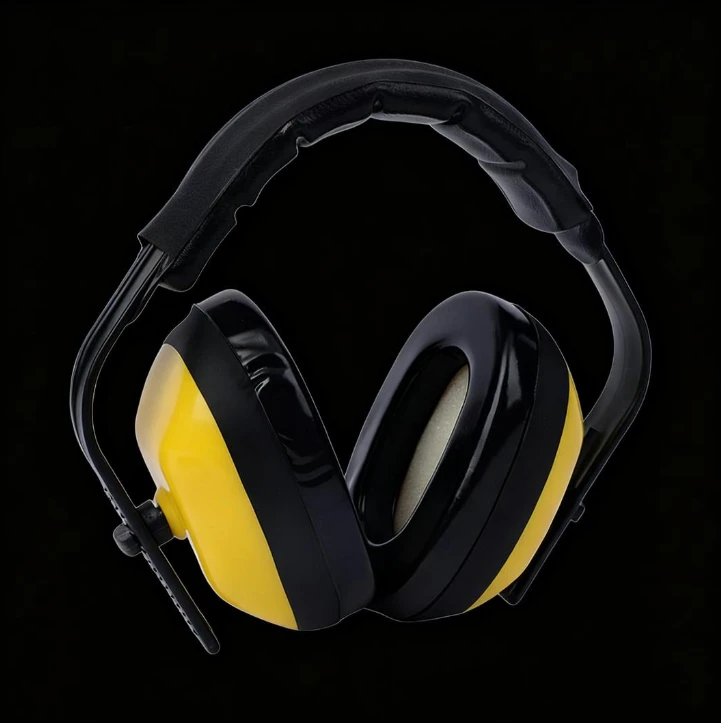
This family covers level-dependent protectors, which allow some sound through while limiting louder events, and communication protectors that connect to a radio or intercom system, sometimes with additional audio functions. The products sit in the eye and ear protection range alongside the conventional protectors issued for the same tasks.
Three boundaries are worth stating clearly. Electronic protection does not increase attenuation, so a product that improves communication but is specified below the required protection level remains unsuitable. Consumer terminology such as noise cancelling does not describe hearing protection performance, which is described by the ratings and the standard the product is made to. And the electronic function does not remove the need for engineering controls: enclosing plant, damping machinery and separating noisy processes reduce the exposure itself, which remains the most reliable improvement available.
Matching Task to Protection Level
| Task | What must be heard | Configuration that follows | What to verify |
|---|---|---|---|
| Working around mobile plant | Vehicle movement, horns, shouted warnings | Level-dependent protection that preserves awareness while limiting peaks | Protection performance against the measured exposure, and the behaviour of the level-dependent function |
| Task requiring radio traffic | Instructions and coordination from a controller | Communication protector with radio connection and a suitable microphone arrangement | Coverage across the site, and how the worker transmits as well as receives |
| Continuous work at a fixed machine | Alarms and signals from the machine itself | Protection selected for the exposure, with the alarm audibility confirmed in the configuration worn | Alarm level and the protection level together |
| Intermittent entry to a noisy area | Nothing while inside; removal on exit | Conventional protection stored at the access point | Access rules and the availability of protection before entry |
| Supervision and training inside the area | Speech with several people, often brief | Level-dependent or communication protection chosen for intelligibility | Whether instructions can be given without removing protection |
| Maintenance with mixed exposure | Signals during the noisy phase, conversation during the quiet phase | Protection that can be worn comfortably for the whole task, with the noisy phase specified | Task breakdown and the protection requirement for each phase |
Two rules complete the table. Protection level is selected from the measured exposure and the employer’s programme, never from the presence of a feature. And where the function is safety-related, such as hearing an alarm or a vehicle, the specification should confirm audibility in the configuration actually worn rather than assuming it from the product literature.
Where Selection Usually Goes Wrong
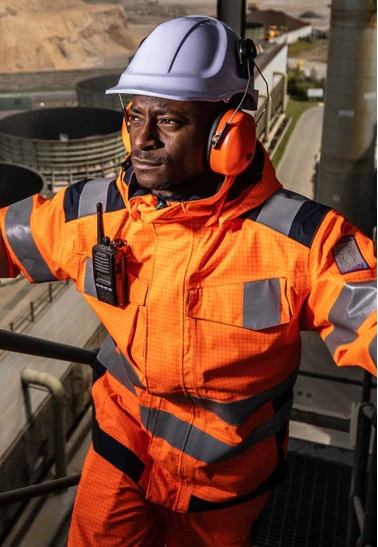
One further failure is worth naming because it survives inspection. A unit is worn with the headband over a helmet rather than under the mounting arms, or with one cup turned slightly outward to relieve pressure, and the seal is compromised in a way the wearer cannot see. Because the product looks as though it is being worn, the issue is not noticed until a hearing change appears or an audibility test is carried out. Checking the seal in the configuration actually worn is the only reliable answer.
The failures are consistent across sites.
- Buying the feature and skipping the rating. The product is chosen for its electronics while the exposure it must answer is never compared with its protection performance.
- Assuming electronic means better protection. Attenuation comes from the passive design, and the amplifier only changes what the wearer hears at a safe level.
- Ignoring the infrastructure. Radio coverage, charging points and spare batteries are treated as details until the system is in use.
- Over-amplification. Setting the gain so high that ambient sound becomes uncomfortable defeats the purpose and encourages removal.
- Hygiene neglected. Shared protectors and unwashed cushions are a common source of complaints and of units being quietly abandoned.
- No rule for a failed unit. Workers do not know whether a unit with a flat battery is still providing protection, so they guess.
- Compatibility overlooked. Spectacles, helmets and face shields disturb the seal of a muff, and electronic features do not change that.
The Hierarchy of Controls Around the Selection
Before communication protection is considered, the exposure itself should be attacked. Enclosing or isolating the noisy plant, adding acoustic treatment to a bay, separating noisy processes from quieter work, maintaining machinery so that it does not become louder over time, and designing the work so that fewer people need to be in the area all reduce the problem. Administrative controls follow: rotation, limiting time in the area, and controlling who enters and when.
Personal protective equipment is the last line of defence, and in this category it carries an additional duty, which is to keep the worker connected to the information they need to work safely. That is why the selection has to consider both sides. A protector that is acoustically excellent but isolates the worker may simply move the risk rather than reducing it.
Specification Points to Fix Before Ordering
Two further points are easy to overlook when the order is placed. The first is the charging routine: where units are charged, by whom, and what happens across shift patterns that do not align with a charging window. The second is spares, because a site that holds no replacement cushions, batteries or cables will keep a unit in service until it fails completely, and the protection then depends on equipment that is already degraded.
- The measured exposure for each position, and the protection performance required against it.
- The communication need: what must be heard, how clearly and how quickly, and by whom.
- The configuration: level-dependent, radio-linked, or conventional protection where no communication need exists.
- Compatibility with helmet, face shield, spectacles and respiratory protection.
- Power arrangements: batteries, charging points, spares and the routine that keeps units charged.
- A rule for what happens when a unit fails or a battery is flat, including whether it remains usable as passive protection.
- Cleaning, hygiene and shared-use rules for the parts that contact the head.
- Documentation required with the quotation, including the protection performance and the function specification.
The eye protection issued alongside hearing protection is covered in Shield Wings’ guide to selecting safety glasses, which owns that topic. The hearing products are listed on the hearing protection earmuffs page.
Shield Wings manufactures hearing protection earmuffs and eye protection at a Guangdong production base and supports industrial customers with attenuation data, configuration options including helmet-mounted versions, and the documentation a programme needs to record what was issued. The decision that holds up is the one taken from the measured exposure and the communication requirement, with the electronics treated as an addition to protection rather than a substitute for it.
For the wider topic and related decisions, see our Hearing Protection & Noise Control.
Frequently Asked Questions
Does electronic hearing protection provide better attenuation?
Not on its own. The protection comes from the passive attenuation of the muff or plug, which is the same principle as a conventional protector; the electronics add the ability to hear speech or signals, or to connect to a radio. A specification should therefore require the protection performance and the electronic function as separate facts, and confirm both against the exposure and the tasks concerned.
What is level-dependent hearing protection?
It is protection that allows some sound through at lower levels, such as speech or an approaching vehicle, while limiting the louder sounds that reach the ear. That makes it useful where a worker must remain aware of their surroundings, for example around moving plant, while still being protected from a high noise level. The behaviour and the limits of the product belong in the supplier documentation rather than in a description of the feature.
What extra management does electronic protection need?
Batteries and charging, function checks before use, hygiene for the parts that touch the head, microphone cleanliness, compatibility with spectacles and helmets, and a rule for what to do when a unit stops working. A unit whose electronics have failed may still provide passive protection, but the worker may not know that, so the specification should state whether the item is withdrawn or used as a passive protector.
Can a worker wear electronic protection instead of the protection specified for the area?
Only where the item has been selected against the same exposure and meets the requirement for that area. Electronic features make a protector easier to live with, but they do not change the level of noise reaching the ear. Where a site allows an alternative, the substitution should be recorded so that the issue record still shows which protection each worker had for which exposure.
When should a site choose communication protection over a simpler protector?
When the task requires speech, radio traffic or awareness of warning signals while the worker is exposed to high noise, and when the alternatives such as visual signalling or restricting access are not practical. The decision should be made against the noise assessment and the communication need together, because a protector that isolates the worker can create a risk that is harder to see than the one it solves.
Balancing protection and communication?
Send the measured levels, the tasks and what workers must still hear. Shield Wings confirms the protection configurations available, including helmet-mounted and level-dependent options, and the documentation that accompanies them.
External references: 29 CFR 1910.95 occupational noise exposure, 29 CFR 1910.132, UK HSE noise guidance, CCOHS PPE answers, CEN-CENELEC standards portal, Regulation (EU) 2016/425.