

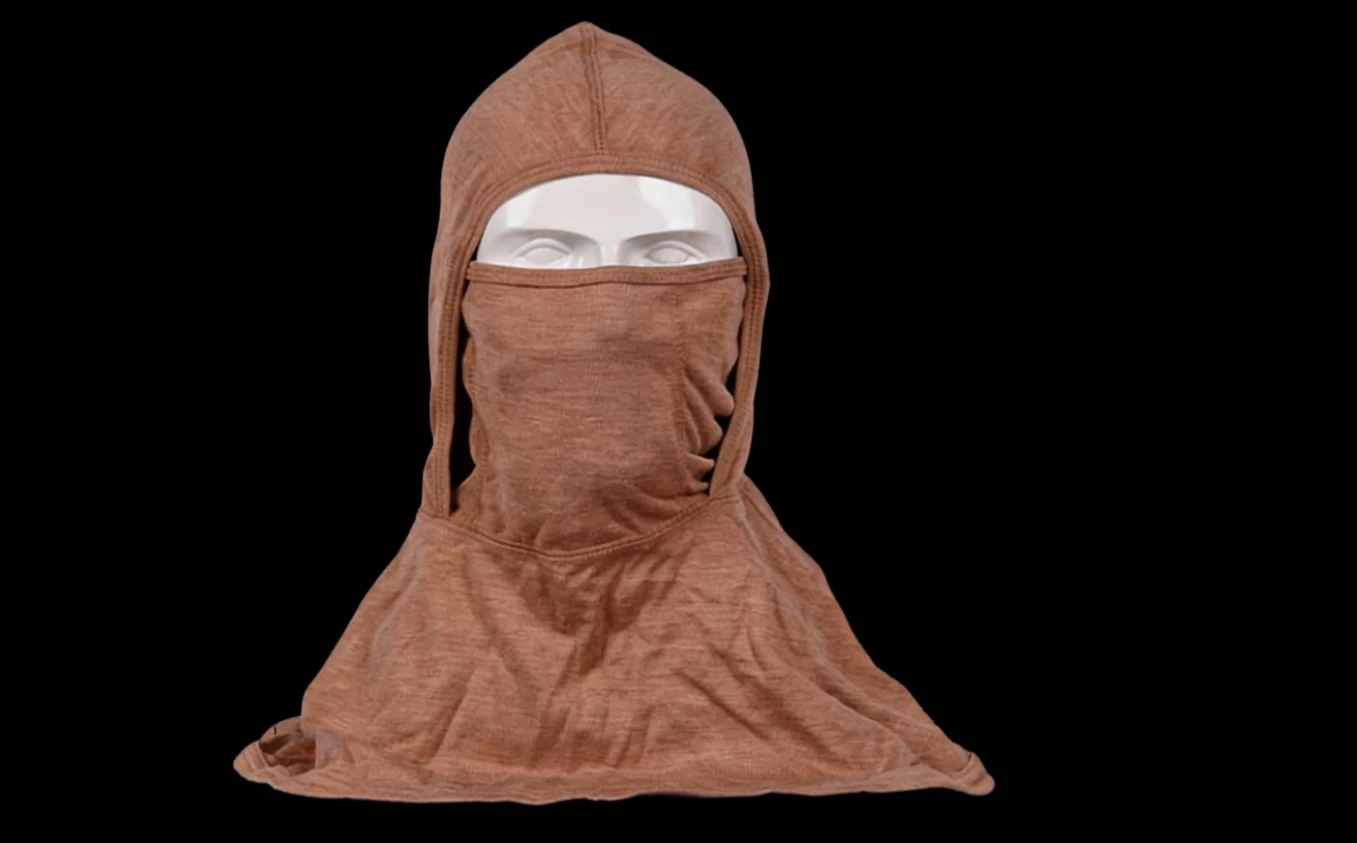
The hood is the smallest item in an arc-rated or flash fire set and the one most often treated as a personal accessory. It is worn next to the face, washed frequently, stored in a pocket or a locker, and replaced when it becomes uncomfortable rather than when it loses protection. Care is where the difference between a compliant hood and a compliant-looking hood appears, and it is usually invisible on inspection.
Where Performance Is Lost in Service
Damage also concentrates at the points the wearer touches. The face opening is stretched every time the hood is put on and taken off, the seams around it take the load, and the elastic or closure at the back of the head weakens with use. Hoods worn under a helmet also abrade against the suspension and the nape strap, which is a wear pattern that is invisible while the hood is on and obvious when it is turned inside out.
Several mechanisms reduce hood performance, and they work quietly. Mechanical wear thins the fabric and stresses the seams, particularly at the face opening where the material is stretched over the head. Contamination with oils, solvents or process chemicals changes both the surface behaviour and, in some cases, the flammability of the material. Heat exposure stiffens and discolours it, and repeated laundering outside the instructions affects finishes, elastic and shape.
Fit is a mechanism in its own right. A hood that has stretched or shrunk no longer covers the neck and chin, and coverage is exactly what the hood provides in an assembly that already covers the body. Because a loose hood still looks like a hood, the loss of coverage is rarely noticed until the hood has been in use for months, which is why the fit check belongs in the routine rather than in an annual review.
Cleaning and Care Within the Manufacturer’s Instructions
Storage belongs with cleaning, because it produces the same kind of damage more slowly. Hoods kept in a locker with oily gloves, folded into a pocket, or left on a shelf in sunlight arrive at the next shift with contamination or degraded fabric. A defined place for hoods, dry and out of the light, and a habit of turning them the right way out before storage, prevent a category of damage that no laundering practice can undo.
The care label is the controlling document, because the protective property depends on how the item is maintained. For inherently flame resistant materials the property is in the fibre and survives normal laundering within the instructions; for treated fabrics it depends on a finish that has to be preserved. In both cases the process used on site has to match the instructions rather than being inherited from general workwear practice.
Three arrangements make hood care manageable.
- Confirm the site’s laundry process against the care instructions in writing before hoods enter the system.
- Keep hoods with the garments they belong to, so they pass through care as a set rather than separately.
- Keep the care instructions with the issue record, because the person who decides how to wash a hood is usually the person who notices the damage.
Contamination determines whether cleaning is permissible at all. A hood that has absorbed oil or a solvent may need to be withdrawn rather than laundered, and a programme that has not decided this in advance will improvise under pressure and usually keep the hood in service.
Inspection Points Before Every Use
The wearer should also confirm that the hood still works with the rest of the assembly. A hood that no longer tucks into the collar of the suit leaves the throat exposed, and one that has stretched may allow the face shield to sit differently. Those conditions are visible only when the set is worn, which is why the check belongs at the point of donning rather than in a store room inspection.
- Fabric: holes, thin areas, scorching, charring, stiffness or discolouration.
- Seams and the face opening: open seams, stretched edges, damaged binding, and a face opening that no longer sits where it should.
- Coverage: neck, throat and chin still covered when the head is turned and the wearer looks down.
- Contamination: oil, solvent, dust or chemical residue, and any unusual smell.
- Markings and labels: legible and present, since a hood whose label has been lost cannot be verified against the specification.
- Repairs: any stitching or patch not carried out to the manufacturer’s instructions, which is a withdrawal trigger.
The check takes seconds and belongs to the wearer. It only changes behaviour if there is somewhere to take a hood that fails it, which means a withdrawal point, a replacement process and a rule that a suspect item never returns to the store.
Periodic Inspection and Test Intervals
Where a site issues hoods personally, the periodic check can be light: a documented review of the hood at the same time as the garment it belongs to, with the same withdrawal criteria. Where hoods are pooled or shared, the check needs to be more deliberate, because the condition history of a shared hood is harder to follow and the hygiene requirement is higher.
Laundered hoods deserve a specific checkpoint. The person who inspects after washing sees the hood when it is clean and flat, which is when damaged seams, thinning fabric and lost elastic are easiest to find. Building that inspection into the laundry process costs almost nothing and catches conditions that a pre-use check at the start of a shift will miss.
| Use and conditions | Inspection arrangement | Who performs it | Record |
|---|---|---|---|
| Hoods in routine use | Pre-use check plus a periodic inspection at the interval the site sets | Wearer, then supervisor or store | Issue record with inspection date |
| Hoods exposed to heat, chemicals or heavy soiling | Shorter interval, with contamination assessed against the care instructions | Trained inspector | Inspection outcome and reason for any withdrawal |
| Arc-rated hoods used for electrical work | Pre-use check plus periodic inspection against the manufacturer’s criteria | Trained inspector | Inspection and laundering history |
| Hoods in a managed laundry programme | Inspected after washing and before return to the worker | Laundry or store | Wash record and inspection result |
| Hoods after an incident or exposure | Withdrawn immediately and assessed before any return to service | HSE with supplier guidance | Incident-linked assessment and disposition |
Because hoods are small and inexpensive, the temptation is to replace them on appearance and skip the paperwork. The useful discipline is the opposite: keep the issue record, note the reason for replacement, and watch for patterns. Repeated stiffness or discolouration in one area points to heat or a laundry problem; repeated damage at the face opening points to how the hood is put on and taken off.
Documenting Condition and Traceability
The record set is short: the specification line the hood was purchased against, the issue record linking hood and worker, inspection results with dates, laundering and repair history where it affects the claim, and the retirement reason. Where hoods are bought in batches, the traceability reference allows a suspect delivery to be found as a group rather than one hood at a time.
The relationship between the hood and the rest of the assembly matters as well. A hood worn with a suit and a face shield is part of a system, and a change of hood model can affect how the face shield sits and how the neck is covered. Recording the configuration in the specification keeps that relationship visible when the next order is placed.
Repair, Withdrawal and Disposal
Disposal is more significant than it sounds for a small item, because a withdrawn hood in a locker is easy to put back on. Recording the retirement, and where the hood went, means an investigator can establish whether a particular hood was still in service at a given date — a question that arises whenever a burn or an arc exposure is investigated.
It is also worth reviewing the specification when the task or the assembly changes. A different suit, a different face shield or a move from electrical work to furnace work can change what the hood needs to provide, and those changes are easier to catch as triggers in the programme than as explanations after an incident.
Repair is limited and defined by the manufacturer. Where it is permitted, the approved components and method should be used and the repair recorded; where it is not, the hood is withdrawn. Disposal should follow the site’s procedure for the materials and any contamination involved, and it should be recorded where the hood carried a certification or a claim.
The failure to design against is the returned hood: withdrawn, put in a store, and reissued because it looks serviceable. A quarantine point with a visible marker, and a rule that only the responsible person releases items from it, prevents the most common route by which a degraded hood returns to service.
What to Ask the Supplier Before You Buy
- What are the care and laundering instructions, and will the site’s process stay inside them?
- Is industrial laundering supported, and under what conditions?
- Is repair permitted, and if so how and by whom?
- Which conditions mean the hood should be withdrawn?
- Does the hood carry an arc rating or a flame resistance claim, and how is it documented?
- What traceability reference appears on the product, and what does it identify?
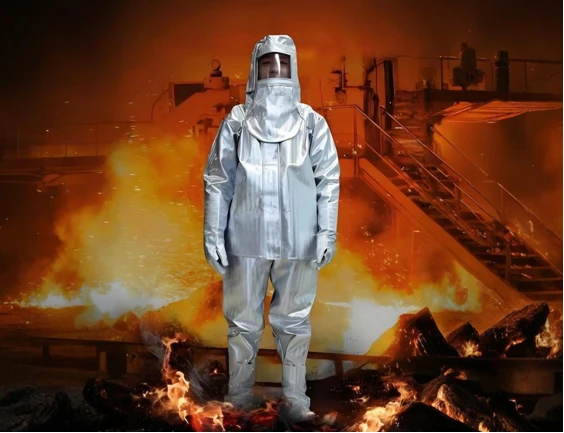
Shield Wings manufactures flame retardant hoods and head protection at a Guangdong production base, and supplies care, inspection and traceability information with the product documentation. The hoods themselves are listed on the flame retardant hood page and within the wider head and face protection range. Where a site also uses reflective head protection for radiant heat, the applications and behaviour of that family are covered in Shield Wings’ article on aluminium foil hood applications, which owns that topic.
The test of hood care is whether a supervisor can pick up any hood in the store and say how it is washed, when it was last checked and why the previous one was replaced. If that answer requires a phone call, the care regime is a habit rather than a control.
Frequently Asked Questions
How should an FR hood be washed?
Only according to the care instructions that come with the hood, because the protective property depends on the fabric and the way it is maintained. Inherently flame resistant materials keep their property in the fibre while treated fabrics depend on a finish that has to be preserved, and both are affected by chemistry, temperature and mechanical action outside the instructions. Where a site uses a central laundry, the process should be confirmed against those instructions before the hoods enter the system.
When should an FR hood or balaclava be replaced?
When the fabric is damaged, when contamination cannot be resolved by the care instructions, when the fit has changed so that the neck or face opening is no longer covered, when a repair has been made outside the permitted instructions, or when the hood has been exposed to a condition beyond its specification. Age alone is a weak criterion; the manufacturer’s criteria and the exposure history decide.
Can an FR hood be repaired?
Only where the manufacturer permits it and states how. Stitching, patches and replacement components applied outside those instructions can leave an area that no longer carries the protection, and they can introduce materials that behave differently under heat. Where repair is not permitted, the hood is withdrawn rather than mended locally, and the replacement is recorded.
How should hoods be stored between shifts?
Clean, dry and away from heat, sunlight, oils and solvents, following the manufacturer’s instructions. A hood stored damp can develop deterioration and odour, and one stored against chemicals can absorb them. Where several workers share a store, keeping hoods in a defined place and separating contaminated items prevents the most common form of damage: a hood that was withdrawn being issued again because it looked sound.
What should a buyer ask about care and replacement?
Ask for the care and laundering instructions in the form the site will use, whether industrial laundering is supported and under what conditions, which conditions mean the hood should be withdrawn, whether repair is permitted, whether the product carries an arc rating or a flame resistance claim and how that claim is documented, and what traceability reference links the hood to its production batch.
Reviewing hood care and replacement rules?
Send the hoods in use, the tasks and the laundry arrangement. Shield Wings confirms the care conditions, the inspection points and the replacement criteria for each product line.
External references: NFPA 70E electrical safety in the workplace, NFPA 2112 flash fire resistant garments, 29 CFR 1910.132, CCOHS PPE answers, CEN-CENELEC standards portal, Regulation (EU) 2016/425.