

Most head protection programmes are decided at the point of buying a shell and then modified for years afterwards. A chin strap is added for a task, ear defenders are fitted to a helmet that was never specified with them, a visor is mounted on an adapter from another brand, and nobody records that the configuration in use is no longer the one that was tested. Accessories are where a helmet specification is most often altered without a decision.
The Hazard First, the Product Second
It is worth thinking about how often the assembly is actually configured as intended. A worker who fits a visor for a grinding task and leaves it in place for the rest of the shift, a lamp that is added in winter and forgotten in summer, or ear defenders worn with the arms turned outward to relieve pressure are all common in practice. Each of those is a small deviation from the specified configuration, and each changes how the helmet sits and what it protects.
The hazards that lead to accessories being fitted fall into three groups. The first is retention: a helmet that comes off during a fall or a swing provides no protection, which is why chin straps and retention systems exist. The second is coexisting exposures: a task may present noise and eye hazards at the same time as head impact, and mounting the protection on the helmet keeps the assembly together. The third is coverage: a neck flap, a visor or a hood closes an area that the shell leaves open.
The complication is that every accessory changes the helmet. Adding mass to the front affects balance and comfort; mounting equipment on the sides can affect retention and the electrical properties of the shell; a visor changes how the helmet sits and how the wearer sees. Those effects are not reasons to avoid accessories, but they are reasons to specify them as part of the assembly, with the manufacturer’s instructions as the boundary of what is permitted.
What the Risk Assessment Has to Establish
Where several hazards apply at once, the assessment should describe the combination rather than listing items. A task that involves noise, flying particles and head impact requires an assembly that satisfies all three simultaneously, and the interactions matter: muffs can lift a helmet slightly, a visor can push on eyewear, and a lamp adds weight at the front. Recording the combination as a configuration is what allows it to be checked and replaced consistently.
- The hazards present and which of them the helmet alone does not address.
- The retention requirement, including whether the helmet has to stay in place during a fall or a swing.
- The noise, eye, face and respiratory exposures that will be managed on the same assembly.
- The positions the worker adopts, since overhead work and confined work change what stays in place.
- The electrical or other class the shell carries, because accessories can affect it.
- The environment: heat, molten metal, chemical splash or the presence of combustible dust.
- How the assembly will be stored, issued and inspected, including who checks the accessories.
The employer owns the assessment, and the supplier documents what the helmet and each accessory are tested to. Where the accessories are supplied with the helmet, the documentation should describe the assembly; where they are added later, the site has to confirm that the combination is permitted.
Which Hazards This Category Covers and Which It Does Not
Two boundaries are worth stating plainly. First, an accessory does not raise the protection level of the helmet it is fitted to; it completes coverage for a task or keeps a second item in place. Second, where the helmet carries a class that depends on the shell being as manufactured, any addition that changes the shell should be treated as a change to that product, and the manufacturer’s instructions should be consulted before the order rather than after the fitting.
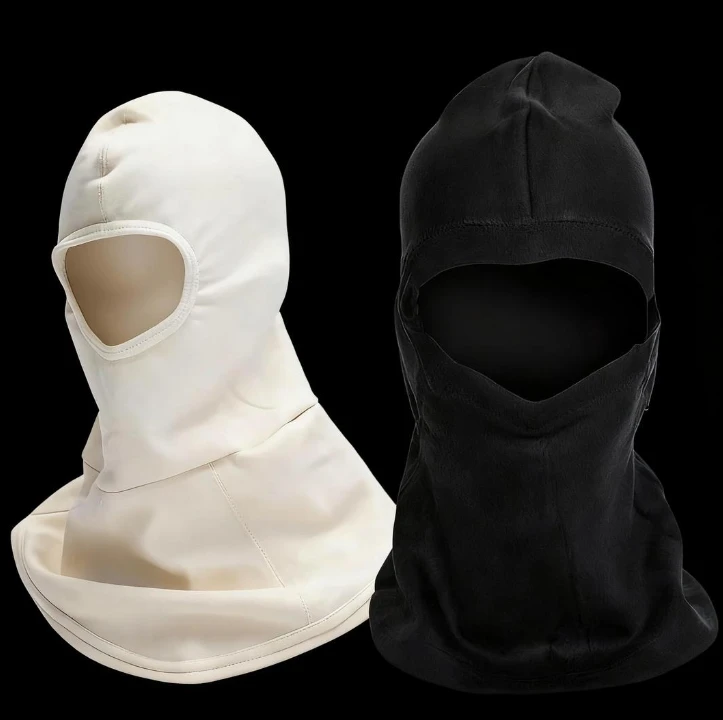
This family covers retention systems, helmet-mounted ear defenders, face shields and visors, lamps, neck flaps and hoods that attach to a shell, sweatbands and mounts for communication or camera equipment. It also covers the mounting hardware itself, which is often the part that determines whether the combination is sound. The classes and type designations of the helmets themselves are covered in Shield Wings’ guide to safety helmets under ANSI Z89.1 and EN 397, which owns that topic.
What accessories do not do is extend a claim. Fitting a visor does not make a shell suitable for a hazard it was not specified for, and mounting metal components on a helmet used near electrical parts or molten metal changes the assembly in a way that may matter. Accessories also do not replace the primary protection for the eyes, the ears or the face: they are mounted on the shell, and each still has to satisfy its own requirement.
Matching Task to Protection Level
Where a task requires two accessories on the same helmet, it is worth checking them together rather than one at a time. A visor that is fine on its own may interfere with the mounting arms of ear defenders, and a lamp fitted at the front can move a visor slightly out of the position it was set to. Those interactions are visible in a five-minute trial and invisible in a specification.
Balance deserves the same practical attention. A helmet with a lamp at the front, a visor and ear defenders on the sides carries weight in three directions, and the wearer adjusts it by tilting or loosening rather than by complaining. Where the assembly is heavy, the headgear and the size become part of the specification, and a short trial over a full shift is the only reliable test.
| Task | What is missing without the accessory | Accessory that follows | What to verify |
|---|---|---|---|
| Work at height or in a moving structure | Retention during a fall or a swing | Chin strap or retention system intended for that shell | Retention behaviour and quick release |
| Plant rooms, workshops and plant with continuous noise | Hearing protection that stays in place | Helmet-mounted ear defenders with the correct mounting arms | Seal against the head and interference with spectacles |
| Grinding, chipping and woodworking | Face coverage in front of the shell | Visor or face shield mounted on the helmet, worn over primary eye protection | Both items staying in position while working |
| Electrical work | Coverage and retention without compromising the class | Accessories intended for that shell, with no conductive additions | Marking still legible and the configuration approved |
| Foundry and molten metal work | Neck and face coverage against splash | Hood or neck flap arrangement specified for the exposure | Overlap with the collar and no metal components collecting splash |
| Confined space and rescue work | Lighting and communication while both hands are used | Helmet-mounted lamp and communication mount intended for the shell | Balance, cable routing and clearance at the opening |
Read across the table, the accessory is always there to complete the protection for that task rather than to upgrade the helmet. The verification column is where most programmes are weakest: the combination is rarely checked in the working position, and the interactions between two accessories are rarely considered at all.
Where Selection Usually Goes Wrong
One failure belongs to purchasing rather than to the workshop: the helmet is ordered first and the accessories are ordered afterwards, often from a different supplier, on the assumption that a mounting system is a standard fitting. Where the helmet has a proprietary mounting rail or a specific slot pattern, that assumption produces either a loose fit or an improvised adapter, and both change the assembly without any documentation. Specifying the helmet and the accessories in one step avoids it.
- Accessories from another brand. Adapters and visors are designed for specific shells, and mixing them changes the assembly without documentation.
- Drilled or adhesive-mounted additions. Both alter the shell in ways the manufacturer did not intend and can affect the properties it carries.
- Metal components in the wrong environment. Electrical work and molten metal tasks are both sensitive to conductive additions.
- Visor used instead of eyewear. The visor is secondary protection and is often lifted, leaving nothing in place.
- Muffs competing with the suspension. Worn under a helmet, the headband and the suspension fight for the same space, and the seal suffers.
- Balance ignored. A lamp, a camera or a heavy visor at the front changes the helmet’s balance and promotes tilting and loosening.
- Marking obscured. Stickers, mounts and accessories that cover the marking remove the evidence that the helmet meets the requirement.
The Hierarchy of Controls Around the Selection
Accessories are part of personal protective equipment, and the controls above them are unchanged: guarding, exclusion zones, tool tethering, quieter machinery, extraction and screens all reduce the exposure that the helmet assembly addresses. Where a site finds itself adding accessories year after year, the useful question is which of the underlying exposures could be reduced instead.
Personal protective equipment is the last line of defence, and an assembly works only if all of its parts are in place and compatible. That is the practical argument for specifying the assembly: a helmet, a visor and ear defenders that were chosen together behave as one system, while three items from three sources often interfere with each other in the working position.
Specification Points to Fix Before Ordering
- The hazard statement for each task, including what the helmet alone does not cover.
- The helmet model the accessories must be designed for, with the mounting system named.
- The retention requirement and the release arrangement.
- Compatibility between accessories, including visor and muffs together.
- Materials, particularly where electrical performance or molten metal exposure matters.
- Balance and weight, checked in the working position over a full shift.
- Inspection and replacement criteria for the accessory as well as the shell.
- Documentation required with the quotation, including whether the combination is approved by the manufacturer.
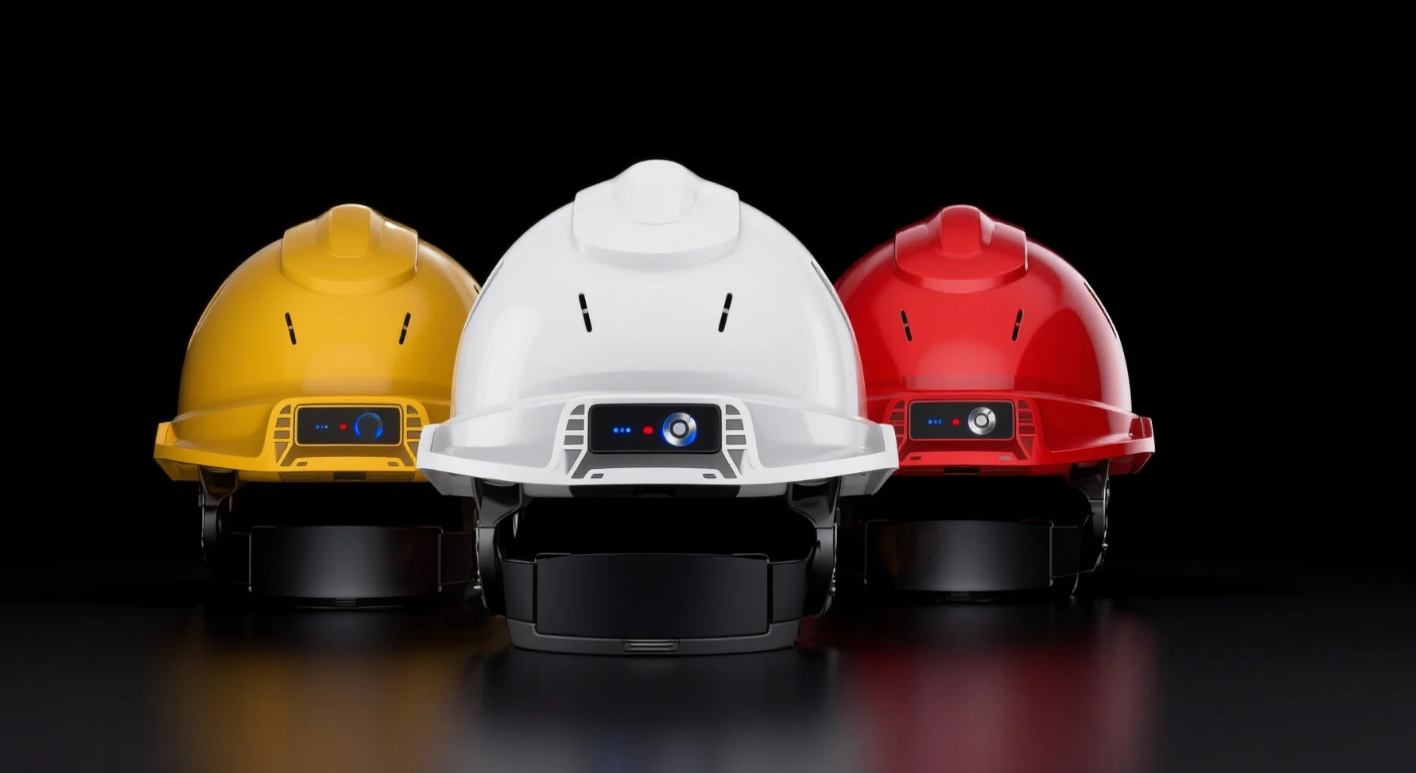
Shield Wings manufactures head and face protection at a Guangdong production base, including safety helmets, welding helmets, face shields and hoods, and supports industrial customers and distributors with accessory selection and the documentation that each product carries. Where a site uses connected equipment, the smart safety helmet page sets out the options, and the wider family is listed in the head and face protection range.
The practice that prevents most accessory problems is simple: order the assembly, record the configuration, and check it in the position the work is performed in. Everything else is a decision taken after the protection has already changed.
Frequently Asked Questions
What accessories can be fitted to a safety helmet?
Chin straps and retention systems, ear defenders mounted on the shell, face shields and visors, lamps, neck flaps, sweatbands and mounts for cameras or communication equipment, but only where the accessory is designed for that shell and does not compromise the properties the helmet carries. The manufacturer’s instructions for the model define what is permitted, and unapproved adapters, drilled shells and adhesive mounts fall outside that.
Why does the mounting system matter so much?
Because the helmet’s claims belong to the configuration that was tested. A shell that carries an electrical class, for example, is not the same product once an accessory has been fitted in a way the manufacturer did not intend, and any change to the shell can affect retention, coverage and the balance of the helmet on the head. Accessories should be specified as part of the assembly rather than added afterwards.
Can ear defenders be worn with a safety helmet?
Where the helmet has the mounting points and the defenders are intended for that shell, the combination is usually the more stable arrangement because the cushions seal against the head without the headband crossing the crown. Where separate muffs are worn under a helmet, the headband and the suspension compete for the same space, and the seal is often compromised. The combination should be checked in use.
Does a face shield fitted to a helmet replace eyewear?
No. A visor reduces the energy reaching the eyes and face and protects the face from impact and splash, but it does not provide the close-fitting coverage of primary eye protection and it can be lifted. Primary eye protection is worn underneath, and the combination should be checked so that both stay in position and the visor does not press on the eyewear.
What should be checked on a helmet and accessory assembly?
That the accessory is intended for that shell, that the mounting hardware is the one supplied for it, that the marking on the helmet is still legible, that the balance of the helmet is comfortable for a full shift, and that the assembly behaves correctly in the working position, including when the wearer looks down or works overhead. Where several accessories are fitted, the interactions between them matter more than each one separately.
Specifying helmet accessories?
Send the helmet model, the hazards and the accessories you need. Shield Wings confirms which combinations are intended for the shell and what documentation accompanies them.
External references: 29 CFR 1910.135 head protection, 29 CFR 1910.133 eye and face protection, 29 CFR 1910.95 occupational noise exposure, CCOHS guidance on headwear, CEN-CENELEC standards portal, Regulation (EU) 2016/425.