

Mining and quarrying expose hands to some of the most abrasive conditions in industry, and the gloves issued for the work are often replaced more often than any other protective item on site. The task is to find a glove that survives long enough to be economical while providing the grip, cut resistance and impact protection that the work actually requires, and to accept that no single product serves every job in an operation.
What This Environment Does to People and Equipment
It is worth separating the tasks that are part of production from those that are part of maintenance, because the equipment requirement usually differs. Production handling is repetitive and abrasive, and it rewards durability and grip. Maintenance work is intermittent and involves tools, fasteners, wire and sometimes chemicals, and it rewards a glove that provides cut performance and dexterity. A single glove issued for both tends to fail in one of the two.
The dominant exposure is mechanical. Rock, aggregate, overburden and ore are abrasive, and they are handled by hand at many points in a process that is otherwise mechanised: clearing blockages, changing screens, inspecting conveyor belts, handling tools and working around crushers. Wire ropes, reinforcing steel, scrap and blades add a cutting exposure, and heavy components create impact and pinch hazards.
The environment compounds all of it. Dust and water are ever-present, and both affect grip. Temperatures range from hot surfaces on equipment to cold and wet outdoor conditions. Processing plants add chemicals used in separation and treatment. Vibration from powered tools is a long-term exposure that is often attributed to the tool and left out of the glove decision, even though the two are used together.
The Hazards That Drive the Specification
The dust and water conditions deserve particular attention because they change both the hazard and the glove. Wet rock is heavier to hold and offers less friction; mud fills a coating pattern and reduces grip; and dust works into the material and abrades the palm. Sites that trial a glove on dry material and then issue it for wet work usually find that the replacement rate doubles for reasons the specification never anticipated.
- Abrasion from rock and aggregate, which decides how long a glove survives rather than what it protects against.
- Impact to the hands from heavy components, tools and falling material.
- Cut exposure from wire, steel, blades and sharp edges, where the level required depends on the task.
- Grip conditions, including wet, muddy, dusty and oily surfaces, and how they change through a shift.
- Vibration from powered tools, which is managed at the tool and task level as well as at the hand.
- Heat from equipment and hot components, and cold from weather and wet conditions.
- Chemical exposure in processing areas, which requires a glove selected on the substance rather than on the family name.
The employer’s assessment sets the requirement, and the supplier documents what the glove is tested to. The most useful structure for a mining operation is to specify by task and by area rather than for the site as a whole, because the glove that survives handling coarse rock is rarely the right choice for a technician working on a conveyor drive.
Controls That Come Before the Equipment
Hand exposure in mining is reduced first by mechanisation and by guarding. Mechanical handling, rock breakers, screen-changing tools, and jigs that keep hands away from crusher jaws and conveyor nip points all reduce the exposure. Guarding and interlocking, isolation before maintenance, and the maintenance of tools so that vibration and the effort required do not increase over time are equally important. Where the work involves rotating machinery, the assessment should state clearly whether gloves are worn, since loose glove material near rotating parts is an entanglement hazard.
Housekeeping and water management are also part of the control set, because a walkway or a work platform that is free of slurry and standing water is easier to work from, and the loads handled there are less likely to slip out of a gloved hand during the shift.
Administrative controls follow: task rotation to limit continuous exposure, defined procedures for clearing blockages, and training in the specific method rather than in general caution. Personal protective equipment is the last line of defence, and in this environment it is a consumable that is replaced frequently, which makes stock and replacement arrangements part of the protection itself.
What the Equipment Has to Do Here
Fit has a safety dimension in this environment that is worth stating plainly. A glove that is too loose reduces control of the load and can catch on structure or on equipment; one that is too tight restricts the hand and is removed for the awkward part of the task. Where the work involves rotating machinery, the assessment should state whether gloves are permitted at all, because a loose cuff near a rotating shaft is a hazard in its own right.
A mining glove has to survive. Durability comes first in practice, because a glove that wears through in a few hours leaves the hand unprotected for the rest of the shift regardless of what its label states. Abrasion resistance, the strength of the coating or the palm material, and the quality of the stitching at the seam are the features that decide this, and they show up as replacement rates rather than as figures on a specification sheet.
On top of durability, the glove has to provide whatever the task requires: grip that works in wet and muddy conditions, cut performance where wire and steel are involved, and impact protection where the back of the hand is exposed. Each of those is a documented property, and the specification should require evidence for each one rather than accepting a general description of the glove as heavy duty.
Selection Criteria Specific to This Sector
Where an operation has several areas, the specification is most useful when it names a glove for each, so that the store issues the right type without a conversation.
Where the site operates in extreme weather, the requirement should also state how the glove behaves when it is wet or cold, since a product that works in a temperate workshop can be unsuitable on a wet winter shift.
| Task | Dominant exposure | Glove characteristics that follow | What to verify |
|---|---|---|---|
| Handling coarse rock and aggregate | Abrasion and impact | Heavy palm and coating with documented abrasion performance | Replacement rate and grip on wet material |
| Wire, steel and conveyor maintenance | Cut and puncture | Cut resistant liner with grip suitable for the conditions | Documented cut performance for the model |
| Working on crushers, screens and chutes | Impact, pinch and sharp edges | Impact performance on the back of the hand with secure fit | Evidence for the impact property, and clearance from moving parts |
| Powered tool use | Vibration and abrasion | Glove suited to the tool, with tool and task controls recorded separately | Anti-vibration measures and limits on exposure duration |
| Processing plant with reagents | Chemical contact | Gloves selected on permeation data for the substance, not on the family | Compatibility information and the care routine |
| Outdoor work in wet and cold conditions | Reduced grip, stiffness, comfort | Water-resistant glove that stays flexible and keeps its grip | Grip when wet and flexibility at working temperature |
Read across the table, the specification is by task, and in most rows it is the balance between durability, grip and the specific property required that decides the answer.
Typical Specification Failures in This Sector
One failure is the absence of a trial. Gloves in this environment are judged by how they perform on the actual material, and a trial with the real rock, the real mud and the real tool is worth more than any comparison of specification sheets.
A second failure is the assumption that a heavier glove is always the safer choice. Weight and bulk reduce control, and a worker who cannot grip a component securely has traded one hazard for another; the useful comparison is between two gloves that both fit and both grip, rather than between gloves of different weights.
- Light gloves in heavy work. A glove that is not durable enough is replaced constantly and provides no protection for part of each shift.
- A level assumed from the family. Cut performance belongs to the tested model, and a heavy duty glove is not automatically a cut glove.
- Grip ignored in wet conditions. Most dropped and fumbled loads happen when the surface and the glove are wet.
- Gloves worn near rotating equipment. Loose cuffs and material near rotating parts create an entanglement hazard, and the assessment should state when gloves must not be worn.
- Vibration treated as a glove property. Tool selection, maintenance and exposure limits are the controls that matter, with gloves as a secondary measure.
- Chemical selection by appearance. The substance determines the glove, and the documentation should name it.
- No replacement trigger. Without a defined wear indicator, gloves stay in service after the coating has been breached.
Building the Full Set Rather Than Buying Pieces
It is also worth reviewing the specification when a task changes, since a new screen design, a different tool or a change in the process can alter both the exposure and the requirement.
The set for a mining operation includes the gloves specified per task, the stock arrangements that keep them available at the workface, the tool and equipment controls that address vibration and grip, and the replacement rules that keep degraded gloves out of service. Where a task also involves chemical exposure, the glove for that substance is specified separately rather than relying on a general purpose product.
Shield Wings manufactures hand protection at a Guangdong production base, including cut resistant, high temperature and heavy duty families, and supplies mining, quarrying and processing customers and distributors with product information and documentation. The glove range is listed in the hand protection category, the cut resistant families are on the cut resistant gloves page, and the impact performance that heavy handling tasks require is covered in Shield Wings’ article on impact protection gloves and ANSI/ISEA 138, which owns that topic.
The specification that works in a mine or quarry is the one that recognises the glove as a consumable, sets out what each task requires, and keeps the stock and the replacement rule close to the work.
For the wider topic and related decisions, see our Hand, Cut & Impact Protection.
Frequently Asked Questions
What gloves are used in mining and quarrying?
Heavy duty gloves selected for the dominant exposure of the task: abrasion and impact for rock and aggregate handling, cut performance where wire, steel or blades are involved, and grip suitable for wet or muddy conditions. Durability matters as much as any single figure, because gloves in this environment are replaced frequently and a design that fails early leaves the hands unprotected for part of the shift.
How does impact protection fit into mining work?
Handling rock, tools and heavy components exposes the back of the hand to impact, and gloves with documented impact performance are specified where that is the dominant hazard. The performance is stated and marked, so the specification should require evidence rather than accepting a description such as heavy duty. Where impact protection is added, it needs to be compatible with the grip and dexterity the task requires.
Does vibration matter for glove selection?
It does, and gloves are only part of the answer. Powered tools transmit vibration to the hands, and the controls that matter most are tool selection, anti-vibration mounts, maintenance so that tools do not become worse over time, and limits on the duration of exposure. Where gloves are used with vibrating tools, the specification should note that vibration management is a control at the tool and task level rather than a glove property alone.
What should be checked before gloves are issued for heavy work?
That the glove carries the performance the task requires, that the size keeps it in place without restricting the hand, that the cuff does not create a snagging risk near moving equipment, and that the grip suits wet, muddy or oily conditions. Where the work involves rotating machinery, the assessment should also state whether gloves are to be worn at all, since loose material near rotating parts creates an entanglement hazard.
How should gloves be managed in a mining operation?
As a consumable with a defined replacement trigger rather than a fixed interval, since wear rates vary enormously between tasks. The practical arrangement is stock at the point of use, a defined wear indicator such as a breach in the coating or exposure of the liner, and a record of replacement by area, because a rise in consumption in one place usually identifies a task that needs reviewing.
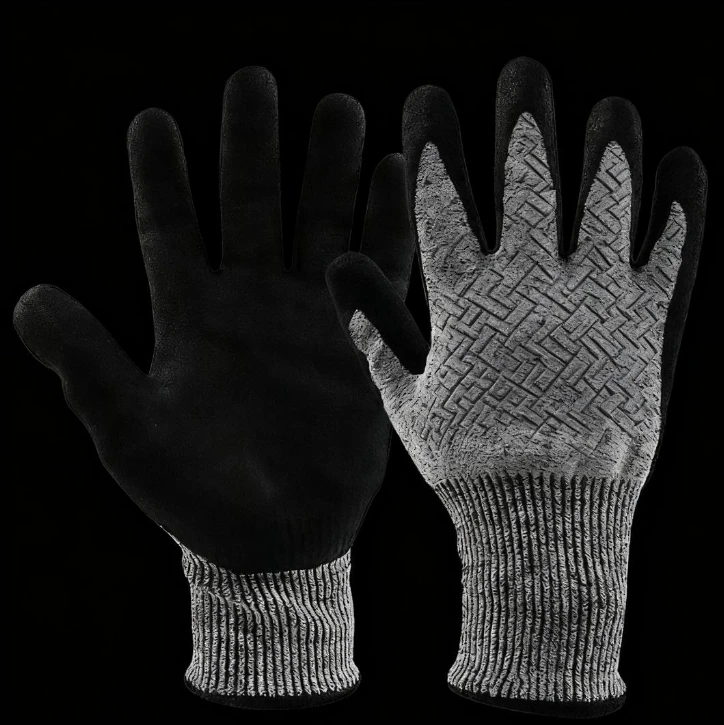

Specifying gloves across a mining operation?
Send the tasks, the materials handled and the conditions. Shield Wings recommends glove families for each task, confirms the performance documented for each and supplies samples for a trial.
External references: 29 CFR 1910.138 hand protection, 29 CFR 1910.132, CCOHS guidance on protective gloves, UK HSE personal protective equipment guidance, CEN-CENELEC standards portal, Regulation (EU) 2016/425.