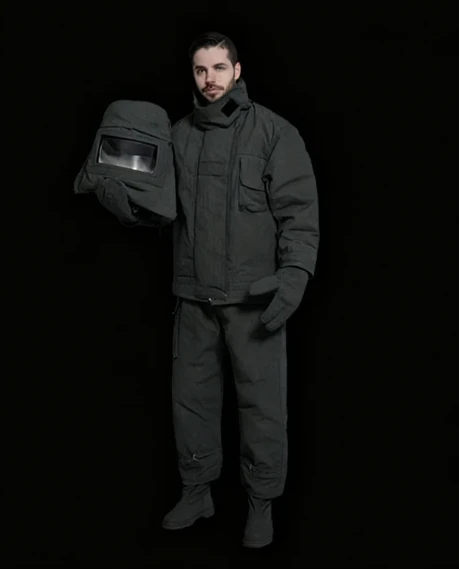
Welding puts flame-resistant clothing between the welder and a steady stream of sparks, molten metal, and radiant heat — and the right FR system covers the body without the weight that makes it unworn. This guide explains the FR clothing welders actually need, with reference to FR clothing for welders from Shield Wings.
Last updated:
Quick definition: Welding FR clothing is selected for sparks, flame, and radiant heat, while arc-rated clothing adds a cal/cm² rating for electrical arc energy — a welder working near live equipment may need both.
Key Takeaways
- Welders need FR clothing because sparks and molten metal land on the body from every direction, and ordinary clothing can ignite or melt into the skin — FR fabrics resist ignition and self-extinguish instead.
- The system includes an FR jacket or coverall over FR base layers, leather or FR gloves, FR head and neck coverage, and FR trousers that close at the ankle — with no synthetic layers anywhere.
- Choose by the process, the climate, and the coverage: lighter FR fabrics for hot shops and TIG work, heavier or leather-reinforced options for MIG, stick, and overhead welding.
- Launder FR clothing per the care label — mild detergent, no bleach, no fabric softeners — and inspect before each use for holes, thin spots, and missing closures.
Why Do Welders Need FR Clothing Specifically?
Welders need FR clothing because sparks and molten metal land on the body from every direction, and ordinary clothing can ignite or melt into the skin — FR fabrics resist ignition and self-extinguish instead.
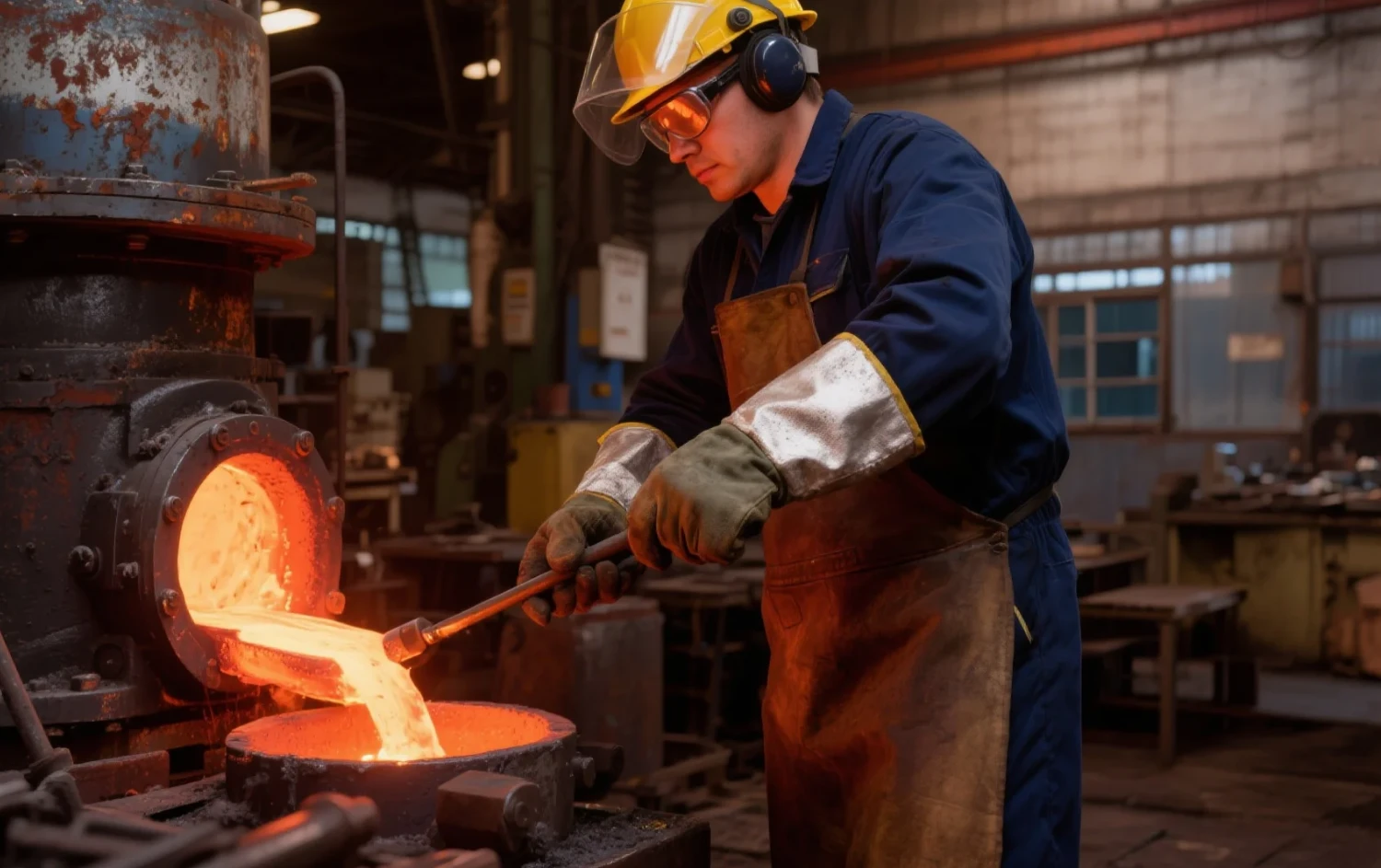
The hazard is not only the arc; it is the thousands of sparks that stream off the weld and the globules of molten metal that fly in all directions. Non-FR synthetics melt and drip onto skin, and non-FR cotton can ignite and continue burning. FR fabrics resist ignition and stop the burn at the fabric, giving the welder escape time. The protection is only as good as the coverage: collars up, cuffs buttoned, pockets closed, and no exposed skin.
What Is the Difference Between Welding FR Clothing and Arc-Rated Clothing?
Welding FR clothing is selected for sparks, flame, and radiant heat, while arc-rated clothing adds a cal/cm² rating for electrical arc energy — a welder working near live equipment may need both.
| Property | Welding FR clothing | Arc-rated clothing |
|---|---|---|
| Primary hazard | Sparks, flame, heat | Electric arc |
| Rating | FR standard | cal/cm² |
| Typical construction | FR cotton or blends | Multi-layer systems |
| Face protection | Optional | Integral hood |
Most welding shops need FR clothing certified for flame and heat; electrical work near live parts adds the arc rating. A garment can carry both, with separate test reports, and dual-certified options simplify the overlap. The task decides which rating is required.
What Should a Welder’s FR System Include?
The system includes an FR jacket or coverall over FR base layers, leather or FR gloves, FR head and neck coverage, and FR trousers that close at the ankle — with no synthetic layers anywhere.
The rule is absolute: nothing that melts near the body. A stationary welder wears an FR jacket; a welder who crawls and works in tight spaces wears FR coveralls. The base layer under the jacket must also be FR, because a synthetic T-shirt melts even under an outer FR layer. Leather aprons and sleeves add protection where spatter concentrates, and an FR cap or hood covers the scalp and neck. The system is only complete when every layer, including the one under the jacket, is flame resistant.
How Do You Choose the Right FR Clothing for Welding?
Choose by the process, the climate, and the coverage: lighter FR fabrics for hot shops and TIG work, heavier or leather-reinforced options for MIG, stick, and overhead welding.
TIG welders benefit from lightweight FR garments that allow movement and breathability; MIG and stick work throw more spatter and justify heavier FR fabrics or leather reinforcement at the arms and torso. Overhead welding adds the need for full coverage and secure closures. In hot shops, choose the lightest FR fabric that still meets the standard, because a jacket that is too hot gets unzipped and the protection leaves with it. Confirm the FR certification on the exact model and trial the garments on the real process.
How Should Welding FR Clothing Be Cared For?
Launder FR clothing per the care label — mild detergent, no bleach, no fabric softeners — and inspect before each use for holes, thin spots, and missing closures.
FR performance depends on the fabric staying intact and clean. Bleach and fabric softeners degrade FR materials; holes and worn cuffs become the spark entry points. Inspect the garments as part of the pre-shift check and replace damaged pieces immediately rather than patching them. A small hole in the wrong place turns a protection system into a false promise.
Choose garments from the hazard assessment and the applicable standard; fabric or certification type alone does not establish suitability for a task.
Welding FR programs work best when the garments are bought as a system: jacket or coverall, base layers, and any leather reinforcement selected together and documented together. A manufacturer that supplies the complete FR clothing set for welders, with certificates for each layer and care guidance for the shop’s laundry, makes the program easier to run and easier to audit. Standardize the sizes across the crew, keep spare stock for the items that wear fastest, and review the program when the processes change — a shop that adds plasma cutting or stainless steel changes its heat and fume profile, and the clothing spec should move with it.
Matching the FR Layer to the Welding Process
“FR clothing for welders” covers a wide range of exposures, and the process decides which layer does the work. The table below groups the shop’s work by what actually reaches the wearer.
| Process group | What reaches the wearer | Layer set to specify |
|---|---|---|
| Light TIG and bench work | Radiant arc, minimal spatter | FR shirt or light jacket; leather only where the workpiece is hot |
| MIG and stick in a booth | Spatter plus radiant heat | FR jacket with leather sleeves or a leather-front apron |
| Heavy fabrication, out of position | Spatter overhead, hot coupon handling | FR jacket plus leather sleeves, bib or apron, and heat-rated gloves |
| Grinding and cutting between welds | Sparks, metal dust, impact | FR layer kept on; glasses under the helmet rather than a bare face |
| Plasma and air-arc gouging | Molten metal spray, higher radiant load | Heavier FR layer and full leather protection at the front and hands |
Worked example: one shop, three bays
Illustrative. A shop runs bench TIG, a MIG booth and a fabrication bay. If one FR jacket is issued across all three, the bench welder wears more protection than the task needs and the fabrication welder wears less — where the spatter arrives from overhead and lands on the shoulders and forearms. Splitting the specification into “bench set” and “fabrication set” and writing the bay on the issue record takes the guesswork out, and it means the heavier set is replaced on the bay’s usage rather than being rationed across the whole shop.
Where welding FR stops being enough
FR clothing made for welding and arc-rated clothing are different specifications: welding wear is chosen for spatter and radiant heat, while arc-rated garments carry a rating in cal/cm² for an electrical exposure. A welder working near live equipment needs the arc rating, not a heavier welding jacket. Two other limits are worth training on: an FR jacket worn open at the front leaves the chest uncovered, and leather protects the front of the body well but becomes stiff and heavy enough that it gets removed for the next task.
For the wider topic and related decisions, see our Flame-Resistant Workwear.
FAQs
When should the welding FR program be reviewed?
The welding FR program should also be reviewed when the shop’s processes change: adding plasma cutting, stainless steel, or heavier plate work changes the heat and fume profile, and the clothing spec should move with it. Keep the process list and the FR spec in one document, and train welders on why the layers and closures matter — a welder who understands the system is a welder who keeps it closed. The program that tracks the processes keeps the clothing matched to the work.
Can a welder wear a regular cotton jacket?
No. It must be FR-certified, because untreated cotton can ignite; every layer near the body must be flame resistant.
Do we need arc-rated clothing for welding?
Only where electrical arc exposure exists. For sparks and heat, FR clothing certified to the applicable standard is the requirement.
How often should welding FR clothing be replaced?
Inspect before each use and replace damaged or worn garments immediately; follow the manufacturer’s service-life guidance for the rest.
How do we get FR clothing specified for our welding shop?
Tell us your processes and climate, and we will recommend the system via our contact page or the welding safety products page .
Do welders need arc-rated clothing?
Only where there is an electrical arc exposure. Welding FR clothing is specified for spatter and radiant heat, while arc-rated garments are measured in cal/cm² against a calculated incident energy. A welder who also works near live equipment needs the arc-rated set for that task.
Is cotton clothing safe for welding?
Untreated cotton can smoulder and, once burning, keeps burning, so it is not a substitute for an FR layer where spatter is present. Where cotton is used as an under-layer it should be a non-melting natural fibre and still worn under an FR outer layer that takes the spatter.
Related Articles
- Anti-Static Workwear for the Petrochemical Industry
- Industrial Safety Gloves: Sizing and Fit Guide
- Arc Flash Suit Care: Inspection Storage and Maintenance
- FR Clothing Fabrics Explained: Nomex Kevlar Modacrylic and More
- FR Clothing Certifications: NFPA 2112 ASTM F1506 and EN ISO 11612
- FR Coveralls Wholesale: How to Vet a Manufacturer