

Safety footwear standards answer different questions: ASTM F2413 is the North American reference and EN ISO 20345 the international benchmark, and each defines protection codes that buyers must read correctly. This guide compares the two, with reference to safety footwear standards from Shield Wings.
(Last modified date: October 2, 2026)
Quick definition: ASTM F2413 is the North American standard for protective footwear, covering impact and compression protection with additional codes for puncture, electrical hazard, and static dissipation.
Key Takeaways
- EN ISO 20345 is the international standard for safety footwear, using classes — S1, S2, S3, and others — that layer in antistatic, water resistance, and penetration protection.
- The two standards use different codes and test details, but they cover the same core protections — impact, compression, and the additional properties — and a global buyer needs both mapped to each product.
- Read the codes in order: the standard, the protection class or level, and the additional codes — and match them to the certificate for the exact model.
- Specify the standard your destination market requires — ASTM F2413 for US operations, EN ISO 20345 for Europe and international projects — and request cross-listed certification where the same shoe serves both.
What Does ASTM F2413 Cover?
ASTM F2413 is the North American standard for protective footwear, covering impact and compression protection with additional codes for puncture, electrical hazard, and static dissipation.
The standard assigns performance requirements to the toe cap — impact and compression ratings — and adds codes for other protections: puncture resistance, electrical hazard (EH), static dissipative (SD), and metatarsal protection. The certificate states the standard, the edition, and the codes for the exact model. For US buyers, ASTM F2413 is the reference that OSHA points to, and the label should be matched to the certificate.
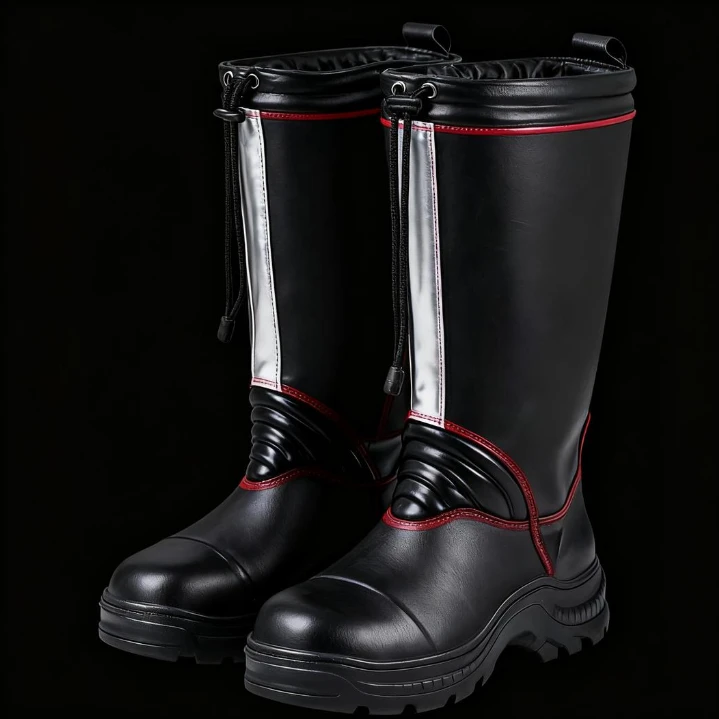
The marking on the boot tells you which standard it was tested to; the certificate tells you which edition.
What Does EN ISO 20345 Cover?
EN ISO 20345 is the international standard for safety footwear, using classes — S1, S2, S3, and others — that layer in antistatic, water resistance, and penetration protection.
| Class | Basic protection | Added properties |
|---|---|---|
| SB | Toe protection | Basic |
| S1 | Toe + antistatic | Energy absorption |
| S2 | S1 + water resistance | |
| S3 | S2 + penetration | Cleated outsole |
The classes build on each other, so S3 includes everything in S2 plus penetration protection. EN ISO 20345 is the reference for Europe and many international projects, and the certificate states the class and edition. Buyers exporting to multiple regions should confirm which standard and edition their market requires.
How Do the Two Standards Compare?
The two standards use different codes and test details, but they cover the same core protections — impact, compression, and the additional properties — and a global buyer needs both mapped to each product.
ASTM F2413 and EN ISO 20345 measure impact and compression with different methods and mark them differently, so a US code and an EN class are not directly interchangeable. The practical approach is to request footwear tested and documented to the standard your market requires, and cross-listed certification where products serve multiple regions. The certificate, not the label, is the evidence, and the edition matters because both standards are revised.
How Do You Read the Codes on a Shoe?
Read the codes in order: the standard, the protection class or level, and the additional codes — and match them to the certificate for the exact model.
An ASTM label may read “F2413” with impact, compression, and additional codes; an EN label may read “S3” with the class and any extras. Each code answers one question: is the toe protected, is the sole protected, is there an electrical or static rating? Write the required protections from the hazard assessment, then confirm the label and certificate deliver them. A code you cannot explain is a protection you cannot prove.
Ask the supplier to state the standard edition on the certificate, keep a standards register for the styles in inventory, and review it whenever a standard is revised, because an older edition can fail a current audit even when the product looks identical.
Which Standard Each Market Recognises
Choosing between ASTM and EN is not a technical preference. Each market has a document it recognises, and the specification has to name the one that applies where the product will be sold.
In the United States, the requirement comes from the regulation rather than from a buyer’s choice. 29 CFR 1910.136 requires protective footwear where there is a danger of foot injury from falling or rolling objects, from objects piercing the sole, or where the footwear protects against an electrical hazard remaining after other measures — and it names ASTM F-2412-2005 and ASTM F-2413-2005 among the consensus standards that satisfy it. F2412 covers the test methods; F2413 covers the performance requirements. A US site therefore specifies F2413, and the certificate is what proves the model meets it.
In the European Union the mechanism is different in kind. Footwear placed on the EU market is personal protective equipment, and Regulation (EU) 2016/425 sets the conformity requirements — including the risk assessment, the technical documentation and the declaration of conformity behind the CE marking. EN ISO 20345 is the harmonised standard a manufacturer will normally test against to demonstrate that conformity, which is why the S-class codes appear on the boot. The regulation is the obligation; the standard is the evidence.
Two practical consequences follow for a buying team.
- If you sell in one market only, name that market’s document in the specification and stop there. Adding the other standard buys nothing except cost.
- If you sell into both, ask for cross-listed certification on the same model rather than stocking two. One product tested and documented to both systems removes a duplicate specification, a duplicate sample approval and a duplicate audit trail.
The item that gets missed in both markets is the edition. A certificate that names an older edition of either standard can fail a current audit even when the product is unchanged, because the test method may have moved. Ask the supplier to state the standard and the edition on the certificate, and keep that reference against the item in your own records — it is the one field that turns a certificate into a defence.
Which Standard Should You Specify?
Specify the standard your destination market requires — ASTM F2413 for US operations, EN ISO 20345 for Europe and international projects — and request cross-listed certification where the same shoe serves both.
The market decides the standard, and the hazard assessment decides the protections within it. For global teams, cross-listed footwear simplifies one inventory across regions. Confirm the certificate matches the exact model and the delivered batch, and re-check on reorders because standards are revised. A shoe with the right standard, the right codes, and the documentation to prove it is a shoe you can defend.
Electrical footwear is secondary protection and does not replace de-energization, insulated tools, or the employer’s electrical safety procedure; confirm all selections against the job hazard assessment and the applicable standard.
For global buyers, the standards question is also a labeling question: the same shoe may need different codes for different markets, and the certificate must match the market’s requirement, not just the product family. Work with a manufacturer that can supply footwear documented to the standard your destination requires, with cross-listed certification where the same model serves multiple regions, and that keeps the certificate editions current. Maintain a standards register so a revised standard flags which styles need re-verification, and attach the register to the footwear compliance file. The standard is the contract between the product and the market; the documentation is what proves it is honored.
Ask the supplier to state the standard edition on the certificate, keep a standards register for the styles in inventory, and review it whenever a standard is revised, because an older edition can fail a current audit even when the product looks identical.
For the wider topic and related decisions, see our Safety Footwear & Boots.
FAQs
Why does the standard edition matter and who owns the register?
Ask the supplier to state the standard edition on the certificate, because an older edition can fail a current audit even when the product looks identical.
Is ASTM F2413 the same as EN ISO 20345?
No. They use different codes and test methods; specify the standard your market requires and confirm it on the certificate.
What does the S-class mean on an EN boot?
The class layers protections — S1 adds antistatic, S2 adds water resistance, S3 adds penetration — so read the class with the certificate.
Do we need cross-listed footwear?
For teams shipping to multiple regions, yes — cross-listed certification lets one product serve every market.
How do we get footwear with the right certification?
Tell us your market and hazards, and we will confirm the standard and codes via our contact page or the foot protection page.
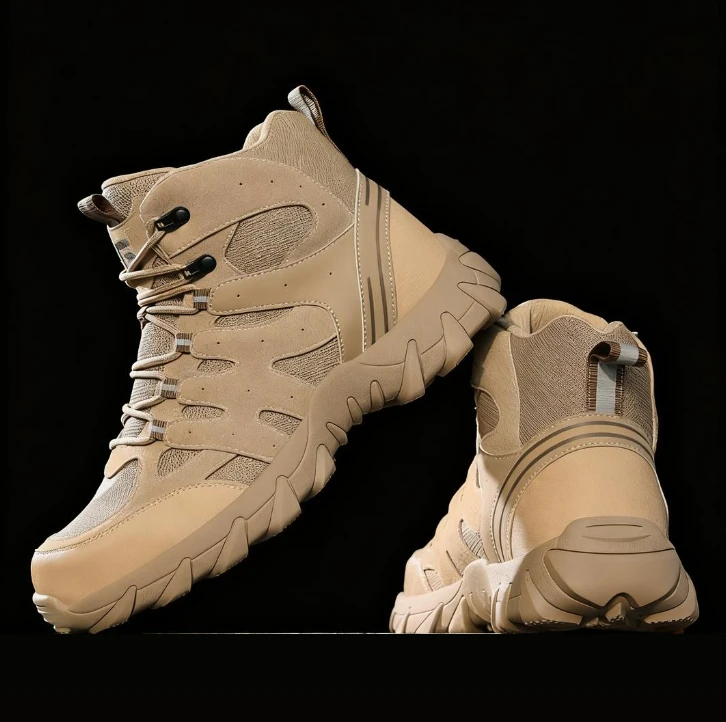
For teams selling into several markets, cross-listed footwear removes a whole specification exercise.
Related Articles
- Anti-Static Workwear: The Complete Guide
- High Visibility Workwear: Classes and Standards
- 10 Common Arc Flash Safety Mistakes on Worksites
- How to Choose Work Boots for Construction Sites
- Puncture Resistant Safety Shoes: Standards and Applications
- Steel Toe vs Composite Toe Boots: Which Should You Choose
Official Resources
- Products Foot Protection Page
- Puncture Resistant Safety Shoes Standards And Applications
- Fr Clothing Certifications Nfpa 2112 Astm F1506 And En Iso 11612
- Astm F1506 Vs Nfpa 2112 Fr Standards Compared
- Contact Shield Wings