

In a food or pharmaceutical plant, footwear is asked to do two jobs at once. It protects the worker, and it must not become a route by which contamination moves around the site. Those two requirements are assessed separately, they are often owned by different departments, and the failures that matter usually happen where the two meet: a boot that protects well but cannot be cleaned to the standard the food safety plan requires, or a cleaning routine that satisfies the plan and quietly destroys the boot.
Why the Programme Outlives the Product Choice
Footwear in these sectors is a programme rather than a purchase, because the product cannot deliver the outcome on its own. The same boot that is appropriate in a controlled area becomes a contamination risk if it is carried between zones, stored wet, cleaned with the wrong product or worn after the sole has started to split. What keeps the performance in place is the set of arrangements around it: who owns which zone, how boots are cleaned, how they are stored, how often they are checked and what happens when one is withdrawn.
There is also an auditor’s view to consider. A food safety or quality audit looks for evidence that the arrangements exist and are followed, not only that a suitable product was bought. Records of issue, training, inspection and withdrawal are the evidence, and they are far easier to produce when they are generated by the routine than when they are assembled from memory in the week before an audit.
It is worth being explicit about the boundary between the two assessments, because that is where responsibility usually blurs. The safety function owns the protection requirement and the fit of the boot to the task. Quality or food safety owns the zone rules and the cleaning standard. The buyer sits between them and turns both into a specification. Where a plant has no named owner for the overlap, the result is a boot chosen on price by whichever department raised the order, and the gap shows up later as a non-conformance or a complaint about wet feet.
Assessment, Selection and Issue
The programme starts with two assessments that are usually carried out by different people and need to be brought together. The first is the risk assessment that establishes the protection the task requires: slip, impact, compression, penetration, chemical exposure and any thermal or electrical considerations. The second is the food safety or quality plan that establishes the hygiene requirements: whether an area is a defined zone, what cleaning is required, and what the site treats as a contamination risk.
Those two outputs meet in the specification. A boot selected on protection alone may have seams, laces or a lining that cannot be cleaned or dried to the site’s standard, and a boot selected on cleaning alone may lack the properties the assessment identified. The specification should state both sets of requirements, and it should name the cleaning method and products that are permitted, because the method is what decides whether the boot keeps its protective properties in service.
Issue is the point at which the programme becomes visible to the workforce, and it is worth treating as a procedure rather than a delivery. Each worker should receive a boot that has been fitted rather than one that matches a shoe size, together with the information they need: where it may be worn, how it is cleaned, how it is dried, how often it is checked and where to go when something is wrong with it. Where a site uses dedicated zone footwear, the issue record should show which zone the boot belongs to.
Training and Competence Evidence
Training here is short, but it has to be specific and it has to be recorded. The content that matters is practical: which footwear belongs in which area and why; what the worker must do at a zone boundary; how to clean and dry the boots using the approved method; which points to look at when checking a boot; and what to do when a boot is damaged or uncomfortable. Handing over a pair of boots and a leaflet covers none of that.
The reason for recording it is not administrative tidiness. Where an incident occurs, the investigation will ask whether the worker was instructed in the correct use and care of the equipment, and where an audit finds wet boots stored in a changing room, the question that follows is whether anyone was told how they should be kept. In the United States, the PPE provisions of 29 CFR 1910.132 set out the expectation that workers are trained and that the training is verified in writing; in the United Kingdom the HSE guidance sets out the same expectations in a different form. The practical version for a plant is a single record per worker, dated, covering the points above.
Inspection Frequency by Hazard Class
A single inspection interval for a whole site is usually either too frequent in the easy areas or too infrequent in the hard ones. It is more useful to group areas by what the boot has to survive and set the interval from there.
| Area type | What shortens the life of the boot | Inspection approach | What the check covers |
|---|---|---|---|
| High-care and controlled zones | Frequent cleaning, aggressive chemistry, thermal disinfection | Formal check at a short interval, recorded | Cleanability, lining condition, seams, sole bond |
| Wash-down and wet processing | Water ingress, fat and process residues, sole wear | Formal check at a short interval, recorded | Tread, splits, water resistance, drying condition |
| Packing, storage and dispatch | Abrasion, pallet traffic, long distances | Formal check at a moderate interval | Tread wear, upper abrasion, toe area |
| Maintenance and workshops | Oil, chemicals, dropped loads, sharp metal | Formal check at a moderate interval | Chemical damage, toe integrity, penetration resistance |
| Offices and low-risk support areas | Normal wear, occasional site visits | Visual check by the user, with a route to report | Fit, condition, cleanliness where the area requires it |
Two design points make any interval workable. The first is that the check has to have defined points rather than being described as a general inspection, because a person who has not been shown what to look for will confirm that the boots look fine. The second is that the person checking must have somewhere to take a failed boot, and the authority to remove it from use on the spot.
Record Keeping for Audits and Incidents
The records that carry the programme are few, and they are all short. An issue record ties a worker to a specific pair and to a zone. A training record shows the date and the content. An inspection record shows what was checked and by whom. A withdrawal record shows why a boot left service and what replaced it.
The withdrawal record is the one that earns its keep, because it is what turns the programme into a purchasing decision. A plant that records twenty withdrawals in a year with the reason written beside each one can change a model, a cleaning product or a drying arrangement on evidence. A plant that records only that replacements were issued will keep buying the same boot and keep replacing it for the same reason.
Retirement, Replacement and Stock Control
Deciding when a boot has reached the end of its life is easier when the criteria are written down in advance. Typical withdrawal criteria cover tread that no longer grips in the area concerned, splits or hardening in the sole, separation between upper and sole, damage to the toe area after an impact, a lining that has failed, and any boot that no longer keeps water out where that matters. A boot that has taken a heavy blow should be withdrawn even if the damage is not obvious, since not every material shows an impact visibly.
Stock control is the quiet part of the programme. A plant needs enough pairs to allow a boot to be withdrawn for cleaning or replacement without leaving a worker without suitable footwear, and it needs enough of the common sizes on site that a faulty pair is exchanged the same day. Holding a small stock of the sizes actually used, and keeping zone footwear separate so that a boot does not migrate between areas, prevents most of the compromises that damage a hygiene programme.
Making the Programme Survive Contact With Operations
Programmes fail in practice for unglamorous reasons: no drying space, a cleaning point that is always busy at shift change, replacement boots kept in a locked store, or a boundary that requires a person to walk back twenty minutes to change footwear. Each of these produces a workaround, and the workaround becomes the routine.
The way to keep the arrangement intact is to design it around the shift rather than around the plant layout on paper. Put the changeover where the worker actually passes, keep spare sizes within reach, give the cleaning point enough capacity for the number of people who need it at the same time, and make sure the drying area can cope with the number of pairs in use. Then check it in the first weeks, because the version that was planned and the version that operations settle into are rarely the same.
Contractors and visitors are part of the same problem and are frequently the weakest point. A maintenance contractor who arrives with site boots that have been in a van overnight, or a visitor who is issued a pair from a store without any instruction, can defeat a zone arrangement that works perfectly for the permanent workforce. The practical answer is a short, recorded briefing for anyone entering a controlled area, dedicated footwear held for visitors in the sizes that are actually used, and a rule that is applied consistently rather than waived when the visitor is senior.
The footwear ranges used in these areas are listed on the safety shoes and boots page and in the foot protection category, and the wider question of how a PPE programme is documented for a manufacturer or importer is set out in Shield Wings’ PPE compliance checklist, which owns that topic. The hygiene side of hand protection in food work is covered in the article on cut resistant gloves for food processing.
Shield Wings manufactures foot protection at a Guangdong production base and supports food and pharmaceutical sites, equipment suppliers and distributors with model selection, cleanable constructions, size ranges and the documentation each product carries. The programme that holds is the one that keeps suitable footwear on the worker and contamination out of the zone.
For the wider topic and related decisions, see our Safety Footwear & Boots.
Frequently Asked Questions
What footwear is required in a food production area?
The requirement has two parts that are decided separately. The first is the protection the task needs, which comes from the employer’s assessment and may cover slip, impact, penetration and chemical exposure. The second is the hygiene requirement, which comes from the site’s food safety plan and dictates whether footwear is dedicated to an area, how it is cleaned, and whether it is stored on site. A boot that satisfies one and not the other is not a correct selection.
Should footwear be dedicated to a hygiene zone?
Where the food safety plan treats an area as a separate zone, the simplest control is footwear that stays within it, with a defined changeover at the boundary and a storage point that keeps clean and used boots apart. That removes the question of whether a boot has been adequately cleaned before it crosses, which is difficult to answer in practice. Where footwear does move between areas, the cleaning step at the boundary has to be specified and recorded.
How is footwear cleaned without damaging it?
Using the method and the products the manufacturer permits. Aggressive chemistry, high pressure or high temperature can damage uppers, bonding and water-resistant finishes, and the damage often appears later as a leak or a split rather than immediately after the wash. The useful approach is to write the approved method into the issue documentation, provide the equipment the method requires, and inspect after cleaning rather than before it.
What records should a footwear programme keep?
Enough to show that each worker has been issued suitable footwear, has been trained in its use and care, and that damaged items were withdrawn and replaced. In practice this means the issue record, the training record with a date, the inspection results and the withdrawal history. The records are what an auditor or an incident investigation will ask for, and they take far less effort to maintain when they are part of the daily routine than when they are reconstructed afterwards.
How often should footwear be inspected?
The frequency follows the hazard and the wear rate rather than a single interval for the site. Areas with heavy soiling, chemicals or high mileage need shorter intervals and a formal check, while an office-adjacent area may need only a visual check by the user. What matters is that the interval is written down, that the check has defined points to look at, and that the person doing it knows what makes a boot unserviceable.

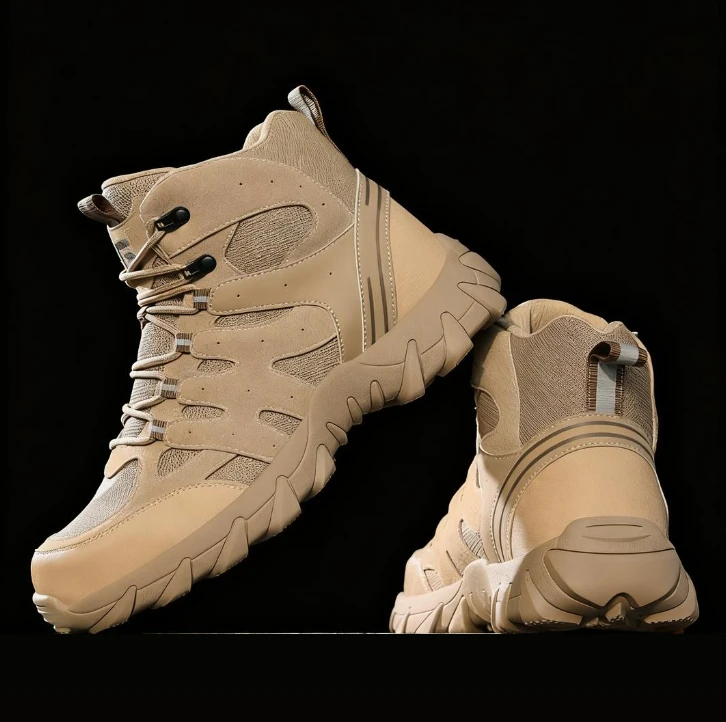
Building a footwear programme for a food or pharma site?
Send the hygiene zones, the cleaning method and the size range required. Shield Wings confirms the cleanable constructions available and the documentation each model carries.
External references: 29 CFR 1910.132, 29 CFR 1910.136 foot protection, UK HSE personal protective equipment guidance, CCOHS guidance on safety footwear, Regulation (EU) 2016/425, CEN-CENELEC standards portal.