

The useful audit samples reality in three places — behaviour, condition and records — and then compares them with each other. Everything else is a review of intentions.
Audit the Site, Not the Document
An audit tests whether the programme operates; a document review tests whether it was written.
The distinction matters because the two exercises produce completely different findings. A document review tends to conclude that the policy is comprehensive, which is usually true. An audit that walks a hazard zone and asks a worker why they are wearing what they are wearing finds the gaps that actually cause injuries: equipment selected for the wrong task, items kept in service past their useful life, a training record that describes a session nobody remembers, and a contractor whose equipment was checked once at mobilisation. The regulatory framing supports this approach, since the duty described in OSHA 1910.132, within the general obligations of 29 CFR 1910 Subpart I, concerns what the employer actually provides and maintains rather than what it has written down. Guidance from HSE, CCOHS and bodies such as ASSP takes the same practical line.
Two framing points shape the audit. It examines a control, since protective equipment remains the last measure in the hierarchy of controls, so findings about upstream controls belong in the report rather than outside its scope. And the audit should be scheduled with the same seriousness as an external one, because a site that only prepares when a customer is coming is a site that has decided which findings it wants.
Sample 1: Wearer Behaviour in the Hazard Zone
Behaviour is sampled by standing in the area where the hazard exists and watching the work as it happens, without announcing the visit in advance.
Five observations cover most of what matters. Whether the equipment in use is the equipment the task requires, comparing the marking against the requirement rather than relying on appearance. Whether it is worn correctly, since a face shield raised, a hood opened for comfort or a garment worn over an unrated base layer is a control that has been partly removed. Whether the worker can explain why the equipment is provided, which is the fastest test of awareness. Whether equipment has been modified or supplemented — a strap replaced with cord, a reflective strip taped on, a glove cut at the thumb — and each of those is a finding regardless of intent. And whether the equipment is removed before the exposure ends, which happens most often around the edge of a task rather than in the middle of it. Recording what was observed rather than who was observed keeps the exercise about the programme rather than the individual, which matters for getting cooperation on the next visit.
Sample 2: Condition of Issued Items
Condition sampling selects items from people and places rather than from the store, because the store holds the equipment nobody is using.
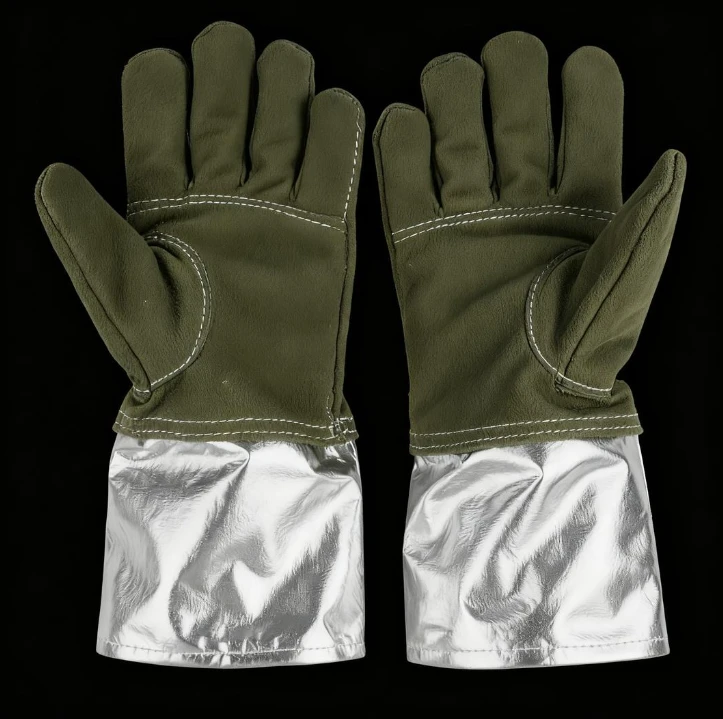
Take a small number of items across different areas, ages and working conditions, and inspect each against the criteria the programme states. Three questions are worth asking of each item: does it still perform the function it was issued for, does it still carry legible identification, and does the worker know when it should be replaced. Damage found in the field that would have been caught at an inspection indicates the inspection is not happening. Damage that is normal for the age of the item indicates the replacement interval or the specification. And equipment whose condition is impossible to judge, because the label is gone or the item is so dirty that the material cannot be seen, is a finding in itself. Where a programme issues items with a defined service life from the manufacturer, the audit should check whether the record and the item agree, since a mismatch here is usually the first sign that issue records are being maintained after the fact. The criteria that apply to clothing and hand protection are set out in the guidance on inspection and retirement.
Sample 3: Records Against Reality
The most productive audit technique is to take one record and compare it with what is physically true, rather than checking that records exist.
Four comparisons are worth making. Take an issue record and confirm with the worker that they hold that item, in that size, in that condition. Take an inspection record and ask to see the item that was inspected on that date. Take a training record and ask the worker to describe one limitation of the equipment concerned. Take an assessment row and confirm that the equipment specified is what is actually in use on that task. Each comparison can be completed in a few minutes and each one tests something that a file review cannot. Two patterns in the results are worth noting rather than only the individual findings: records that are consistently accurate but describe equipment nobody uses suggest a programme designed around the file, and records that are accurate on paper but not in practice suggest the documentation is being produced for the audit rather than by the process.
Sample 4: Training Effectiveness
Training is audited through questions rather than records, because the requirement is comprehension.
Three questions work in the field and do not resemble an interrogation. What is this equipment protecting you against? When would you take it off or replace it? And what does it not protect you against? The third question is the most discriminating, because limitations are the content most often dropped when a session is delivered quickly, and they are the content that prevents a worker from using an item outside its tested conditions. Where answers are vague across a whole crew rather than from one person, the finding is about the programme rather than the individual: either the training content is too general or it was delivered in a way that did not reach the crew. Where the answer is precise but the equipment is worn incorrectly, the gap is usually in the practical element rather than in the briefing. A finding in either direction is worth recording in the same way as a physical defect, because training is what connects the equipment to its limits.
Sample 5: Contractor Interface
Contractors are audited at the boundary, because that is where the host site’s control ends and another employer’s begins.
Three checks cover the interface. Whether the verification performed at induction is still accurate for the people currently on site, which in a long project is frequently not the case. Whether the equipment in use matches the area minimums in the site rule, and whether the rule version on the wall is the current one. And whether any site-issued equipment has been returned and recorded, since a contractor’s locker is a common resting place for items nobody can account for. Where a contractor works under a permit system, the permits are a useful cross-check on equipment, because they name the task, the area and the conditions — which is exactly the information needed to test whether the equipment matches the requirement. Findings involving contractors belong in the same report and the same corrective action process as internal findings, since a separate track for contractors is how interface problems persist. The record structure for that interface is described alongside the equipment documentation in the compliance checklist for manufacturers and importers.
Scoring and Findings Classification
Findings are more useful when they are classified by their consequence rather than by how easy they are to fix.
| Classification | What it describes | Typical response |
|---|---|---|
| Immediate risk | Equipment absent, unsuitable or defective in a live hazard, or a control removed | Stop the task, correct on the spot, record and escalate |
| Systemic gap | A pattern across areas or shifts, such as inspections not performed or records produced after the event | Corrective action with an owner and a date |
| Documentation gap | Records that cannot link the requirement to the equipment issued | Fix the record design rather than chasing entries |
| Improvement | Comfort, fit or availability issues that reduce wear | Evaluate and feed into the next review |
Two rules make the classification useful. An immediate risk is corrected and recorded on the spot rather than carried into a report, because a report is not a control. And a systemic gap is never closed by retraining alone: if the inspections were not happening, the question is why the interval, the authority to withdraw items or the recording method made them impractical.
Corrective Action and Follow-Up
An audit’s value is decided after the report, not in it.
Four requirements make the follow-up work. Each systemic finding gets a named owner, an action and a date, recorded in the same place the original finding lives. The root cause is addressed rather than the symptom: a missing label is a procurement or labelling issue, a garment worn without its hood is an availability or design issue, and repetitive damage at one point on a garment is usually a task or specification issue. Immediate fixes are verified in the field rather than by email, since the only meaningful test is that the position has changed. And findings are reviewed at the next programme review, because the purpose of an audit is to change the programme rather than to generate a document. A short, consistent audit repeated on a schedule with disciplined follow-up produces more improvement than an exhaustive audit whose findings are filed, and the register that holds the findings alongside the equipment decisions is described in the sourcing, manufacturing and compliance hub.

FAQ: Questions About PPE Audits
What should a PPE audit cover?
Behaviour in the hazard zone, the condition of issued equipment sampled in the field, records compared against what is physically true, training effectiveness tested by asking workers about limits, and the contractor interface. Coverage should include several areas, shifts and equipment types, because a single-area audit describes one operating condition rather than the programme.
How will you audit PPE?
By sampling reality rather than rereading the policy: observe work in progress without notice, inspect a small number of items taken from users, compare one or two records with the physical equipment they describe, and ask a few workers what their equipment protects against and what it does not. Findings are then classified by consequence, with immediate risks corrected on the spot.
How often should PPE compliance be audited?
A short audit every few months keeps better contact with reality than an annual exhaustive exercise, and the interval should shorten where the work, the workforce or the equipment is changing. Event-driven audits after an incident, a plant change or a contractor mobilisation are also worth scheduling. What matters more than frequency is that the same sample points are used each time, so the results are comparable.
What is the difference between an audit and an inspection?
An inspection examines items or conditions against defined criteria, such as checking a garment for damage or a store for segregation. An audit samples the programme as a whole to test whether those inspections, records, training and controls operate as intended, and it usually compares one against another. Inspection findings are the raw material an audit uses; the audit asks why the inspection did or did not catch something.
If you are designing a programme audit and want the sample points and finding classifications set out as a repeatable method, send your current checklist or audit report to [email protected], or use the contact page to ask for an audit design review.
{
“@context”: “https://schema.org”,
“@type”: “Article”,
“headline”: “PPE Programme Audit: Testing Whether the Programme Works When Nobody Is Watching”,
“description”: “How to audit a PPE programme by sampling behaviour, condition, records, training and the contractor interface, classifying findings by consequence and closing them with named corrective actions.”,
“inLanguage”: “en-US”,
“author”: { “@type”: “Organization”, “name”: “Shield Wings”, “url”: “https://www.shield-wings.com/” },
“publisher”: { “@type”: “Organization”, “name”: “Shield Wings”, “url”: “https://www.shield-wings.com/” },
“mainEntityOfPage”: { “@type”: “WebPage”, “@id”: “https://www.shield-wings.com/ppe-programme-audit/” },
“about”: [
{ “@type”: “Thing”, “name”: “PPE programme audit” },
{ “@type”: “Thing”, “name”: “Audit sampling method” },
{ “@type”: “Thing”, “name”: “Corrective action” }
],
“keywords”: “ppe programme audit, ppe compliance audit, safety ppe audit checklist”
}
{
“@context”: “https://schema.org”,
“@type”: “FAQPage”,
“mainEntity”: [
{
“@type”: “Question”,
“name”: “What should a PPE audit cover?”,
“acceptedAnswer”: { “@type”: “Answer”, “text”: “Behaviour in the hazard zone, the condition of issued equipment sampled in the field, records compared against what is physically true, training effectiveness tested by asking workers about limits, and the contractor interface. Coverage should include several areas, shifts and equipment types, because a single-area audit describes one operating condition rather than the programme.” }
},
{
“@type”: “Question”,
“name”: “How will you audit PPE?”,
“acceptedAnswer”: { “@type”: “Answer”, “text”: “By sampling reality rather than rereading the policy: observe work in progress without notice, inspect a small number of items taken from users, compare one or two records with the physical equipment they describe, and ask a few workers what their equipment protects against and what it does not. Findings are then classified by consequence, with immediate risks corrected on the spot.” }
},
{
“@type”: “Question”,
“name”: “How often should PPE compliance be audited?”,
“acceptedAnswer”: { “@type”: “Answer”, “text”: “A short audit every few months keeps better contact with reality than an annual exhaustive exercise, and the interval should shorten where the work, the workforce or the equipment is changing. Event-driven audits after an incident, a plant change or a contractor mobilisation are also worth scheduling. What matters more than frequency is that the same sample points are used each time, so the results are comparable.” }
},
{
“@type”: “Question”,
“name”: “What is the difference between an audit and an inspection?”,
“acceptedAnswer”: { “@type”: “Answer”, “text”: “An inspection examines items or conditions against defined criteria, such as checking a garment for damage or a store for segregation. An audit samples the programme as a whole to test whether those inspections, records, training and controls operate as intended, and it usually compares one against another. Inspection findings are the raw material an audit uses; the audit asks why the inspection did or did not catch something.” }
}
]
}