

Mining and heavy plant work ask more of a boot than almost any other industrial application. The ground is abrasive and often wet, the loads are heavy, the shifts are long, and the boot is asked to keep working through mud, rock and water without much attention. Footwear specification in this sector is less about choosing the most protective product and more about choosing one that will still be on the worker’s feet and still doing its job at the end of the week.
What This Environment Does to People and Equipment
The first thing to understand about a mine or quarry is how quickly the ground destroys footwear. Grit embedded in mud acts like an abrasive on soles and uppers through the whole shift, and the flexing at the toe happens thousands of times a day rather than a few hundred. A boot that would last a year in a warehouse can be finished in a season on a wet quarry floor, and a specification that ignores the wear rate will be judged by the replacement budget rather than by the protection it was meant to provide.
The second is water. Surface sites deal with rain and standing water; underground work deals with groundwater, dust suppression and process water; both produce boots that are wet inside as well as out. Wet leather and wet lining lose their shape, the foot moves more, and the boot that fitted well when it was issued no longer holds the foot the way it did. Where the boot cannot dry between shifts, the deterioration accelerates.
The third is variability. A single site may include a pit floor of broken rock, a haul road, a workshop with oil on the ground, a process plant with chemicals and a canteen area. The worker who crosses several of those in one shift needs footwear that satisfies the hardest condition, or a site that is organised so that the footwear changes with the location.
A fourth factor is distance. Mining and heavy plant work is not carried out in one place: a shift can involve walking from a change house to a vehicle, from a vehicle to a face or a machine, and back again several times, on ground that is uneven for the whole route. That distance is what makes weight and fit part of the specification rather than a comfort preference, and it explains why the boots that are popular on these sites are not always the ones with the heaviest construction.
The Hazards That Drive the Specification
The assessment for this sector has to be written by area, and it usually ends up longer than buyers expect.
- Impact and compression from falling rock, ore, tools and components, and from plant and vehicle wheels.
- Penetration from below through broken rock, wire, rebar and sharp debris, which is where the midsole matters.
- Crushing and rolling loads on the foot where vehicles, tracks or heavy equipment are moved.
- Slip on wet rock, mud, clay, slurry, oil and process water, each of which behaves differently.
- Thermal exposure: heat in deep workings and process areas, cold and wind on surface sites in winter.
- Chemical exposure to fuels, hydraulic fluid, oils, greases, process reagents and dust.
- Long shifts, long distances and heavy manual handling, which make fit and weight part of the safety question.
Two of these deserve specific attention in this sector. Penetration from below is more relevant here than in most industries, because broken ground places sharp objects underfoot continuously rather than occasionally, and the behaviour of a midsole under repeated loading belongs in the decision. And rolling loads deserve a place in the assessment even though they cannot be solved by a toe cap alone, because most of the control comes from traffic management and segregation.
Controls That Come Before the Equipment
In mining and heavy plant, the engineering controls carry most of the protection, and the footwear specification is written around what they leave behind. Traffic management that separates pedestrians from vehicles, marked walkways, exclusion zones around moving plant, reversing aids and driver training reduce the crushing risk that no boot can address. Ground support, scaling and housekeeping reduce the rockfall and debris that produce impact and penetration hazards underfoot.
Water control matters as much as any product decision. Drainage, bunding, grading and the routing of surface water away from walking routes change the slip risk far more than a different sole compound, and a maintained walkway reduces the depth of mud that the boot has to work through. Where dust suppression is used, its effect on floor condition should be considered alongside the benefit it brings. And on remote sites, the logistics themselves are a control: a spare pair held on site prevents a worker being left with a damaged boot because a replacement is three days away.
The order in which these controls are applied also decides how detailed the footwear specification has to be. Where the site has already separated pedestrians from plant, drained the working areas and kept the walkways clear, the boot is dealing with abrasion, water and wear rather than with the worst case everywhere. Where those controls are partial, or where the site is being moved forward in stages, the footwear has to cover more of the risk in the meantime. Recording which controls are in place, and which are planned, is what stops the boot specification being written for conditions the site no longer has.
What the Equipment Has to Do Here
Footwear for this sector is expected to hold up against repeated abuse while remaining wearable, which pushes the specification in several directions at once.
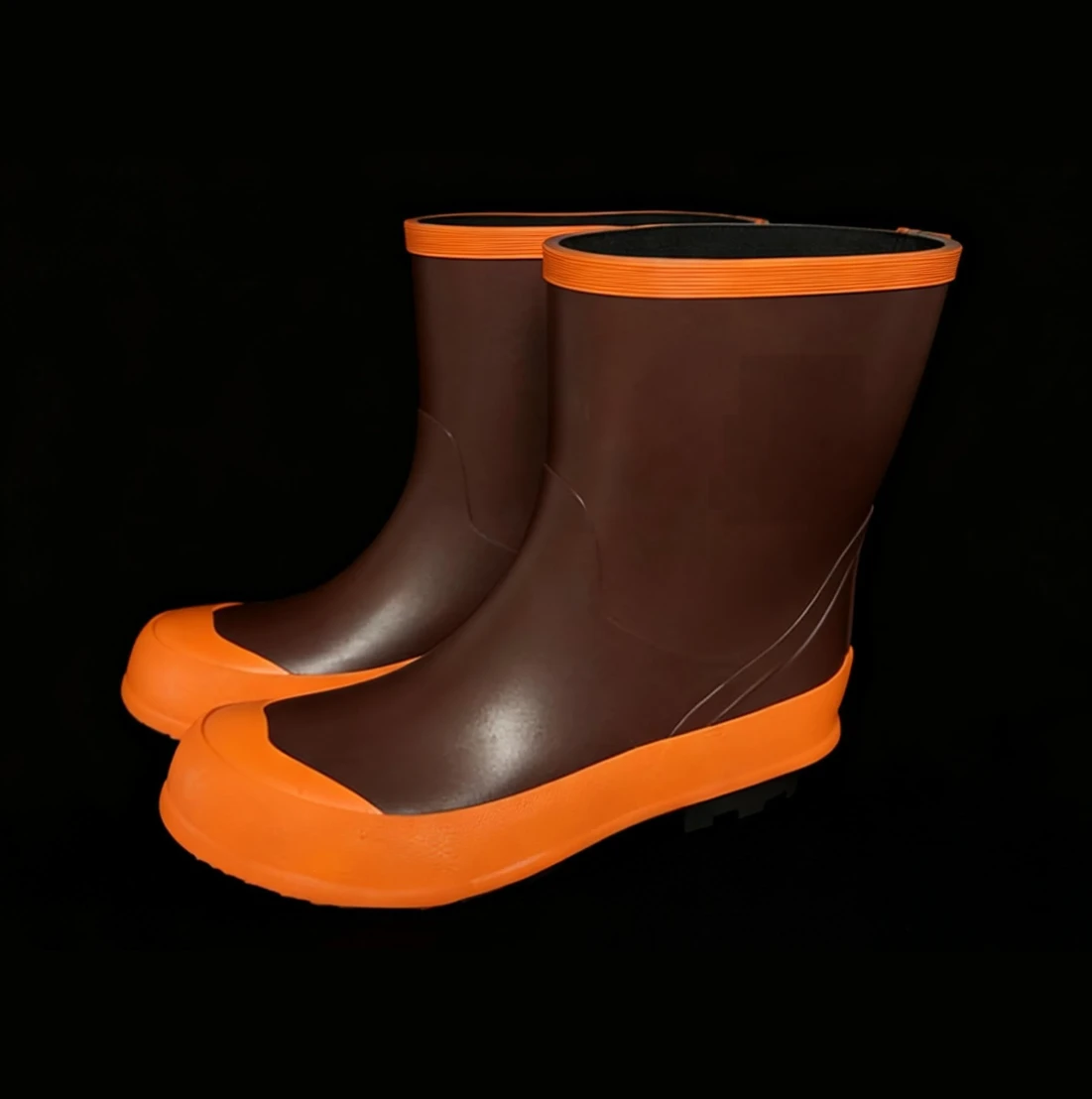
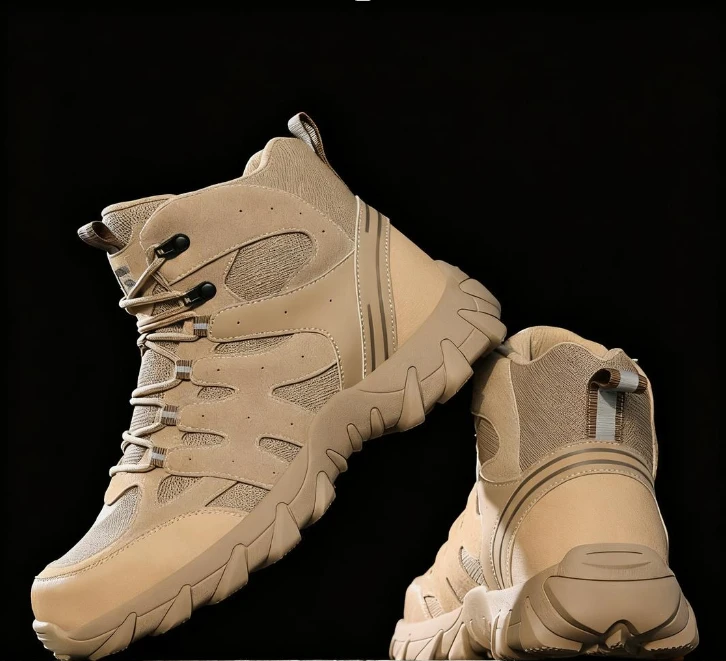
It has to resist abrasion on the sole and the upper, which argues for careful selection of materials rather than the thickest option available. It has to keep water and mud out, which is largely a question of height and closure. It has to provide the protective properties the assessment identifies, which typically means toe protection and, where the ground warrants it, penetration resistance from below. It has to hold grip on surfaces that change through the shift, from wet rock to oily workshop floor. And it has to be comfortable enough to be worn for a long shift, because a heavy boot that is comfortable for four hours is not a heavy boot that protects for twelve.
The ways the two main footwear standards express toe protection and penetration resistance are covered in Shield Wings’ guide to ASTM and EN ISO 20345 footwear standards, and the way penetration resistant midsoles are constructed and selected is examined in the article on puncture resistant safety shoes, which owns that topic.
Selection Criteria Specific to This Sector
| Area or role | Dominant hazards | Footwear direction | What to verify |
|---|---|---|---|
| Open pit and quarry floor | Broken rock, dust, standing water, slips | Tall, sealed boot with an abrasion resistant sole | Height against the water actually present |
| Underground workings | Sharp ground, heat, wet floor | Penetration resistance plus a compound that holds on wet rock | Midsole behaviour under repeated loading |
| Haul roads and traffic areas | Mud, slurry, vehicle traffic | Tread that clears mud, with visible presence considered | Traffic separation, since footwear is not the control here |
| Processing plant | Chemicals, water, heat, slips | Chemical resistant upper with grip suited to the floor finish | The reagents and concentrations actually present |
| Workshops and maintenance | Oil, dropped tools, sharp metal | Toe protection, oil-suited sole and penetration resistance where relevant | Whether one model covers the workshop and the yard |
| Long shifts with heavy handling | Fatigue, poor fit, reduced attention | Weight and fit trialled over a full shift | Fitting across the size range rather than a size list |
The pattern in the table is that the site is not one specification. Larger operations generally run two or three, with a boundary rule that says who wears what where, and the boundary is easier to enforce when it is written down and included in induction.
Typical Specification Failures in This Sector
The failures here are usually commercial rather than technical, and they show up as a replacement rate that is higher than it needs to be.
- A light boot chosen for heavy ground. Weight matters, but not at the cost of the protection the site requires.
- Tread not inspected. On abrasive ground the sole reaches the end of its grip long before the upper looks worn.
- Water entering from above. A low boot on a wet site produces wet feet whatever the upper is made of.
- One pair per worker on a wet site. Boots never dry, deteriorate faster and are less willingly worn.
- No stock of spare sizes on site. Remote logistics turn a minor boot problem into a worker wearing damaged footwear.
- Cleaning with whatever is available. Hosing and aggressive cleaning shorten the life of uppers and bonding unless the maker permits it.
- Deformation not noticed. A crushed or collapsed upper changes the fit and the way the foot is held, and is often missed in inspection.
Building the Full Set Rather Than Buying Pieces
Footwear in this sector is one part of a set that has to work together. Gaiters and knee protection limit what reaches the boot and the leg; hi-visibility clothing is usually a site requirement on any surface operation with vehicle traffic; gloves and sleeves deal with the handling side of the task that the boot cannot cover; and where the worker is exposed to cold or heat, the sock and liner change the fit of the boot that was specified without them.
The footwear ranges discussed here are listed on the safety shoes and boots page and in the foot protection category, and the wider selection logic across the range, including how a programme is built rather than a single model bought, is set out in Shield Wings’ safety shoes and boots buying guide.
Shield Wings manufactures foot protection at a Guangdong production base and works with mining operations, heavy plant contractors and distributors on model selection, height and sole options, size ranges and the documentation each product carries. The specification that survives a mine is the one that matches the ground, and that includes the plan for replacing what the ground wears out.
For the wider topic and related decisions, see our Safety Footwear & Boots.
Frequently Asked Questions
What type of boots do miners wear?
The answer follows the part of the operation. Surface and quarry work generally calls for a tall, sealed boot that keeps water and mud out and resists abrasion from rock and gravel, while underground work adds the need for penetration resistance from sharp ground and wire, and often a specification that suits heat rather than cold. Processing plants, where there is less rock underfoot and more machinery, often end up with a different model again. One boot rarely suits every role on a mining site.
Why do mine boots wear out so quickly?
Because the ground they work on is abrasive and often wet, and because a shift on a mine covers far more ground than a shift in a factory. Grit embedded in mud acts on the sole and the upper continuously, flexing happens thousands of times a day, and the boot is often cleaned with a hose rather than cared for. Wear is therefore normal, and the useful control is to inspect on condition and replace before the protection is affected.
Is penetration resistance necessary in mining?
Where the worker walks on broken rock, on ground containing wire or rebar, or in an area where sharp debris collects, the hazard is credible and the assessment should address it. Penetration resistance is provided by a midsole plate, and how that plate behaves matters as much as whether it is present, because repeated loading and flexing affect different materials in different ways. Whether it is required in a particular role comes from the employer’s assessment of the ground.
What should be checked before a mining boot is reused?
Check the sole for tread wear and for splits, examine the flex area at the toe, look for separation between the upper and the sole, and confirm that the toe area has not taken a heavy impact. On a sealed boot, confirm that it still keeps water out, since a boot that has become wet inside stops being a practical piece of equipment. Confirm too that the boot still fits, because a compressed or deformed upper changes the way the foot is held.
Do mining sites need more than one pair per worker?
On a wet site, or one with a long shift and heavy soiling, a second pair usually pays for itself. A boot that cannot dry between shifts deteriorates faster and is uncomfortable to wear, which shortens its life and reduces the willingness to wear it. Remote sites add a further reason, since a replacement may take days to arrive, and holding a small stock of sizes on site is often the difference between a worn boot being withdrawn promptly or kept in use too long.
Specifying footwear for a mine, quarry or heavy plant site?
Send the ground conditions, the areas involved and the size range required. Shield Wings confirms the sole, height and midsole options available and the documentation each model carries.
External references: 29 CFR 1910.136 foot protection, CCOHS guidance on safety footwear, UK HSE personal protective equipment guidance, 29 CFR 1910.132, CEN-CENELEC standards portal, Regulation (EU) 2016/425.