

Boot height is the part of a footwear specification that is most often decided by habit. Some sites issue low shoes to everyone; others issue a tall boot to everyone; and in both cases the choice is often inherited rather than assessed. It is worth treating height as its own decision, because it determines what reaches the leg, how the boot is put on and cleaned, and how much of the working day it can realistically be worn.
The Hazard First, the Product Second
Height is not a protective property in the way that toe protection or penetration resistance is. It does not change the performance of the components inside the boot; it changes the area of the leg that the footwear covers. That makes it a question of exposure: what could reach the ankle, the calf or the leg, and how high does it get there?
The exposures that drive height are predictable. Water is the most common, whether it is standing water on a site, wash-down in a food or chemical plant, or process fluid that has leaked onto the floor. Splash is the second: molten metal and slag in foundry and welding areas, chemicals in a plant, and the mixture of sparks, swarf and coolant around cutting and grinding. Dust and powder is the third, which matters less for the skin than for what it does once it gets inside the boot, where it abrades socks and the lining and is difficult to remove.
The counter-argument has to be weighed honestly. A taller boot is heavier, warmer and slower to put on, and it takes longer to break in. In work where the exposure does not reach the ankle, those costs are paid for nothing, and the worker who is issued a warmer, heavier boot for no reason has been given a reason to leave it in the locker. Height should answer a hazard.
Height also interacts with fit in a way that is easy to miss. A taller boot has more of the leg to accommodate, so it holds the ankle and calf rather than the foot alone, and the shape of the top opening decides whether the boot stays in place during kneeling, climbing and crouching. That is why the same height can feel comfortable on one person and loose on another, and why the proportion of the working day spent kneeling or climbing belongs in the assessment alongside the water depth. Design differences, such as how the collar is cut and whether it is padded, matter at least as much as the measurement itself.
What the Risk Assessment Has to Establish
The assessment usually needs a handful of specific answers, and they are all about the exposure rather than the product.
- The greatest depth of water the worker walks through, and how often that occurs.
- The highest point that splash or spill can reach on the leg, including during cleaning and maintenance tasks.
- The substances involved, since splash from a hot or aggressive material sets a different requirement from water.
- Whether the hazard arrives from the floor, from above or from the side, which decides what has to be covered.
- How long the exposure lasts, because a soaked leg for a full shift is a different problem from a momentary splash.
- The temperature, since additional coverage also means additional heat retention.
- How the boot has to be removed, particularly where contamination means it must come off before entering a clean area.
- Any need for speed of removal in an emergency, such as immersion, chemical contact or a hot environment.
The employer’s assessment sets the height requirement, and the product choice follows it. Where two areas of a site have different exposures, the more useful outcome is two specifications rather than one boot chosen for the worst case everywhere.
It is worth writing down what the assessment concluded, because height decisions are the ones most likely to be revisited by anecdote. A line that records the measured water depth, the splash height and the substance involved gives the next buyer something to work with, and it also allows a change in the process to be compared against the specification that was written. Without that line, a boot that was correct when it was issued becomes the traditional model, and any improvement has to overcome the habit rather than the evidence.
Which Hazards This Category Covers and Which It Does Not
This article covers the coverage question: how far up the footwear reaches, what that does and does not protect, how the choice interacts with trousers, waders and gaiters, and how the decision is written into a specification. It sits within the foot protection range and assumes that toe, penetration, slip and electrical requirements have been established separately.
What it does not do is make height a substitute for those properties. A tall boot without the required toe protection is not a safer boot; it is a taller one. Nor does height remove the need for the controls above the equipment layer, since water on a floor is still a drainage problem, and splash from a process is still a containment problem, regardless of how high the boot reaches.
Matching Task to Protection Level
| Exposure | Where the hazard lands | Coverage that answers it | What to verify |
|---|---|---|---|
| Dry, clean, level work | Underfoot only | Low shoe or ankle design | That the protection required is still present |
| General outdoor work | Wet ground, mud, splash from puddles | Ankle to mid-height boot with a sealed upper | Height against the water actually crossed |
| Standing water and site flooding | Above the ankle line | Taller boot or wellington-style construction | Depth measured, plus the overlap with trousers |
| Wash-down and process splash | Leg up to the calf, from all directions | Tall, cleanable design with minimal seams and openings | Hygiene requirements and cleaning method |
| Molten metal, slag and hot work | Splash from above and the side | Tall design, typically pull-on so splash cannot lodge | Compatibility with the leg protection worn above it |
| Dust and powder | Entry at the boot opening | Close-fitting top, or a gaiter over the boot | What the dust does once inside the boot |
| Confined or emergency escape | Rapid removal may be needed | Design that can be removed quickly when contaminated | Whether the removal route is practised |
Read down the table, height rises with the level the hazard reaches, and the last row is the one that is most often forgotten. In a plant where a worker may need to get a boot off quickly, a design that takes a minute to unlace is a design problem, and it is better identified before the purchase than during an incident.
Where Selection Usually Goes Wrong
Height decisions go wrong in both directions, and the errors cost comfort when they are too high and protection when they are too low.
- Height inherited from the last order. The process changes and the specification does not, so the boot either over-covers or under-covers.
- Water depth estimated rather than measured. A boot that is issued for flooding is often the same height as the puddles it cannot cope with.
- Trousers not considered. A tall boot worn with trousers tucked inside it fills with water that the boot was meant to keep out.
- Laces where they do not belong. In hot work and around moving machinery, a pull-on design removes both the lodging and the entanglement problem.
- Heat disregarded. Taller boots are warmer, and in hot areas the result is a boot that is worn loosely or not at all.
- Removal not planned. Where contamination must be kept out of a clean area, the changeover routine decides the design.
- Fit sacrificed for coverage. A tall boot that is not fitted properly is more likely to rub, and rubbing boots are removed or replaced with something unsuitable.
The Hierarchy of Controls Around the Selection
Before height is specified, the controls above the footwear should be examined, because several of them remove the need for extra coverage. Drainage and bunding reduce standing water; spill containment and closed transfer reduce the amount of process fluid that reaches the floor; screens, guards and distance reduce splash in foundry and cutting work; and keeping the changeover between clean and contaminated areas outside the working space reduces the amount of contamination that footwear carries.
Where those controls are incomplete, the boot and the clothing above it have to work as a system. Waterproof trousers worn outside the boot, a gaiter over the boot top, a wader arrangement for deeper water and a leg protector over the calf all change what the footwear needs to achieve. The specification should describe the combination, and it should state who owns each part of it, because a system that depends on two departments and is owned by neither tends to fail at the boundary.
Specification Points to Fix Before Ordering
The points below turn a general request for taller boots into something that can be checked when the order arrives.
- The measured exposure: water depth, splash height and the substances involved.
- The required height on the boot, expressed as a design category rather than a preference.
- The closure: laced, zipped or pull-on, with the reason recorded.
- How the boot is worn with trousers, gaiters or a wader, including which is outside which.
- The thermal consequence of added coverage, with the working temperature stated.
- Cleaning and drying arrangements, since a taller boot takes longer to dry inside.
- Removal and changeover procedure, including any requirement for speed in an emergency.
- Fit and sizing across the range, with a trial over full shifts before the order is confirmed.
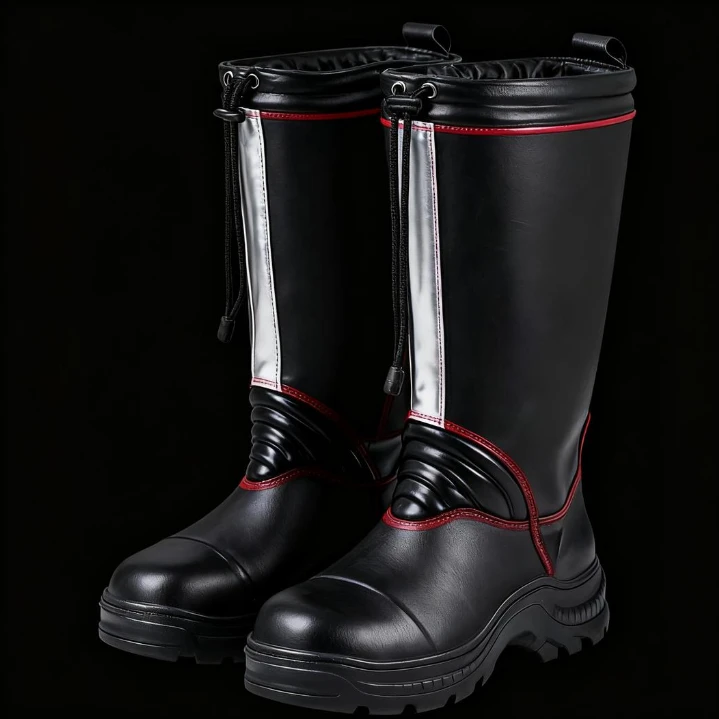
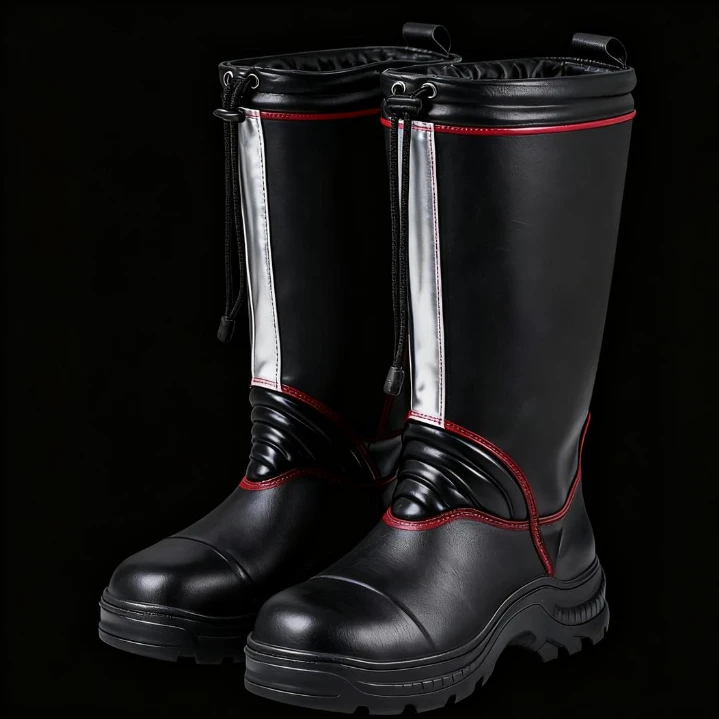
Boots that reach higher up the leg, including the firefighting designs used where the leg is exposed to heat, are described on the structural firefighting boots page. The ranges that cover the industrial cases in this article are listed on the safety shoes and boots page, and the wider selection logic is set out in Shield Wings’ safety shoes and boots buying guide, which owns that topic.
Shield Wings manufactures foot protection at a Guangdong production base and supports employers and distributors with height options, closure types, size coverage and the documentation each model carries. Height is a decision about coverage, and it is best made by measuring the exposure rather than by following the last order.
For the wider topic and related decisions, see our Safety Footwear & Boots.
Frequently Asked Questions
Does boot height affect protection?
Height changes which parts of the leg the footwear covers, not the performance of the protective components inside it. A taller boot does not provide more toe or penetration protection than a lower one built to the same requirement, but it does keep water, splash, dust and contamination away from a larger area of the leg and ankle. Height is therefore chosen against the exposure and not against a general preference for more coverage.
When is a taller boot actually necessary?
When the hazard reaches above the ankle line. Standing water, wash-down and process splash, molten metal or slag, sparks from cutting and grinding, and any work where the leg is exposed to contamination all justify more height. Conversely, in dry, clean, level work a low or ankle design is lighter, easier to put on and cooler, and adding height without a hazard to answer buys nothing.
Are taller boots harder to wear?
They are heavier and warmer, they take longer to put on where they are laced, and they need more time to break in, particularly around the ankle and calf. Pull-on designs avoid the lacing time and are used where laces would present a hazard or trap contamination. The practical approach is to trial a taller boot over full shifts, because discomfort that is invisible in a store room often appears in the last two hours of a shift.
Why do some sites require boots without laces?
Two reasons, and both matter. Laces and the openings they pass through can hold splash, dust or molten metal where it contacts the foot for longer, which is why pull-on designs are common in foundry and welding areas. Laces can also present an entanglement or trip hazard around moving machinery. Where laces are used, they should be of a type and length the manufacturer specifies, and replaced when they are damaged.
How is the right height measured?
From the actual exposure rather than from a general rule. The useful figure is the greatest depth of water, the highest point that splash or spill can reach, and the level the leg would have to be protected to if the substance involved were present. Those answers are then converted into a height on the boot and checked against the range available, with the overlap to protective trousers or a wader arrangement defined at the same time.
Deciding on boot height and coverage?
Send the water depth, the splash exposure and the working temperature. Shield Wings confirms the heights, closure types and size ranges available and the documentation each product carries.
External references: 29 CFR 1910.136 foot protection, CCOHS guidance on safety footwear, UK HSE personal protective equipment guidance, CEN-CENELEC standards portal, Regulation (EU) 2016/425, 29 CFR 1910.132.