

Footwear is the protective equipment workers wear longest and complain about most, and both facts shape the specification. A boot chosen purely on protection properties may be rejected by the workforce within a week; a boot chosen for comfort alone may be missing the one property a task depends on. Getting the balance right starts by naming every hazard a pair of boots has to cover on that particular route through the plant.
The Hazard First, the Product Second
Feet are exposed to hazards that arrive through different paths. Impact and compression come from above, when a load drops or rolls onto the toe area. Puncture comes from below, through the sole, from nails, wire, swarf or glass. Electrical exposure separates into two very different cases: protection for the wearer against contact, and static control in an area where a discharge could ignite or damage. Slip comes from the interface between the sole and the surface, and depends on the floor, the contaminant and the way the worker walks. Heat, molten metal and chemical exposure add further requirements, and each has its own test basis.
The route matters as much as the task. A worker who spends ten minutes on an oily wash-down pad and six hours on a dry warehouse floor needs a boot that handles both, and the specification should describe the full walking surface rather than the nominal job title. Footwear is also the item most likely to be worn off-site, so the site’s policy for that should be written rather than left to convention.
What the Risk Assessment Has to Establish
Occupational foot protection requirements in the United States are set out in 29 CFR 1910.136, with additional construction requirements in 29 CFR 1926 Subpart E, and both link the protection to the hazard present. In Europe, the PPE Regulation and the footwear standards it calls up set the framework. In every case, the selection is the employer’s decision, and the boot is the answer to a hazard statement.
A footwear specification becomes quotable when the assessment records:
- What can fall or roll onto the foot, and with what mass and frequency.
- What is under the foot: nails, wire, sharp scrap, glass, or a smooth surface.
- Whether electrical contact is credible, and whether static control is required instead.
- The floor conditions across the whole walking route, including wash-down, oil, water, dust and gradients.
- Thermal exposure, including hot material, molten metal, radiant heat from a floor-level source, or cold.
- Chemical or biological contamination of the floor and the cleaning agents used on it.
- The measured fit requirements across the workforce, including width and volume, not only length.
Two of these are commonly under-specified: the full walking route and the fit range. Both have the same consequence, which is that the correct boot is not worn for the whole shift.
It also helps to record how long each exposure lasts. A boot that is adequate for a short crossing of a wet area may be the wrong choice for a worker who stands in that area for two hours, because both slip performance and comfort degrade over a shift, and a wet boot is a persistent rather than a momentary condition. Sites that capture duration find that the specification becomes simpler in some areas and stricter in others, which is usually a sign that the assessment is describing the work rather than the job title.
The final part of the assessment is the interface between the boot and everything else the worker wears. Where trousers are worn over or tucked into the boot changes how hot material and liquids run, and where gaiters or leggings are required for splash protection they change the fit. Writing that interface into the requirement prevents the situation where each item was correct on its own and the combination was never checked.
Which Hazards This Category Covers and Which It Does Not
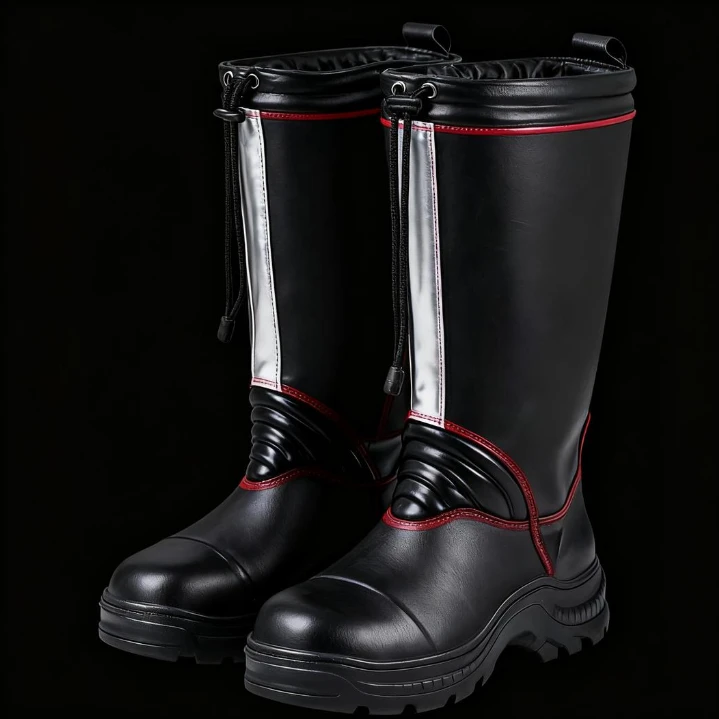
Foot protection covers dielectric boots for high voltage work, steel toe puncture resistant safety shoes built with a puncture resistant midsole, and structural firefighting boots designed for fireground conditions. Each is a different product with a different test basis, and the marking on the boot is what links it to the requirement.
What the category does not do is equally specific. Footwear does not address hazards that reach the body through other routes, such as vibration transmitted through a vehicle floor, which is managed by the vehicle and by work design. It does not protect the lower leg, which is a gaiters or leggings question where molten metal or chemical splash is present. And it does not replace the measures that stop objects from falling in the first place. Where the assessment identifies electrical exposure, the boot is one element of a specification that also covers gloves, insulating tools and procedures.
Matching Task to Protection Level
The protection properties come from the assessment and are expressed in the markings the applicable standard requires. The table below shows the decision path for each hazard family; the specific class or category belongs to the site assessment and to the standard the market works to.
| Hazard | What decides the specification | Marking the buyer verifies | Evidence to request |
|---|---|---|---|
| Falling or rolling loads | Mass and frequency of the load, and whether the metatarsal area is exposed | Impact and compression protection as declared for the model | Test documentation for the model and the marking on the delivered boot |
| Sharp objects underfoot | Type of scrap or debris on the route and the sole construction | Penetration resistance declared for the model | Documentation naming the property and the sole construction specified |
| Electrical contact | Whether contact with energised parts is credible, and the task conditions | The electrical property declared for the boot | Test evidence, plus the inspection and testing regime that property requires |
| Static control | The atmosphere or ESD programme and the site’s grounding arrangements | The static control property declared for the model | Documentation linking the property to the site’s programme requirements |
| Slip on wet, oily or contaminated floors | The contaminant, the surface and the gradients across the route | The slip performance declared for the sole compound | Sole specification and a trial on the actual floor conditions |
| Hot material, molten metal and fireground conditions | Contact temperature, splash potential and the duration of the task | The thermal properties declared for the model | Documentation for the firefighting or heat application claimed |
How the two main footwear standards compare, and how the categories within them are structured, is covered by Shield Wings’ guide to safety footwear standards, which owns that explanation. What matters at selection stage is that the specification names the framework, the property and the marking, rather than a description such as heavy duty.
Where Selection Usually Goes Wrong
The failures are consistent across sites and can be checked quickly.
- Buying on toe cap alone. Impact protection is one property; puncture, slip, electrical and thermal requirements are separate and separately marked.
- Treating electrical properties as interchangeable. Boots specified for one electrical purpose are not automatically suitable for another, and the assessment has to state which exposure is present.
- Choosing the sole by comfort. The sole compound decides slip performance on the actual floor, which is why a trial on site is worth more than a catalogue rating.
- Issuing sizes without fitting. Feet are measured, and protective boots change the internal volume, so the fitting step belongs in the programme.
- Ignoring off-site use. Where workers take footwear onto client sites, the policy should say what may be worn and where.
- Replacing on appearance alone. Sole wear and midsole integrity are the properties that fail first, and they are not always visible from the outside.
- One boot for every task. A single specification across a mixed site usually over-specifies most tasks and under-specifies one.
Two of these failures have a commercial signature that is worth watching for. Where a specification is over-specified, the pattern is a high unit price, low replacement rate and persistent complaints about weight and heat; where it is under-specified, the pattern is a low unit price, a short service life and repeated minor injuries that never quite justify an investigation. Neither pattern is visible in a purchase report alone, which is why the review should compare the specification against the task list at least once a year.
It is also worth checking, at the same review, whether the footwear is actually being worn as intended. A walk through the site at shift change tells more about this than any record: boots undone at the cuff, trousers tucked in where the procedure says otherwise, or a mix of models on one crew are all indications that the specification, the fitting or the issue process needs attention rather than that the workforce needs reminding.
The Hierarchy of Controls Around the Selection
Foot injury prevention begins well before footwear. Housekeeping that keeps floors clear of scrap and wire, mechanical handling instead of manual lifting, load securing, wheel chocks, floor repair, drainage, suitable floor treatments, appropriate cleaning regimes and task sequencing that keeps feet out of the path of moving loads all reduce the hazard itself. Footwear then addresses the residual exposure.
Personal protective equipment is the last line of defence: a safety boot reduces the consequence of an impact, a puncture or a slip, and it does not prevent the load from falling, the wire from reaching the floor or the spill from happening. That distinction is worth writing into the specification, because it defines which changes to the process should trigger a review of the footwear requirement and which should not.
Specification Points to Fix Before Ordering
A footwear specification that can be quoted and audited covers more than a style and a size list.
- The hazard statement for each task or route, including the surface conditions and any electrical or thermal exposure.
- The standard the footwear must be tested to, named with its scope, and the properties required under it.
- The marking expected on the boot, so that receiving inspection can verify the properties without opening documentation.
- Sole specification and slip performance against the actual contamination present, verified on site where possible.
- Fit requirements, including width and volume options, and the fitting process before bulk issue.
- Documentation required with the quotation: test evidence for the model, care instructions and traceability.
- Inspection and replacement rules, including what the wearer checks before each use and what triggers withdrawal.
- The off-site and client-site policy, so that the specification covers the footwear actually worn.
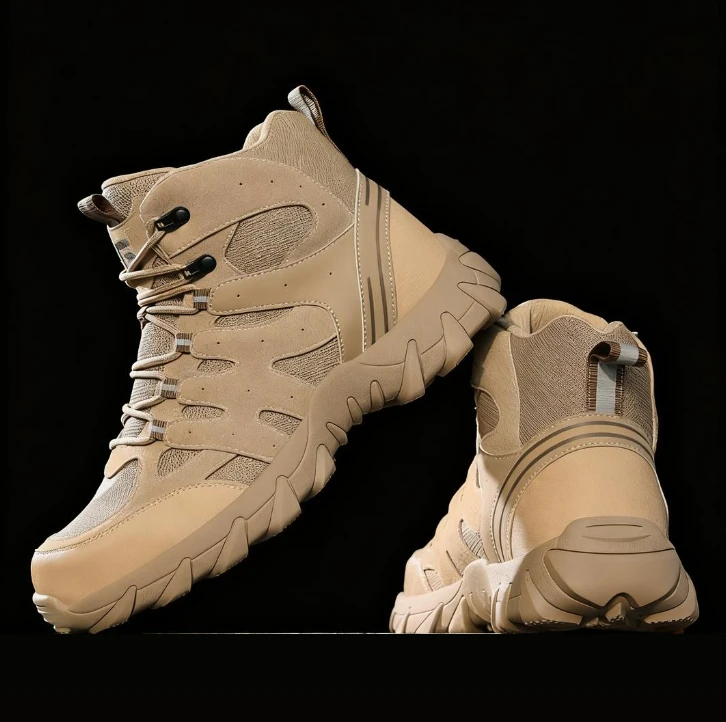
Shield Wings manufactures foot protection at a Guangdong production base, including high voltage dielectric boots, steel toe puncture resistant safety shoes and structural firefighting boots, with the documentation each specification needs. The full range sits in the foot protection category.
The commercial outcome of getting this specification right is unglamorous but measurable: fewer returns and exchanges, fewer boots in lockers that never get worn, and a documented connection between each hazard on the route and the property marked on the boot.
For the wider topic and related decisions, see our Safety Footwear & Boots.
Frequently Asked Questions
Are electrical hazard boots the same as dielectric boots?
No, and the difference matters more than any other footwear distinction. The two are specified for different exposures, tested differently and inspected on different regimes, and a boot selected for one purpose is not automatically suitable for the other. The assessment should state which exposure is present, and the specification should name the property required rather than a general description such as insulated boots.
How is the correct footwear size determined for a workforce?
Fit has to be measured rather than assumed, and a footwear programme should include a fitting step before bulk issue. Toe caps, protective midsoles and thicker uppers change the internal volume, so the size that fits in a casual boot is not always the size that fits in the protective version. Where several widths or volume options are available, offering them reduces returns and improves the chance that the boot is worn as specified.
How long does protective footwear remain as specified?
There is no fixed interval. Sole wear, midsole integrity, upper damage, contamination and any impact to the toe area all affect whether the protection is still available, and the wear rate depends on the surface walked and the load carried. The manufacturer’s instructions and the site’s inspection routine set the replacement rule, and pre-use checks by the wearer catch most problems early.
What should be checked when issuing safety footwear?
Confirm that the marking on the boot matches the properties the assessment requires, that the fit allows the foot to be stable without pressure points, and that the sole suits the walking surfaces on site. Record the issue against the worker, set the inspection interval, and confirm what the wearer should do if the boot is damaged, contaminated or involved in an impact.
Can one boot specification cover a whole site?
Rarely for the hazard properties, although it can work for the commercial side of the order. Where a site includes electrical work, hot material handling, wet or oily floors and puncture risk, the protection properties differ by task and the specification should follow the task. Standardising the supplier, the labelling and the issue process, while keeping the required properties task-specific, gives most of the simplicity without the over-specification.
Specifying footwear across several hazards?
Send the walking routes, the floor conditions and the electrical or thermal exposures involved. Shield Wings confirms which models carry the properties required and what marking and documentation will be supplied.
External references: 29 CFR 1910.136 foot protection, 29 CFR 1910.132, 29 CFR 1926 Subpart E personal protective equipment in construction, CCOHS guidance on safety footwear, ASTM F2413 specification for protective footwear, 29 CFR 1910.137 electrical protective equipment, Regulation (EU) 2016/425.
{“@context”:”https://schema.org”,”@type”:”FAQPage”,”mainEntity”:[{“@type”:”Question”,”name”:”Are electrical hazard boots the same as dielectric boots?”,”acceptedAnswer”:{“@type”:”Answer”,”text”:”No, and the difference matters more than any other footwear distinction. The two are specified for different exposures, tested differently and inspected on different regimes, and a boot selected for one purpose is not automatically suitable for the other. The assessment should state which exposure is present, and the specification should name the property required rather than a general description such as insulated boots.”}},{“@type”:”Question”,”name”:”How is the correct footwear size determined for a workforce?”,”acceptedAnswer”:{“@type”:”Answer”,”text”:”Fit has to be measured rather than assumed, and a footwear programme should include a fitting step before bulk issue. Toe caps, protective midsoles and thicker uppers change the internal volume, so the size that fits in a casual boot is not always the size that fits in the protective version. Where several widths or volume options are available, offering them reduces returns and improves the chance that the boot is worn as specified.”}},{“@type”:”Question”,”name”:”How long does protective footwear remain as specified?”,”acceptedAnswer”:{“@type”:”Answer”,”text”:”There is no fixed interval. Sole wear, midsole integrity, upper damage, contamination and any impact to the toe area all affect whether the protection is still available, and the wear rate depends on the surface walked and the load carried. The manufacturer’s instructions and the site’s inspection routine set the replacement rule, and pre-use checks by the wearer catch most problems early.”}},{“@type”:”Question”,”name”:”What should be checked when issuing safety footwear?”,”acceptedAnswer”:{“@type”:”Answer”,”text”:”Confirm that the marking on the boot matches the properties the assessment requires, that the fit allows the foot to be stable without pressure points, and that the sole suits the walking surfaces on site. Record the issue against the worker, set the inspection interval, and confirm what the wearer should do if the boot is damaged, contaminated or involved in an impact.”}},{“@type”:”Question”,”name”:”Can one boot specification cover a whole site?”,”acceptedAnswer”:{“@type”:”Answer”,”text”:”Rarely for the hazard properties, although it can work for the commercial side of the order. Where a site includes electrical work, hot material handling, wet or oily floors and puncture risk, the protection properties differ by task and the specification should follow the task. Standardising the supplier, the labelling and the issue process, while keeping the required properties task-specific, gives most of the simplicity without the over-specification.”}}]}