

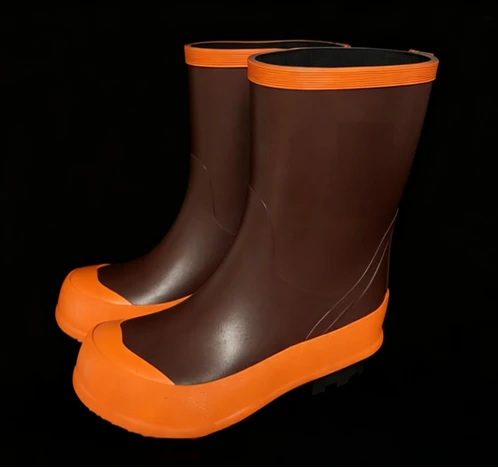
Dielectric footwear is bought as a product and relied upon as a programme. The boots themselves are specified once; what decides whether the protection is still there in month eighteen is whether the site can show which pair was issued to whom, when it was last inspected, what the test result was and why the last pair was withdrawn. Utilities and their contractors are audited on exactly that chain, and it is easier to build than to reconstruct.
Why the Programme Outlives the Product Choice
The protective property of dielectric footwear depends on the integrity of the complete item: the outer material, the sole, the seams and the absence of contamination or mechanical damage. That integrity is not visible in a catalogue and does not survive careless storage, aggressive cleaning or a single unnoticed puncture. A programme exists to keep those conditions visible, and to make sure that the boot a worker puts on is still the product that was specified.
Programmes fail for practical reasons rather than technical ones. Pairs are split. Issue records identify a worker but not an item, so the history of a specific pair is unknown. Inspection becomes a visual glance with no record. Testing is planned but not scheduled, and then not done because nobody knows which pairs are due. Replacement happens when a boot looks worn rather than when a defined criterion is met. Each of these is cheap to prevent at the design stage and impossible to fix retrospectively during an audit.
The commercial argument is straightforward as well. Clear retirement criteria prevent both premature replacement of sound equipment and the silent continued use of compromised equipment, and a pair-level record makes the annual quantity predictable instead of anecdotal.
Assessment, Selection and Issue
The programme begins with the assessment, which is the employer’s to own. Electrical work exposes the wearer to more than one hazard, and the assessment has to state which exposure the footwear addresses and which it does not: insulating protection for contact with energised parts, protection against arc-flash consequences at the body level, and static control where an ignitable atmosphere is present are different requirements, and footwear specified for one purpose is not automatically suitable for another.
Selection then converts the hazard statement into a specification, and issue puts the right pair on the right person with a record. Three issue-stage decisions shape everything downstream:
- Track the item, not only the worker, so that each pair has a history from first issue to retirement.
- Issue and withdraw as pairs, because a mixed set has the protection of its weaker boot.
- Record the fit and the intended use, including whether the boot will be worn with overshoes, gaiters or other equipment that affects how it is worn.
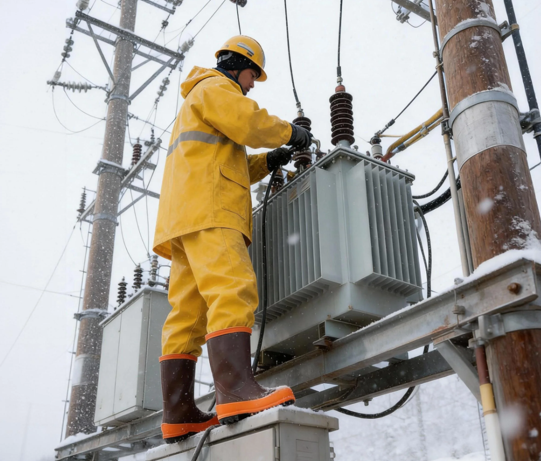
Personal protective equipment sits last in the hierarchy of controls, and this programme assumes the earlier controls are in place: isolation and de-energisation, insulated tools, barriers, live-line procedures, permits and competent supervision. The footwear is specified for the residual exposure that remains after those measures are applied, and a change in the procedure should trigger a review of the requirement.
Training and Competence Evidence
Workers are the first line of inspection in any dielectric footwear programme, and their checks are only useful if they have been taught what to look for. Training should cover how the boots are meant to be used and stored, which conditions require withdrawal, how contamination should be managed, and what to do if a boot is exposed to a chemical or mechanical event during a task.
Competence evidence needs to be specific enough to answer a question six months later. A record that says a worker attended electrical safety training is weaker than a record showing they were trained on the inspection criteria for the specific footwear they were issued, on the procedure that governs it, and on the reporting route when a boot is withdrawn. Where the programme relies on an appointed person to carry out periodic verification, that person’s competence should be documented separately, because the test result is only as good as the person producing it.
Inspection Frequency by Hazard Class
Inspection in this category operates on three levels, and the programme should state which level applies to each situation rather than leaving it to judgement on the day.
| Level | When it happens | What it covers | Record |
|---|---|---|---|
| Pre-use check | Before every use by the wearer | Visible damage, punctures, cuts, cracks, sole separation, contamination, moisture inside, correct fit and condition of the closure | Entry in the issue card or app, with withdrawal if anything is found |
| Periodic inspection | At the interval set by the manufacturer’s instructions and the site procedure | Full examination against the manufacturer’s criteria, including storage history and use conditions | Dated inspection record against the pair |
| Electrical verification | At the interval and by the method specified for the product | The electrical property the boots are provided for | Test result, method, date, person and outcome against the pair |
| Event-based check | After any impact, chemical contact, heat exposure or suspected damage | Damaged pair withdrawn and assessed before any return to service | Event record and disposition |
The intervals themselves come from the manufacturer’s instructions, the site’s own history and the severity of the exposure. Writing them into the programme, with a named person responsible for scheduling, is what turns a good intention into a record. In practice this is the step most often missing: sites frequently know that a periodic check is required, but cannot say who triggers it or where the result is filed.
Record Keeping for Audits and Incidents
An auditor or an incident investigator works backwards from a boot in service and asks how it came to be there. The programme should be able to answer that question with documents rather than recollection: the assessment that established the requirement, the specification that responded to it, the purchase and batch traceability reference, the issue record naming the worker and the pair, the inspection and test history, the training that covered its use, and the retirement record for its predecessor.
Two habits make this set sustainable. Keep the record against the pair identifier rather than against the worker alone, so that a boot that moves between workers carries its history with it. And record the reason for each withdrawal, not only the date, because the pattern of reasons is what tells a programme manager whether the interval is right, whether a particular task is damaging equipment faster than expected, or whether storage is the real problem.
Retention matters as well. Electrical incidents can be investigated long after equipment has been replaced, and a disposal record that identifies the pair and the reason for retirement is often the difference between a defensible answer and an unexplained gap.
Where a contractor works across several client sites, the record should also travel. Disputes about equipment are rarely about the product and usually about who inspected it and when, so a pair-level record that can be produced on a client site removes an argument before it starts. For larger fleets, the same record set supports the annual review: the number of pairs withdrawn, grouped by reason, shows whether the interval is too long, whether a particular task is damaging equipment, or whether the storage arrangements are the underlying problem.
Retirement, Replacement and Stock Control
Retirement criteria should be written before the first pair is issued, so that withdrawal is a rule rather than a negotiation. A workable set of triggers includes mechanical damage, penetration or cracking of the outer material, separation of the sole, contamination that the manufacturer’s cleaning instructions cannot resolve, exposure to heat or chemicals outside the product’s specified conditions, a failed verification result, and achieving the age limit the manufacturer states.
Stock control then follows from the same records. Consumption per worker per year, by size, gives a realistic annual quantity; a minimum stock level for each size prevents a worker from using a damaged pair because the replacement is not available; and a replacement lead time agreed with the supplier keeps the programme from depending on expedited shipping. Where a site keeps spare pairs in store, the storage conditions apply to them as well, and a rotation rule prevents older stock from ageing in the rack and being issued when it is no longer sound.
It is worth being explicit in the procedure that a damaged pair is removed from circulation immediately, even if the replacement is not yet available. The alternative — marking a pair as suspect and putting it back on the rack — is the most common way that withdrawn equipment returns to service.
Making the Programme Survive Contact With Operations
A programme is only as good as its behaviour on a wet Tuesday during a fault call. Three design choices help it survive. Keep the record-keeping light enough to complete in the field, because a form that takes ten minutes will not be filled in at all. Make the withdrawal path obvious, with a designated place for suspect equipment and a clear instruction that no one returns it to the rack. And review the programme against real events: after every withdrawal, every test failure and every incident, check whether the interval, the storage arrangements or the selection were the underlying cause. A programme reviewed only at audit time will keep repeating the same failures between audits.
Shield Wings manufactures high voltage dielectric boots at a Guangdong production base and supports electrical utilities, contractors and distributors with product information, care and inspection guidance and documentation for the specifications involved. The selection and construction detail behind the product family is set out in the complete guide to dielectric boots, which owns that topic, and the wider foot protection category covers the other footwear families a utility programme needs.
The test of this programme is simple to state and worth applying to an existing one: pick any pair in service and try to reconstruct its history. If the answer requires a phone call to the person who issued it, the record is in the wrong place.
For the wider topic and related decisions, see our Arc Flash & Electrical Safety PPE.
Frequently Asked Questions
How often should dielectric boots be tested?
The interval comes from the manufacturer’s instructions and from the employer’s programme, not from a single number that fits every site. The programme should define a periodic verification interval, add checks after any event that could compromise the boot, and record each result against the pair. Where the manufacturer specifies a test method and interval, that instruction is the controlling document and the site procedure should be written to match it.
Should boots be tracked as single items or as pairs?
As pairs. The protective property belongs to the complete footwear assembly, and mixing a serviceable boot with a damaged one loses the protection of the set. Issue, inspection, testing and retirement records should therefore identify a pair, and where one boot is withdrawn the pair is withdrawn with it and assessed before either is returned to service.
What conditions damage a dielectric boot in storage?
Oils, solvents, acids, prolonged ultraviolet exposure, heat, and being stored folded or compressed under load all affect the materials the protection depends on. Storage should follow the manufacturer’s instructions: clean and dry, out of direct sunlight, away from heat sources and chemicals, and supported so that the boot or overshoe is not deformed. Storage conditions are part of the programme because damage before first use is invisible.
Can a damaged dielectric boot be repaired?
Only where the manufacturer explicitly permits the repair and states how it must be carried out. Adhesives, patches, stitching and replacement components applied outside those instructions can affect the very property the boot is provided for, and a repaired boot may no longer correspond to the tested product. Where repair is not permitted, the boot is withdrawn and replaced rather than repaired locally.
What records does an auditor expect to see?
The hazard assessment that established the requirement, the specification of the boot selected against it, issue records identifying each worker and each pair, the inspection and test results with dates and the person who performed them, the training that covered use and inspection, and the retirement or replacement record. Together these show that the requirement, the product and the maintenance of the product are connected.
Setting up a dielectric footwear programme?
Send the tasks, the exposure and the size breakdown. Shield Wings confirms the boot specification, the care and inspection guidance and the documentation that supports each pair through its service life.
External references: 29 CFR 1910.137 electrical protective equipment, 29 CFR 1910.269 electric power generation, transmission and distribution, 29 CFR 1910.136 foot protection, ASTM F1117 specification for dielectric footwear, UK HSE electrical safety guidance, CEN-CENELEC standards portal, Regulation (EU) 2016/425.
{“@context”:”https://schema.org”,”@type”:”FAQPage”,”mainEntity”:[{“@type”:”Question”,”name”:”How often should dielectric boots be tested?”,”acceptedAnswer”:{“@type”:”Answer”,”text”:”The interval comes from the manufacturer’s instructions and from the employer’s programme, not from a single number that fits every site. The programme should define a periodic verification interval, add checks after any event that could compromise the boot, and record each result against the pair. Where the manufacturer specifies a test method and interval, that instruction is the controlling document and the site procedure should be written to match it.”}},{“@type”:”Question”,”name”:”Should boots be tracked as single items or as pairs?”,”acceptedAnswer”:{“@type”:”Answer”,”text”:”As pairs. The protective property belongs to the complete footwear assembly, and mixing a serviceable boot with a damaged one loses the protection of the set. Issue, inspection, testing and retirement records should therefore identify a pair, and where one boot is withdrawn the pair is withdrawn with it and assessed before either is returned to service.”}},{“@type”:”Question”,”name”:”What conditions damage a dielectric boot in storage?”,”acceptedAnswer”:{“@type”:”Answer”,”text”:”Oils, solvents, acids, prolonged ultraviolet exposure, heat, and being stored folded or compressed under load all affect the materials the protection depends on. Storage should follow the manufacturer’s instructions: clean and dry, out of direct sunlight, away from heat sources and chemicals, and supported so that the boot or overshoe is not deformed. Storage conditions are part of the programme because damage before first use is invisible.”}},{“@type”:”Question”,”name”:”Can a damaged dielectric boot be repaired?”,”acceptedAnswer”:{“@type”:”Answer”,”text”:”Only where the manufacturer explicitly permits the repair and states how it must be carried out. Adhesives, patches, stitching and replacement components applied outside those instructions can affect the very property the boot is provided for, and a repaired boot may no longer correspond to the tested product. Where repair is not permitted, the boot is withdrawn and replaced rather than repaired locally.”}},{“@type”:”Question”,”name”:”What records does an auditor expect to see?”,”acceptedAnswer”:{“@type”:”Answer”,”text”:”The hazard assessment that established the requirement, the specification of the boot selected against it, issue records identifying each worker and each pair, the inspection and test results with dates and the person who performed them, the training that covered use and inspection, and the retirement or replacement record. Together these show that the requirement, the product and the maintenance of the product are connected.”}}]}