

When a single protector is not enough, the instinct is to buy a stronger one. In hearing protection that instinct has a limit: ratings are achieved under laboratory conditions, and in a real plant the fit, the duration of wear and the way the protector sits with a helmet all reduce what the worker actually receives. Combining earplugs with ear muffs is a different approach to the same problem, and it works because the two protectors fail in different ways.
What Each Option Is Designed For
The exposure pattern decides which of the two is easier to live with. Where noise is continuous through a shift, a plug that is correctly inserted in the morning and stays put is often the most comfortable and least intrusive answer. Where noise arrives in bursts, as at a press, a hammer or a loading bay, the ability to don and remove a muff quickly matters more, and workers tend to keep a muff on the head rather than seated, which reduces its seal. Dual protection is usually specified where the level is high enough that neither approach alone leaves a comfortable margin.
An ear plug is designed to close the ear canal, which makes its performance depend on correct insertion and on the shape of the individual canal. It is unobtrusive, it stays in place when a helmet, face shield or respiratory protection is worn, and it can be worn under ear muffs. Its weakness is that it is easy to insert badly and easy to leave too shallow, which is precisely the failure that impulse and high-level noise punish.
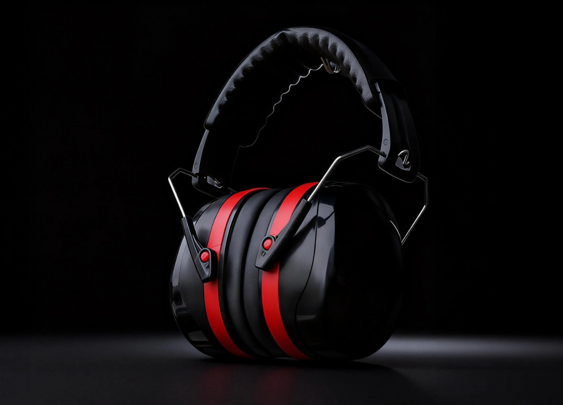
An ear muff is designed to seal around the ear with a cushion and a headband, which makes its fit more repeatable and its performance easier to verify by inspection. It is simple to put on and take off, which suits intermittent exposure, and it can be mounted on a safety helmet. Its weakness is that anything crossing the seal, such as spectacle arms, hair or a helmet strap, reduces performance, and it becomes uncomfortable in heat.
Single protection is the norm and remains the correct choice for most noisy areas. Dual protection is the answer where the exposure is high enough that the uncertainty in a single protector’s real-world performance is itself a problem, or where the exposure is impulsive and sustained.
How They Differ in Construction
The components that fail are also different, and that changes the maintenance rule. In a muff, the cushion is the working seal, and it hardens and flattens with use and cleaning; the headband provides the force that keeps the cushion in contact, and it weakens or distorts with repeated stretching. In a plug, the material has to conform to the canal each time it is inserted, so cleanliness and storage determine whether it still works. A programme that treats both as one consumable category will replace the wrong item at the wrong time and keep the other past its useful life.
The two protectors address different parts of the pathway. A plug attenuates sound in the canal before it reaches the eardrum, and it relies on the seal it makes with the canal wall. A muff attenuates sound by enclosing the ear in a cavity with a sealed cushion and by absorbing energy in the shell and the lining. Because the mechanisms are different, the weaknesses are different, and combining them covers both.
That difference also explains why the combination is not additive. Once the plug has reduced the energy reaching the ear, the muff has less energy to work with, so its contribution is smaller than its own rating. Any figure used for a combination should come from the method the employer’s standard or guidance defines, and it should not be estimated by adding two numbers from two datasheets.
Performance Differences That Matter on Site
Verification deserves its own line because it is where dual protection is usually weaker than intended. Anyone can see whether a muff is on the head, but almost nobody can see whether a plug is correctly seated, and a muff placed over a poorly inserted plug hides the problem rather than solving it. That is why programmes using dual protection lean more heavily on training, on supervisor checks and, where the site has access to it, on fit verification methods that measure the performance achieved by the individual rather than the rating on the pack.
| Consideration | Earplugs | Ear muffs | Combined |
|---|---|---|---|
| Fit and consistency | Depends on insertion and on canal shape | Repeatable, verified by inspection | Both, with plugs inserted first |
| Interaction with other equipment | Unaffected by helmets and shields | Affected by spectacle arms, hair and helmet straps | Muff seal must be checked with the other items in place |
| Comfort over a shift | Usually tolerated well when correctly sized | Can build heat and pressure | Higher heat load; breaks and rotation matter |
| Ease of removal | Slower, and easy to drop | Fast | Removal rules should be written, because taking off one layer may leave the worker exposed |
| Communication and alarms | Reduces speech clarity | Reduces speech clarity | Greater reduction; requires a planned communication method |
| Hygiene and replacement | Consumable, replaced frequently | Serviceable, with cushions and headband replaced | Both regimes run in parallel |
Read across the table, the combination is not simply a stronger version of either column. It changes comfort, communication and the procedures around the task, and those consequences belong in the specification rather than in a note issued after the fact.
Cost and Service Life Compared
The visible cost of dual protection is modest: a pair of plugs added to a muff that the site already buys. The real cost sits in the routine. Plugs are used or replaced far more often than muffs, so consumption is frequent and needs to be managed like a consumable rather than issued once. Muffs still need cushions and headbands replaced on the manufacturer’s interval, and their service life is shortened if they are stored badly or shared without cleaning.
There is also a procedural cost that shows up in the programme rather than in the purchase order. Dual protection requires training on insertion, a rule about the order of donning, hygiene arrangements for shared equipment, and a communication plan for the tasks where workers still need to hear. Sites that skip those steps find that workers wear one protector instead of two, which returns the situation to the single-protector case with the cost of the second item still on the invoice.
Where the Choice Is Genuinely Commercial
Where a site operates several noisy areas at different levels, the specification is most useful when it is graded rather than uniform. One area may need only a plug, another a muff because of the need to remove it quickly for conversation, and a third the combination because the exposure is high and sustained. Writing that grading into the programme, and marking it at the area, prevents the most common commercial error in this category, which is buying the highest specification everywhere and then finding that workers wear less than specified because the protection is uncomfortable.
Where the assessment shows that a well-fitted single protector brings the exposure within the required limits, the choice between plug and muff is legitimately commercial: it comes down to fit across the workforce, compatibility with helmets and eyewear, comfort in the working temperature, and the ease of maintaining the chosen product. In those situations the cheaper and simpler option is often also the better one, because it is more likely to be worn correctly.
What is not commercial is choosing single protection because it is cheaper when the measured exposure requires more. Equally, adding dual protection as a default across a plant is a decision with costs of its own: heat, communication difficulty, higher consumable use and slower task entry. The right scope comes from the measurement, not from a policy statement.
How to Trial the Decision Before Committing
A trial should run long enough to include a difficult shift rather than a quiet one.
A trial answers the questions a datasheet cannot. Ask workers to wear the specified combination through a representative shift and record when they want to remove it, whether the seal is disturbed by their helmet or spectacles, and whether they can still hear what they need to. Check the combination at the end of the shift rather than only at the start, because cushions migrate and plugs work loose over hours.
Record the outcomes in the specification: which combination was chosen for which area, what the communication provision is, and what the fitting and replacement rules are. That record is what makes the next order straightforward, and it is what an auditor or an occupational health professional will ask for when reviewing the programme.
Which Buyer Profile Each Option Suits
Three profiles cover most of the market. A site with moderate noise and good engineering controls needs one well-fitted protector chosen for comfort and compatibility, and the decision is commercial. A site with high or impulsive exposure at specific machines needs dual protection at those positions, with the procedures, training and communication provisions that make it work. A site with highly variable conditions across areas needs a graded specification, where the requirement changes by area and the worker is trained to know which combination applies where.
The eye protection issued alongside hearing protection is covered in Shield Wings’ guide to selecting safety glasses, which owns that topic. The hearing products themselves are listed on the hearing protection earmuffs page, alongside the rest of the eye and ear protection range.
Shield Wings manufactures hearing protection earmuffs and eye protection at a Guangdong production base and supports industrial customers with attenuation data, fitting guidance and configuration options, including helmet-mounted versions for tasks where head protection is already worn.
The decision that holds up is the one taken from the measured exposure, and then tested with the workers who will wear the result. Everything else — brand, price, appearance — is a preference that the measurement does not need to consider.
For the wider topic and related decisions, see our Hearing Protection & Noise Control.
Frequently Asked Questions
When is dual hearing protection used?
It is used where exposure remains high even with a well-fitted single protector, and where the task involves very high levels or impulsive events over a sustained period. The decision comes from the measured exposure and the employer’s programme, not from a rule of thumb, and it should also consider what the worker has to hear, because a combination that removes warning signals introduces a different risk.
Is the combined attenuation the sum of the two ratings?
No. The combination does not simply add the two values, and treating it as though it did overstates the protection. The reason is physical: when one protector already reduces the energy arriving at the ear, the second has less to work with, so the additional benefit is smaller than the second protector’s own rating. Any calculation method used should come from the standard or the guidance the employer works to.
Which order should the combination be worn in?
The plugs go in first, correctly inserted and seated, and the muffs are then fitted over them with the cushions sealing against the head and no obstruction from spectacle arms, hair or headwear. Order matters because a muff placed first can move when the plug is inserted, and because a plug that is not properly seated cannot be corrected by a muff placed over the top of it.
Does dual protection make communication harder?
It usually does, and that needs to be planned rather than discovered. Where the task requires instructions, alarms or vehicle awareness, the specification should include the method used to communicate, such as visual signals, warning lights, radio with suitable hearing protection, or level-dependent protectors where the exposure allows them. Removing one protector to hear is the failure mode to design against.
Does dual protection increase cost significantly?
The consumable cost rises because plugs are used or replaced far more often than muffs, and the muff needs service parts over its life. The larger cost is often procedural: fitting, training, hygiene and the time taken to get the combination right, plus the risk of exposure if workers use one protector instead of the two specified. Both sides belong in the business case.

Reviewing protection for a high-noise area?
Send the measured levels, the tasks and the equipment workers already wear. Shield Wings provides attenuation data, configuration options and fitting guidance, including helmet-mounted versions, with the documentation the programme needs.
External references: 29 CFR 1910.95 occupational noise exposure, 29 CFR 1910.132, UK HSE noise guidance, CCOHS PPE answers, CEN-CENELEC standards portal, Regulation (EU) 2016/425.
{“@context”:”https://schema.org”,”@type”:”FAQPage”,”mainEntity”:[{“@type”:”Question”,”name”:”When is dual hearing protection used?”,”acceptedAnswer”:{“@type”:”Answer”,”text”:”It is used where exposure remains high even with a well-fitted single protector, and where the task involves very high levels or impulsive events over a sustained period. The decision comes from the measured exposure and the employer’s programme, not from a rule of thumb, and it should also consider what the worker has to hear, because a combination that removes warning signals introduces a different risk.”}},{“@type”:”Question”,”name”:”Is the combined attenuation the sum of the two ratings?”,”acceptedAnswer”:{“@type”:”Answer”,”text”:”No. The combination does not simply add the two values, and treating it as though it did overstates the protection. The reason is physical: when one protector already reduces the energy arriving at the ear, the second has less to work with, so the additional benefit is smaller than the second protector’s own rating. Any calculation method used should come from the standard or the guidance the employer works to.”}},{“@type”:”Question”,”name”:”Which order should the combination be worn in?”,”acceptedAnswer”:{“@type”:”Answer”,”text”:”The plugs go in first, correctly inserted and seated, and the muffs are then fitted over them with the cushions sealing against the head and no obstruction from spectacle arms, hair or headwear. Order matters because a muff placed first can move when the plug is inserted, and because a plug that is not properly seated cannot be corrected by a muff placed over the top of it.”}},{“@type”:”Question”,”name”:”Does dual protection make communication harder?”,”acceptedAnswer”:{“@type”:”Answer”,”text”:”It usually does, and that needs to be planned rather than discovered. Where the task requires instructions, alarms or vehicle awareness, the specification should include the method used to communicate, such as visual signals, warning lights, radio with suitable hearing protection, or level-dependent protectors where the exposure allows them. Removing one protector to hear is the failure mode to design against.”}},{“@type”:”Question”,”name”:”Does dual protection increase cost significantly?”,”acceptedAnswer”:{“@type”:”Answer”,”text”:”The consumable cost rises because plugs are used or replaced far more often than muffs, and the muff needs service parts over its life. The larger cost is often procedural: fitting, training, hygiene and the time taken to get the combination right, plus the risk of exposure if workers use one protector instead of the two specified. Both sides belong in the business case.”}}]}