

In a foundry or a metal processing plant, the feet are exposed to hazards that arrive from three directions at once: splash from above and the side, contact heat from the floor and from hot material, and penetration from the scrap and castings on the ground. Footwear for these positions is therefore a different product from a general safety boot, and the differences are concentrated in the height, the closure and the sole.
What This Environment Does to People and Equipment
Footwear also has to be removable quickly, and that is a design requirement rather than a detail. Where material has been spilled onto a boot, the ability to get the boot off without untying a lace through a glove is a practical safety feature, and it explains why so many foundry designs use a smooth surface with a closure the worker can release in one movement. That is a construction decision the buyer should recognise when comparing products.
Molten metal behaves like a liquid, which is what makes it so damaging to footwear. It runs down a surface, it collects wherever there is a cavity, and it stays in contact while it solidifies. Laces, eyelets, open tongues and deep seams all give it somewhere to sit against the boot and against the leg. That is why foundry footwear is designed with smooth surfaces, closures that resist collection, and heights that keep material away from the leg opening.
Heat also arrives without splash. A floor that has been exposed to hot material, a casting that is still cooling, and radiant heat from a pouring area all load the sole and the upper, and repeated heat cycles stiffen rubber, leather and adhesives. Add penetration risk from scrap and swarf, plus the wear of working on a wet and gritty floor, and the boot has to survive several mechanisms at once.
The Hazards That Drive the Specification
Duration deserves its own line, because heat effects accumulate. A boot that tolerates a hot floor for a minute behaves differently after an hour of standing on it, and the insulation that protects the foot also makes the boot hotter from the inside. Where a position involves long periods on a warm floor, the specification should reflect that, and welfare arrangements such as rotation, matting or platforms may do more for the worker than a heavier boot.
- Splash from a pour, a ladle or a mould, including the direction it travels and the amount of metal involved.
- Contact heat from the floor, from cooling castings and from material handled near the feet.
- Penetration hazards on the ground, such as scrap, swarf, nails and sharp cast edges.
- Wet and contaminated floors, including the slip risk and the process risk of moisture near molten metal.
- Loads that can fall or roll onto the foot, which is a metatarsal exposure rather than a toe-only one.
- The duration of exposure and the worker’s movement pattern, since heat builds in footwear over a shift.
The employer’s assessment sets the requirement, and the supplier documents the properties the footwear carries. Where the assessment names the metal, the operation and the position, the boot selection becomes a comparison against documented performance rather than a preference, and the properties can be verified from the marking.
Controls That Come Before the Equipment
Foundry work is dominated by process controls, and footwear is the last layer. Pour path design that keeps workers out of the trajectory, screens and barriers at the furnace and the mould, mechanised handling of ladles and castings, dry floors and dry tooling, housekeeping that removes scrap and spillage, restricted access during a pour, and clear escape routes all reduce the exposure. Moisture control is part of the same set, because water meeting molten metal produces an event that no boot is designed for.
Administrative controls follow: procedures that define how close a worker may stand, who handles what, and how spillages are dealt with. Personal protective equipment then addresses the residual exposure. That framing matters commercially, because a site that tries to solve a process exposure with heavier footwear will keep buying and still leave the hazard in place.
What the Equipment Has to Do Here
It is worth distinguishing thermal performance from splash behaviour when comparing products, because they are not the same property. A boot can resist contact heat from a hot floor while being unsuitable for molten metal splash, since splash depends on how the material behaves on the surface, how much of it collects, and whether it can reach the skin at the leg opening. The supplier should be able to state what each design is intended for, and the buyer should verify that against the position rather than against the department.
Footwear for these environments has to keep molten material away from the skin, resist contact heat from below and around the boot, protect against penetration from the ground, and stay grippy on floors that are often wet and gritty. In practice that produces a recognisable set of design features: a higher leg to cover the ankle and lower calf, a closure that does not collect material, an upper that resists heat and does not melt, a sole specified for hot surfaces and penetration, and a construction that can be removed quickly if material has been spilled on it.
Two boundaries are worth stating. Not all high-leg boots are foundry boots: the material behaviour and the closure design are what matter, and general purpose boots may collect splash where a foundry design sheds it. And the coverage around the leg is part of the specification rather than an accessory: where splash can reach the lower leg, the arrangement between the boot, the gaiter and the leg protection determines whether material is directed away or inside.
Selection Criteria Specific to This Sector
| Position or task | Dominant exposure | Footwear characteristics that follow | What to verify |
|---|---|---|---|
| Pouring and ladle work | Splash and radiant heat, moving on a wet floor | High leg, smooth closure, heat resistant upper, slip resistant sole | Marking for the properties claimed, plus fit for a full shift |
| Mould and casting handling | Contact heat and heavy loads | Metatarsal and penetration protection alongside thermal performance | Load handling method in the assessment, and guard coverage |
| Slag and dross removal | Splash, hot material on the floor, sharp debris | High leg plus penetration and heat resistance, with a sole for hot surfaces | Sole condition, since this is where failure appears first |
| Furnace and heat treatment areas | Radiant heat and hot floors | Heat resistant sole with appropriate leg height for the position | Contact temperature and duration in the assessment |
| Maintenance in the hot area | Mixed exposure and unpredictable floors | Boot specified for the maintenance task, with pre-task check | Equipment condition before entering the area |
| Yards and loading areas adjacent to the plant | Penetration, slip, occasional hot material | Sole for the surface, with the thermal properties required by the proximity to the plant | Whether the position warrants the foundry specification at all |
Alongside the boot, the set usually includes leg protection where splash can reach the shin, and gaiters where the position puts the boot opening in the splash path. The interfaces decide the outcome, which is why they are specified together with the boot rather than added later.
Typical Specification Failures in This Sector
Two of these failures come from the same root, which is choosing footwear for the plant rather than for the position. A boot that suits a furnace inspection round may be entirely wrong for the ladle area next door, and issuing the same product across both means one position is over-specified and the other is not covered. Writing the requirement by position, and stating it in the assessment, is the simplest correction available.
It is also worth reviewing the specification whenever the process changes. A larger casting, a different alloy, a new ladle or a change in the pour path can all alter the exposure at a position where the footwear was previously considered adequate. Where the change process does not trigger a footwear review, the site keeps the old protection while the hazard moves.
- General purpose footwear in a molten metal area. The properties that matter here are not the ones that appear on a standard industrial boot.
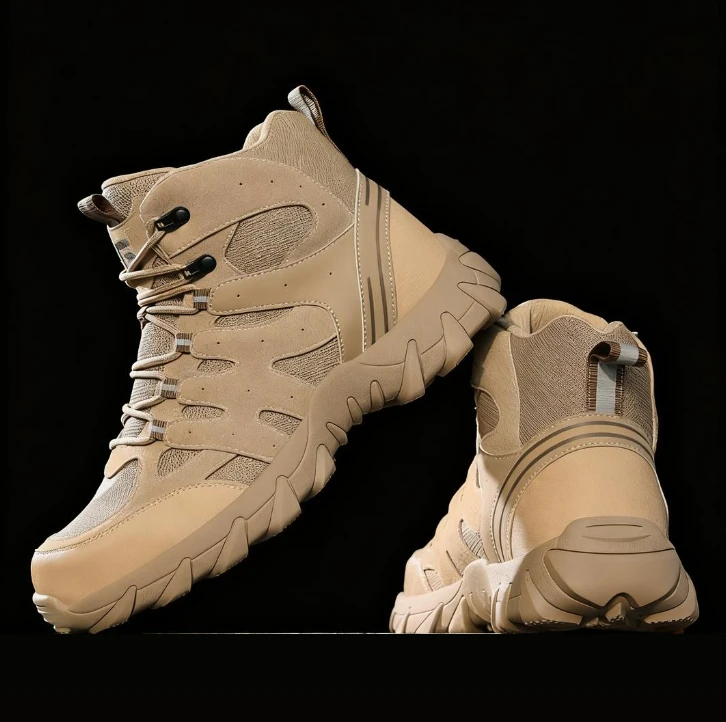
- Laces, eyelets and open tongues. These collect material and hold it against the boot, which is why the closure is part of the specification.
- Boot height chosen for comfort only. A shorter boot leaves the leg opening closer to the splash path and increases the chance of material entering.
- Sole condition ignored. Heat exposure and hot surfaces damage soles gradually, and a worn sole loses grip and penetration protection together.
- Boots reused after an event. Footwear that has received a significant splash or impact is assessed before it returns to service.
- Coverage treated as optional. Where the shin is exposed, the boot alone does not complete the protection, and the arrangement with the leg protection has to be specified.
- Wet conditions managed by footwear alone. Moisture near molten metal is a process issue, and the controls belong in the assessment.
Building the Full Set Rather Than Buying Pieces
Footwear for a foundry position is one part of an assembly that includes leg protection, a body garment with closed construction, and face and head protection for the same task. The penetration standards that decide the midsole requirement, and how they apply to different applications, are covered in Shield Wings’ article on puncture resistant safety shoes, which owns that topic.
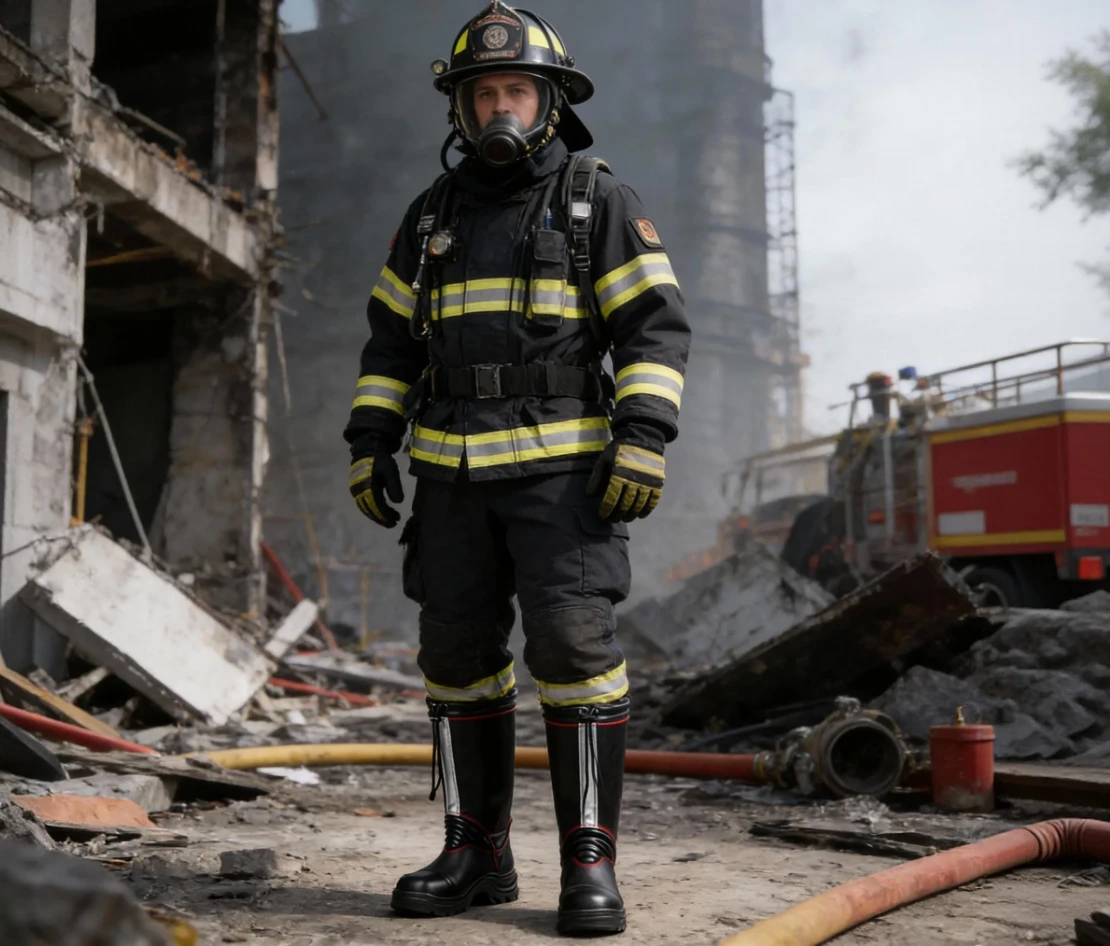
Shield Wings manufactures footwear and protective equipment at a Guangdong production base, including structural firefighting boots and the wider foot protection range, and supports foundry, steel and glass customers with specification guidance and the documentation for each property claimed. Where the position combines molten metal with structural firefighting risk, the firefighting boot range is often the reference point for construction and closure design.
The specification that works is written around the position rather than the department: the metal, the direction of splash, the floor conditions and the movement of the worker, with the closure and the coverage around the leg decided in advance rather than left to what the store carried this month.
For the wider topic and related decisions, see our Safety Footwear & Boots.
Frequently Asked Questions
What footwear is used in foundries and molten metal areas?
Footwear specified for the thermal and mechanical exposure of the task, usually with a high leg to keep material out, a closure that cannot collect metal, and a sole built for hot surfaces and penetration. The specific properties required come from the assessment of the position: the metal, the quantity of any splash, the contact temperatures and the conditions on the floor. General purpose safety boots are not automatically suitable for molten metal.
Why does the boot closure matter so much?
Molten metal runs and collects. Laces, eyelets, open tongues and deep seams give it somewhere to sit in contact with the boot, and a boot that is easy to put on and remove quickly is also safer when material has just been spilled on it. This is why foundry footwear designs favour smooth surfaces and closures that resist the collection of splash.
Should spats or leggings be worn with the boots?
Where the assessment shows that splash can reach the lower leg, additional coverage is normally specified, and its arrangement relative to the boot matters: material should be directed over and away from the boot opening rather than into it. Whether that is provided by a taller boot, a gaiter or a leggings design follows from the task and from how the worker moves.
How do wet floors affect the choice?
Wet conditions create two problems in molten metal areas: slip risk on contaminated surfaces, and the process hazard that arises when moisture meets molten material. Boots are selected for grip on the actual floor, while the process controls that keep moisture away from metal belong in the assessment alongside the footwear rather than being dealt with by the boot.
What should be checked before foundry footwear is issued?
Confirm that the marking covers the properties the assessment requires, that the boot height and closure match the splash exposure, that the sole suits the floor conditions, and that the fit allows a full shift without the boot being worn loosely. Then set an inspection rule that includes the sole, the upper and the closure, and a withdrawal rule after any significant splash or impact.
Equipping a pour floor or casting position?
Send the operations, the metal and the floor conditions. Shield Wings confirms the footwear configurations available, the coverage around the leg and the documentation each property carries.
External references: 29 CFR 1910.136 foot protection, 29 CFR 1910.132, 29 CFR 1910 Subpart I, CCOHS guidance on safety footwear, CEN-CENELEC standards portal, Regulation (EU) 2016/425.