

Insulated footwear is bought for a feeling and specified as a marking. Workers choose boots that keep their feet warm in winter and cool enough on a hot floor, while the marking on the product states which heat-transfer property has been tested. The two are related but not identical, and understanding the difference is what prevents a cold store from being equipped with boots that were selected for something else.
What the Standard Actually Covers
Footwear standards define a set of additional properties that a manufacturer may claim and mark, and among them are insulation against cold and insulation against heat. In the European framework these appear as markings — commonly referred to as CI for cold insulation and HI for heat insulation — alongside other properties such as protection of the ankle area, designated AN. Each marking states that the footwear was tested for that property under defined conditions, which is a more useful piece of information than a description of how warm the boot is.
What the standard does not do is predict comfort. Insulation against cold describes how the boot limits the transfer of cold from the ground through the sole, which is the dominant pathway for a worker standing on a cold floor. It does not describe how the boot performs in cold air with wind and wet, which depends on the upper, the lining and the fit, nor how the wearer perceives warmth, which depends on socks, activity and circulation. Treating the marking as a comfort rating is the most common misunderstanding in this category.
The Ratings Buyers Are Asked to Prove
The activity level is the variable most often missing from a cold-weather specification, and it changes the answer substantially. A worker who walks continuously generates heat and needs less insulation than one who stands at a control point, and a specification written for the second worker will be uncomfortably hot for the first. Where a site has both patterns, two specifications or an adjustable layering arrangement will serve the workforce better than a single compromise.
What a buyer needs to demonstrate is that the footwear matches the environment described in the assessment. For cold conditions that means stating the temperature range, the duration of exposure, whether the worker stands still or moves continuously, and whether the ground is cold, wet, icy or a combination. For hot conditions the equivalent statement describes the surface temperature, the duration of contact and whether hot material can reach the foot rather than only the floor being warm.
- The temperature of the floor or surface the worker stands on, and how long they stand on it.
- Whether the exposure is continuous, intermittent or only when moving between areas.
- Whether water or ice is present, since moisture changes the thermal performance of any boot.
- Whether hot material can reach the boot, which is a different requirement from a warm floor.
- The other properties required on the same boot, such as water resistance, penetration resistance or slip performance.
- The activity level, because a worker moving continuously generates heat while a static position does not.
Those statements are what allow a supplier to propose a boot and what allow an auditor to follow the reasoning. Without them, cold-weather footwear tends to be bought on the basis of thickness, and hot-floor footwear on the basis of descriptions that do not correspond to a tested property.
How Test Methods Differ Between Frameworks
The additional-property markings in the European framework are defined by the footwear standard, and the manufacturer claims and marks them for the models where the tests have been performed. North American footwear is specified through its own framework, in which thermal and insulation requirements appear as part of the property set the standard defines, and the documentation and labelling carry the detail rather than a single mark.
For a buyer working across markets, three practical consequences follow. A marking from one framework does not translate directly into the terminology of the other, so the specification should name the framework and the property. The presence of an insulation marking does not imply water resistance, penetration resistance or slip performance, which are separate. And where a site has specific thermal conditions, the most reliable approach is to state them precisely and to ask the supplier which tested property corresponds to them.
Reading the Marking on the Product
Ankle protection sits in the same group of additional properties and deserves the same care. Where a manufacturer claims protection of the ankle area, that protection comes from the boot’s design and materials rather than from a separate guard, and it addresses impacts and abrasion around the ankle. It does not describe how much support the boot provides, which comes from the shaft height, the lacing and the fit, and those are separate reasons to prefer one model over another.
Two further checks are worth making where the property matters to a regulated task. Confirm that the marking is permanent and legible, since these are the claims an auditor will read on the delivered product. And confirm that the insoles and footbeds supplied are the ones the property was tested with, because replacing a footbed with a different one can change both the insulation and the fit that the specification relied on.
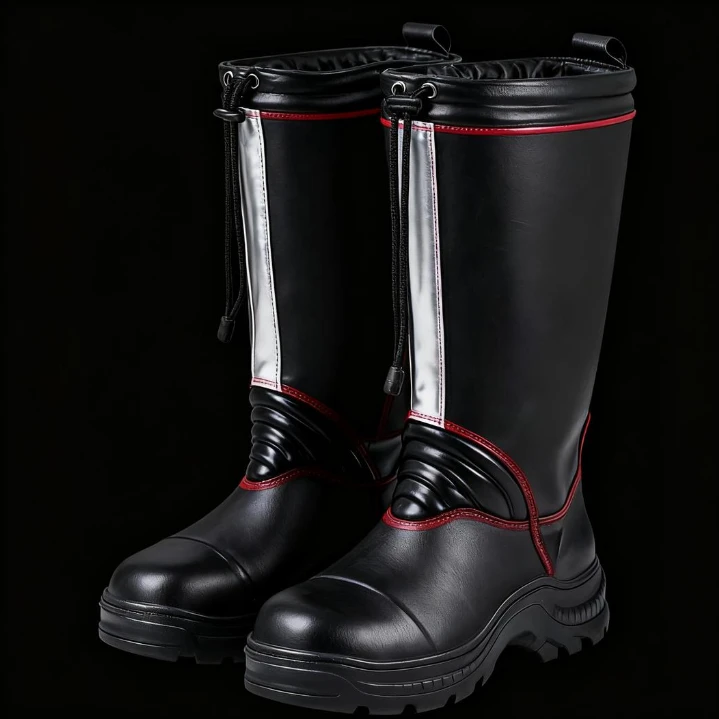
The marking on insulated footwear groups the properties the model carries: the basic protection properties, plus any additional ones such as cold insulation, heat insulation or ankle protection. Because these are additional claims, they appear only where the manufacturer has tested and marked them, which means two visually similar boots in the same range can carry different sets.
Two checks are worth building into goods-in. Confirm that the marking includes the property the specification required, rather than assuming that a winter boot is insulated or that a boot for a hot floor carries the heat marking. And confirm the construction details that support the property: the sole assembly, the footbed, the lining and, where the assessment requires it, the fit that keeps the foot in contact with the insulation rather than moving inside the boot.
Comparing the US and EU Frameworks
| Question | North American practice | European practice |
|---|---|---|
| How is insulation expressed? | As part of the property set the footwear standard defines, detailed in the documentation and labelling | As additional property markings such as CI for cold and HI for heat |
| What does the test describe? | Heat transfer through the footwear under defined conditions | Heat transfer through the footwear under defined conditions |
| What else appears? | Other protective properties, separately documented | Other additional markings, including ankle protection where claimed |
| What does the buyer verify? | That the documented properties match the environment | That the marked properties match the environment |
| What sits outside the claim? | Comfort, socks, activity and moisture | Comfort, socks, activity and moisture |
Read across the table, both frameworks test a heat-transfer property and leave the working conditions to the buyer. The specification is only complete when it names the environment as well as the marking.
Common Misreadings of the Rating
Two of those misreadings interact and are worth discussing together. Insulation and water resistance are separate properties, yet cold-weather footwear is often bought as though one implied the other, and a soaked boot removes the benefit of the insulation. The practical rule is to state both requirements in the specification, confirm both on the delivered product, and include the care and drying instructions that keep both properties intact, because damage from incorrect drying affects exactly the layers the marking relies on.
- Treating an insulation marking as a comfort rating. It describes heat transfer under test conditions, not how warm or cool the boot feels in use.
- Assuming insulation implies water resistance. Water in a boot defeats insulation, and the two properties are specified and marked separately.
- Buying on thickness alone. A thicker boot with poor fit can be colder than a thinner one, because circulation and trapped air matter.
- Using cold-weather boots for hot floors. The requirements pull in opposite directions, and a boot specified for one is not specified for the other.
- Confusing ankle protection with support. AN is a protection property, while the support a boot gives comes from the shaft, the lacing and the fit.
- Ignoring the sole. The floor pathway is the dominant route for both cold and heat, and the sole assembly is where the property is provided.
- Forgetting the rest of the set. Socks, insoles and gaiters change the thermal performance, and they belong in the specification rather than in personal choice.
What Documentation to Request From a Supplier
Where the footwear is bought for a single site with known conditions, it is worth asking the supplier to state which of the tested properties corresponds to those conditions, and to put that statement in writing. That correspondence is the part a supplier cannot verify on the buyer’s behalf, but a written recommendation against a described environment gives the site something specific to record in the assessment and to revisit if the conditions change.
Ask for the standard the footwear is tested to and the properties it carries, the test evidence covering the model and production site, the sole and lining specification, the care and drying instructions, and a traceability reference for the batch. Where the same model is ordered repeatedly, ask whether the construction or materials have changed, because insulation performance depends on the sole assembly and the lining as supplied.
Two further requests help in service. Ask what cleaning and drying methods preserve the insulating layers, since these boots are often dried in conditions that damage them. And ask whether the model is available in the size and width range the workforce needs, because a boot that is too tight or too loose compromises insulation as well as comfort. How footwear families and properties are selected overall is covered in Shield Wings’ safety shoes and boots guide, which owns that topic.
Shield Wings manufactures foot protection at a Guangdong production base, including steel toe puncture resistant safety shoes and the wider foot protection range, and supports cold store, construction, utility and industrial customers with property selection and the documentation each claim requires.
The specification that holds up states the environment, names the property the footwear carries, and confirms both against the delivered product. Insulation is a tested property of the boot as supplied, not an impression formed in a storeroom.
For the wider topic and related decisions, see our Safety Footwear & Boots.
Frequently Asked Questions
What does the CI marking on safety footwear mean?
CI indicates that the footwear has been tested for insulation against cold, so the sole and the boot assembly reduce the transfer of cold from the ground to the foot. It addresses the pathway through the sole, which is why it matters most for workers standing on cold floors, frozen ground or refrigerated surfaces for long periods. It does not describe how warm the boot feels in air, and it is not the same property as thermal insulation for a hot environment.
What does the HI marking cover?
HI indicates insulation against heat, tested in the same framework: the footwear limits heat transfer through the sole from a hot surface. It is relevant where workers stand on hot floors or surfaces, and it is a separate property from resistance to molten metal splash or to radiant heat. Where the task involves hot material rather than a hot floor, the requirement is different and the assessment should state it.
What is AN ankle protection?
AN indicates additional protection of the ankle area, provided through the boot’s design and materials rather than through a separate guard. It is relevant where the ankle may be struck, cut or abraded, and where support around the ankle helps stability on uneven ground. It is a design and protection property, and it should not be confused with the support a boot provides through its lacing and shaft height.
Do insulated boots work in wet conditions?
Insulation and water resistance are separate properties. Water entering a boot removes much of the benefit of insulation, because wet materials conduct heat away from the foot, so a cold-weather specification normally includes water resistance alongside the insulation marking. The assessment should confirm both requirements rather than assuming that an insulated boot is automatically waterproof.
How should insulated footwear be inspected and stored?
Check the sole for cracking and separation, the upper for damage, and the lining for dampness, compression and contamination, since insulation depends on the structure staying intact and dry. Storage should be dry, at ambient temperature and away from heat sources, because drying insulated boots on a heater can damage adhesives and the insulating layers. Footwear that has been soaked repeatedly should be reassessed rather than simply redried.
Specifying footwear for cold or hot floors?
Send the surface temperatures, the exposure duration and the other properties required. Shield Wings confirms which insulation and protection properties the footwear carries and the documentation behind each claim.
External references: 29 CFR 1910.136 foot protection, 29 CFR 1910 Subpart I, CCOHS guidance on safety footwear, UK HSE personal protective equipment guidance, CEN-CENELEC standards portal, Regulation (EU) 2016/425.