

Gloves are the item firefighters use most and the item they have least patience with, and the two facts are related. A glove that cannot be manipulated through a coupling, a tool or a door handle goes on the ground or is left hanging from a pocket, whatever it protects against. Selecting between structural, proximity and wildland gloves is therefore a decision about role and manipulation before it is a decision about numbers.
What Each Option Is Designed For
It is also worth naming the control that sits above all three. Fireground tactics, incident command, the decision about whether an interior attack is appropriate, and the use of water, ventilation and protective lines determine the thermal load the crew experiences before any glove matters. Personal protective equipment is the last line of defence: it reduces the consequence of the exposure that the tactical and engineering decisions have not removed, and no glove changes the temperature of the environment the crew enters.
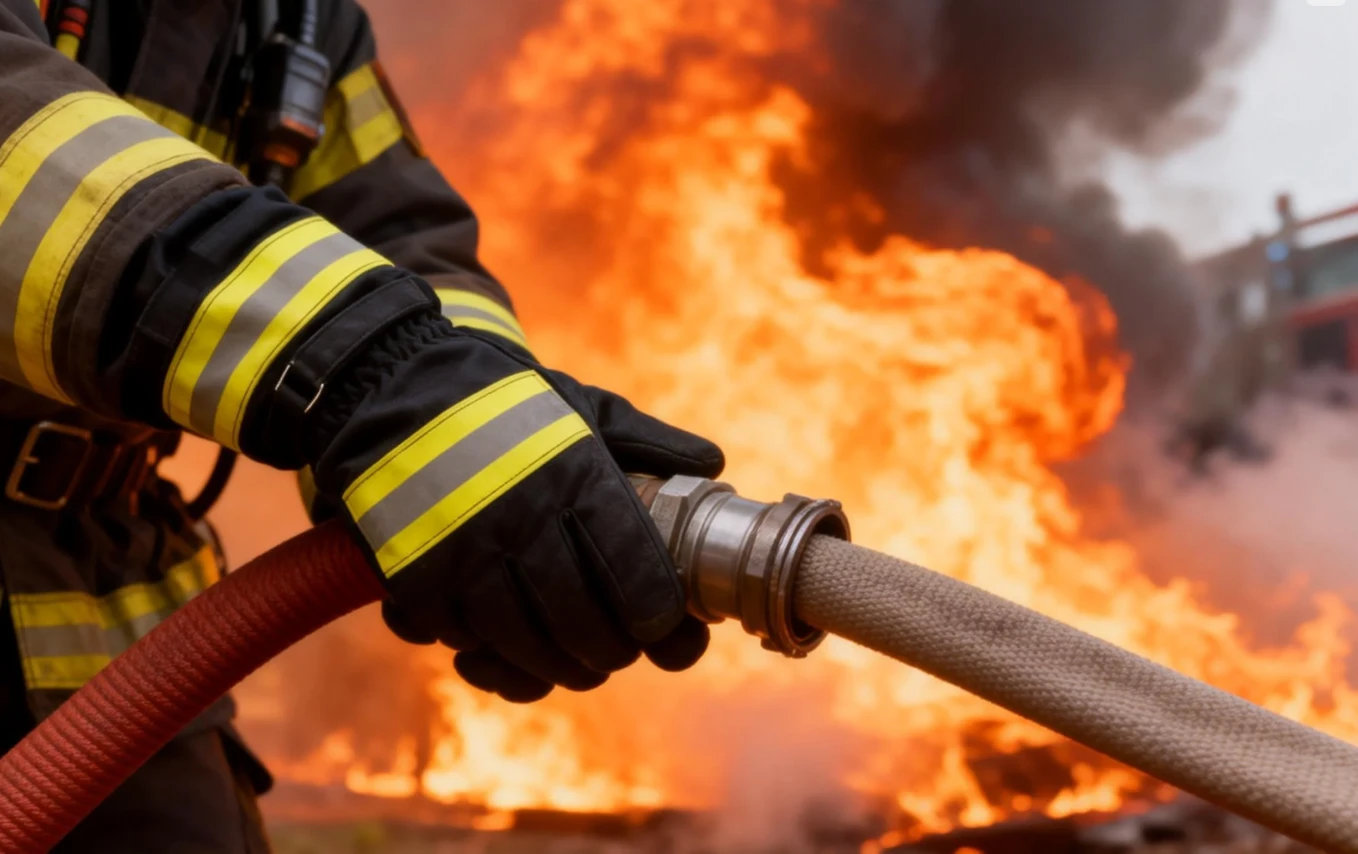
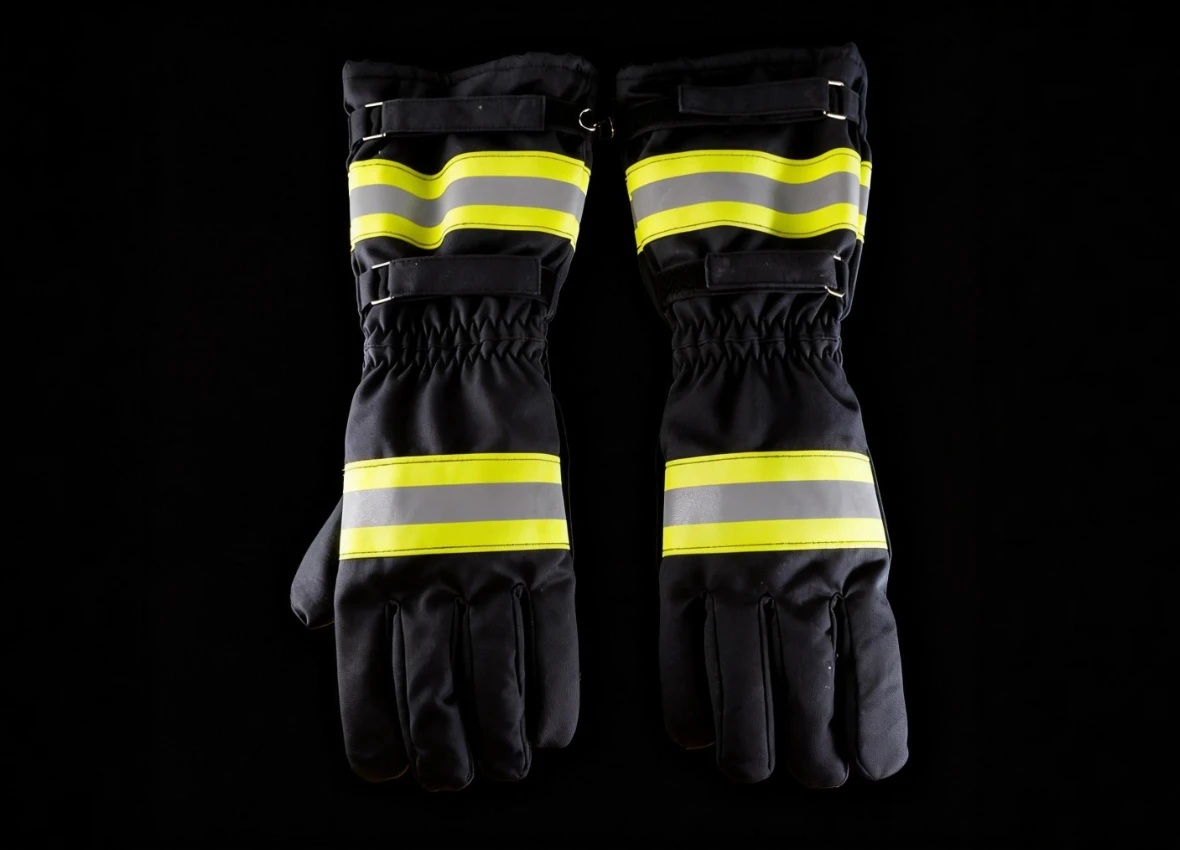
Structural firefighting gloves are built for the interior environment: flame, heat, water, hot surfaces, and the need to work with tools and hose lines while wearing them. Their protection is defined by the firefighting glove standards the market applies, with NFPA 1971 in the United States and EN 659 in Europe, and their design balances thermal protection against the dexterity required to operate equipment.
Proximity gloves are built for high radiant heat where the wearer is not in direct flame contact but is exposed to intense thermal load, typically as part of a reflective proximity ensemble. Their construction emphasises reflective outer surfaces and heavier thermal protection, and they are used for tasks such as fireground entry from a distance, flammable liquid incidents and aircraft rescue work.
Wildland gloves are built for lighter, more mobile operations on vegetation fires: walking with hand tools, moving over rough ground, holding a tool for long periods, and working near radiant heat and embers. Their emphasis is grip, abrasion resistance and light weight, with the level of thermal protection appropriate to that role rather than to interior structural firefighting.
How They Differ in Construction
Fit and sizing sit inside the construction question because they decide whether the layers work. A structural glove that is too large lets the lining move and the grip wander; one that is too small restricts the hand and reduces circulation, which is a comfort and an endurance problem on a long incident. Because the layers are thick, the same nominal size differs between models, so a sizing trial across the crew is worth more in this category than in most, and it should include the cuff arrangement with the sleeve of the turnout coat.
The construction differences follow the environment. Structural gloves combine a leather or heat resistant outer shell, a thermal lining, and a moisture barrier, with seams positioned to reduce ingress and a cuff that covers the wrist and overlaps the sleeve. Proximity gloves add a reflective outer surface over a heavier thermal layer, which increases protection against radiant load and reduces flexibility and feel. Wildland gloves strip back the layers to a single durable construction with reinforced palm and fingertips for grip and abrasion.
Those differences affect care as much as protection. Moisture barriers and reflective surfaces have specific cleaning requirements and can be damaged by the wrong process or temperature, while wildland gloves tolerate more straightforward washing. That is why the care rules belong in the specification: a brigade that washes proximity gloves on the structural cycle will replace them sooner and with less protection in the meantime.
Performance Differences That Matter on Site
Two differences are consistently underestimated. The first is wet performance: gloves that feel secure when dry can become slippery on wet hose or wet tools, and a grip failure during a task is more likely than a thermal failure. The second is drying behaviour after washing, because a glove that takes a long time to dry may be unavailable at the start of the next shift, which leads crews to use a different glove or a spare that does not fit them properly.
| Consideration | Structural gloves | Proximity gloves | Wildland gloves |
|---|---|---|---|
| Dominant exposure | Flame, heat, water, hot surfaces | Intense radiant heat | Radiant heat, embers, abrasion, terrain |
| Dexterity | Designed for tool and coupling work | Limited by the heavier construction | Highest of the three for tool and hand use |
| Water resistance | Moisture barrier as part of the assembly | Reflective outer surface with thermal layers | Varies; not usually a barrier design |
| Care and decontamination | Defined process with inspection of the barrier | Specific process for the reflective surface | Simpler cleaning, attention to grip and wear |
| Typical service pattern | Repeated live fire exposure and washing | Task-specific, often infrequent | Frequent seasonal use, high abrasion |
| Retirement triggers | Barrier damage, seam failure, heat damage, contamination | Surface damage, delamination, loss of reflectivity | Grip loss, holes, worn reinforcement |
Read across the table, the three columns are not grades of the same product. The structural glove is the working glove, the proximity glove is a specialised item for a specific thermal problem, and the wildland glove is a different tool for a different environment. Brigades that operate in all three roles should treat them as separate specifications with separate care rules.
Cost and Service Life Compared
Where budget is limited, the more useful question is which glove each crew needs for the duties they actually perform.
Cost comparisons in this category are dominated by replacement rate rather than unit price. Structural gloves are exposed to heat, water and contaminated environments and are washed frequently, so their service life is measured in exposure cycles and inspection findings. Proximity gloves often last longer in calendar terms because they are used less often, but their reflective surfaces are what fail when they do, and those failures are visible. Wildland gloves wear out through abrasion and grip loss, and are often consumed in a season.
The programme decisions that control the cost are the same in all three cases: a defined inspection interval, clear retirement criteria, a decontamination routine that follows the manufacturer’s instructions, and enough stock that a glove needing withdrawal does not leave a crew without protection. Buying fewer, better-specified gloves and caring for them properly is usually cheaper than buying replacements driven by avoidable damage.
Where the Choice Is Genuinely Commercial
Where a station must equip a large crew, the commercial questions are stock depth and sizing rather than product performance. Holding a realistic spread of sizes, a spare pair per appliance, and a defined replacement budget spread across the year keeps protection available; buying a single bulk size to save on unit price produces a crew wearing gloves that do not fit, and a fit problem in this category is a protection problem as well as a comfort one.
Within one role, the choice between gloves that satisfy the same standard is legitimately commercial. Two structural gloves may both meet the requirement and differ in fit, in the size range, in how the cuff sits over the sleeve, in how long they take to dry after washing, and in how they feel when a tool is gripped. Those differences are real and they are worth comparing, because the glove that is comfortable and dry is the one that stays on the hand.
What is not commercial is substituting one role’s glove for another to simplify stock. A wildland glove used for interior work, or a structural glove used where proximity protection is required, is a specification decision taken for the wrong reason. Where a station holds several types, the labelling and the issue practice should make the role of each glove obvious at the appliance.
How to Trial the Decision Before Committing
Where a service operates across all three roles, the trial should also test the practical separation between them: whether the correct glove for each duty is identifiable at the appliance, and whether the storage and drying arrangements allow it to be available when it is needed. A specification that is technically correct but cannot be followed at two in the morning is not a working specification.
Trials in this category should be run under realistic conditions rather than in a store room. Ask crews to wear the candidate gloves through a drill that includes the tasks they actually perform: advancing and coupling hose, operating tools, opening doors, climbing, and handling equipment with wet or slippery surfaces. Check how the gloves perform when wet, since water changes grip and thermal behaviour and is present in almost every real deployment.
Record what the crews reported and how the gloves performed in the care process, including drying time and any change in fit after washing. Those observations are what turn a purchase into a specification and what an auditor or a procurement review will look for when the next order is justified.
Which Buyer Profile Each Option Suits
Whatever the profile, the issue practice should match the role the glove was specified for.
Three profiles cover most purchasers. A municipal or industrial fire service running structural response needs structural gloves as the working issue, with proximity gloves for specific hazards and wildland gloves if the service covers vegetation fires. An airport or industrial site with flammable liquid risk may need proximity protection more prominently, alongside structural capability for building fires. A forestry, rural or wildland agency needs light, durable gloves specified for that environment, with thermal protection matched to the role rather than borrowed from structural equipment.
The standards and requirements behind the structural glove itself are covered in Shield Wings’ article on firefighting gloves under NFPA 1971 and EN 659, which owns that topic. The products are listed on the firefighting gloves page and within the wider hand protection range.
Shield Wings manufactures firefighting gloves and protective hand equipment at a Guangdong production base and works with fire services, industrial brigades and distributors on role-based specifications, sizing and the documentation each standard requires. The distinction worth writing into the specification is not which glove is strongest, but which glove is issued for which duty.
For the wider topic and related decisions, see our PPE by Industry.
Additional guidance retained during consolidation
Consolidated guidance from firefighting-gloves-nfpa-1971-and-en-659.
Key Takeaways
- NFPA 1971 sets the performance requirements for structural firefighting gloves, covering thermal protection, cut resistance, impact protection, and dexterity, as part of the certified ensemble.
- EN 659 is the European standard for firefighters’ gloves, covering heat and flame protection, dexterity, and mechanical resistance, with performance levels for each property.
- Choose by the operation and the standard: structural firefighting requires NFPA 1971 or EN 659 certified gloves, and the fit must be validated through realistic drills.
- Clean and dry firefighting gloves with the ensemble, inspect them after every fire for damage and contamination, and replace them when the protection is compromised.
What Do Firefighting Gloves Need to Do?
Firefighting gloves must resist heat and flame, protect against cuts and impacts, and keep enough dexterity for the work — a glove that protects but cannot grip a hose is a glove that gets removed at the worst moment.
The hands face heat, debris, and sharp materials on the fireground, and they also do the fine work: coupling hoses, operating tools, and reaching victims. The glove balances thermal protection, cut and impact resistance, and dexterity, and the standard tests all three. The balance is the engineering challenge — too much protection and the hands cannot work; too little and the hands are exposed. The certificate confirms the balance for the exact model.
What Does NFPA 1971 Require?
NFPA 1971 sets the performance requirements for structural firefighting gloves, covering thermal protection, cut resistance, impact protection, and dexterity, as part of the certified ensemble.
| Requirement | What it means |
|---|---|
| Thermal protection | Heat and flame resistance |
| Cut resistance | Protection against debris |
| Impact protection | Cushioning against crushing |
| Dexterity | Ability to handle tools and hose |
NFPA 1971 is the benchmark for structural firefighting in North America, and the glove is certified as part of the ensemble system. The certificate states the standard, the model, and the tested properties. For departments, the glove should come from the same certified ensemble generation as the coat, trousers, hood, and boots, so the system stays consistent.
What Does EN 659 Cover?
EN 659 is the European standard for firefighters’ gloves, covering heat and flame protection, dexterity, and mechanical resistance, with performance levels for each property.
| EN 659 property | What it tests |
|---|---|
| Flame and heat | Thermal protection levels |
| Dexterity | Handling performance |
| Mechanical | Cut, tear, puncture resistance |
EN 659 states performance levels for each property, so the certificate shows how the glove scores on each. For international departments, confirm which standard your market requires, and request cross-certification where the same model serves multiple regions. The standard answers the question: does this glove protect and work?
How Do You Choose Firefighting Gloves?
Choose by the operation and the standard: structural firefighting requires NFPA 1971 or EN 659 certified gloves, and the fit must be validated through realistic drills.
Start with the standard your department’s operations require, then confirm the glove’s performance on each property. Fit matters: the glove must allow the hand to work — gripping the hose, coupling fittings, and handling tools — and the cuff must overlap the coat sleeve without gaps. Run a fit and function trial through a realistic drill, because a glove that fails in the drill will fail on the fireground. The right glove protects and works.
How Do You Care for Firefighting Gloves?
Clean and dry firefighting gloves with the ensemble, inspect them after every fire for damage and contamination, and replace them when the protection is compromised.
Gloves take heavy abuse and contamination, so cleaning is part of the protection. Dry them properly, inspect the palms, fingers, and cuffs for burn-through, tears, and wear, and track each pair’s age and exposures. Replace gloves on the department’s lifecycle plan and after any incident. A glove that is clean, intact, and certified is a glove the firefighter can trust when it counts.
Firefighting PPE selection must follow the department’s standards and maintenance program; confirm every ensemble component against the applicable standard and its certification.
For the wider topic and related decisions, see our PPE by Industry.
Official Resources
References
Frequently Asked Questions
Can one glove cover structural, proximity and wildland work?
No single glove is specified for all three roles. Proximity work involves higher radiant load and reflective protection, structural firefighting requires the combination of thermal protection, water resistance and dexterity that firefighting glove standards define, and wildland work prioritises light weight, grip and durability against radiant heat on vegetation fires. A brigade that operates in more than one role normally carries more than one glove specification.
What is the biggest practical difference between structural gloves?
Dexterity against thermal protection. Every additional layer that improves thermal performance costs some feel, and glove choice within the same standard often comes down to how much manipulation the crew needs for the tasks they perform, such as operating a tool, opening a coupling or handling a hose. Trialling gloves during a drill, in wet conditions and with the tools actually used, is the only reliable way to judge that balance.
How should firefighting gloves be cleaned and inspected?
Follow the manufacturer’s instructions, which normally define the washing process, the drying method and the inspection criteria for the materials, seams and any moisture barrier. Contamination with combustion products is a health issue as well as a performance one, and the care of gloves belongs in the same decontamination routine as the rest of the ensemble. Any glove with damage to the barrier or the shell is withdrawn.
How long do firefighting gloves last?
Service life depends on the number of exposures, the care regime and the conditions they meet rather than on a fixed period. Gloves used for regular live fire, contaminated interiors and repeated washing will age faster than those used mainly for inspection and standby duties. The programme should define inspection intervals and retirement criteria, and record both, rather than relying on a date alone.
What should a specification for firefighting gloves include?
The role the glove is required for, the standard it must be tested to, the size range and fit requirements, the care and decontamination process, the inspection and retirement criteria, and the documentation to accompany each delivery. Where a brigade operates across roles, the specification should state which glove is issued for which duty and make that distinction visible on the appliance.
Specifying gloves by role?
Send the duties, the standards you work to and the tasks the crews perform in gloves. Shield Wings confirms the constructions available, the size range and the documentation for each product.
External references: NFPA 1971 protective ensembles for structural firefighting, NFPA 1977 protective clothing for wildland firefighting, 29 CFR 1910.132, 29 CFR 1910 Subpart I, CEN-CENELEC standards portal, Regulation (EU) 2016/425.
{“@type”:”FAQPage”,”@context”:”https://schema.org”,”mainEntity”:[{“@type”:”Question”,”name”:”Can one glove cover structural, proximity and wildland work?”,”acceptedAnswer”:{“@type”:”Answer”,”text”:”No single glove is specified for all three roles. Proximity work involves higher radiant load and reflective protection, structural firefighting requires the combination of thermal protection, water resistance and dexterity that firefighting glove standards define, and wildland work prioritises light weight, grip and durability against radiant heat on vegetation fires. A brigade that operates in more than one role normally carries more than one glove specification.”}},{“@type”:”Question”,”name”:”What is the biggest practical difference between structural gloves?”,”acceptedAnswer”:{“@type”:”Answer”,”text”:”Dexterity against thermal protection. Every additional layer that improves thermal performance costs some feel, and glove choice within the same standard often comes down to how much manipulation the crew needs for the tasks they perform, such as operating a tool, opening a coupling or handling a hose. Trialling gloves during a drill, in wet conditions and with the tools actually used, is the only reliable way to judge that balance.”}},{“@type”:”Question”,”name”:”How should firefighting gloves be cleaned and inspected?”,”acceptedAnswer”:{“@type”:”Answer”,”text”:”Follow the manufacturer’s instructions, which normally define the washing process, the drying method and the inspection criteria for the materials, seams and any moisture barrier. Contamination with combustion products is a health issue as well as a performance one, and the care of gloves belongs in the same decontamination routine as the rest of the ensemble. Any glove with damage to the barrier or the shell is withdrawn.”}},{“@type”:”Question”,”name”:”How long do firefighting gloves last?”,”acceptedAnswer”:{“@type”:”Answer”,”text”:”Service life depends on the number of exposures, the care regime and the conditions they meet rather than on a fixed period. Gloves used for regular live fire, contaminated interiors and repeated washing will age faster than those used mainly for inspection and standby duties. The programme should define inspection intervals and retirement criteria, and record both, rather than relying on a date alone.”}},{“@type”:”Question”,”name”:”What should a specification for firefighting gloves include?”,”acceptedAnswer”:{“@type”:”Answer”,”text”:”The role the glove is required for, the standard it must be tested to, the size range and fit requirements, the care and decontamination process, the inspection and retirement criteria, and the documentation to accompany each delivery. Where a brigade operates across roles, the specification should state which glove is issued for which duty and make that distinction visible on the appliance.”}}]}