

Two plants can buy the same anti-static garment and get two entirely different outcomes, because “anti-static” answers a question that the environment has already decided: whether the risk is an ignition or a damaged product. In a solvent-handling area, a discharge that a worker never feels can start a fire. On an assembly line for sensitive electronics, the same discharge destroys a component that passes every functional test. The garment is similar in both cases; the specification logic is not.
What This Environment Does to People and Equipment
Static charge is generated by movement: walking, sliding across a seat, removing a jacket, handling film or powder, or moving a dry product through a chute. The charge accumulates on insulating surfaces and on the body, and it leaves suddenly when a conductive path appears. Rate of generation and rate of dissipation decide whether the charge becomes a problem, which is why dry air, synthetic materials and fast movement make every one of these environments worse.
The consequences split along the same line as the hazard.
- Flammable atmospheres. In petrochemical plants, refineries, fuel handling areas and paint or solvent operations, the credible event is ignition of a flammable vapour or gas. The energy needed is small, and the assessment usually treats the control of ignition sources as the governing objective.
- Combustible dust. Powder handling, milling, blending, and dry bulk transfer can form a dust cloud; the assessment focuses on the dust’s ignition sensitivity and on preventing charge accumulation in the cloud and on surfaces.
- Electrostatic discharge damage. In electronics manufacturing and assembly, the product is the victim. A discharge well below the threshold of human perception can damage or degrade components, with failures that appear later in the field rather than at the station.
These are engineering and process problems that clothing can only mitigate. Treating the garment as the primary control leads to specifications that look rigorous and still leave the exposure in place.
The Hazards That Drive the Specification
The specification starts from the assessment, which in these environments is usually an ignition hazard assessment, a hazardous area classification, or an ESD control programme. Each of them produces a statement that the garment has to fit: what the atmosphere is, where it can be present, how sensitive the product is, and what the site’s existing controls already achieve.
For a buyer, three questions determine whether the requirement is stated precisely enough to quote against. First, what is the classification of the area where the task happens, and does the worker move between classified and unclassified areas during the shift? Second, which parts of the body contact the product, the tools and the surfaces, since a garment specification that stops at the torso leaves sleeves and gloves unaddressed? Third, what does the site already do about grounding, flooring and humidity, because the garment depends on those measures rather than replacing them?
The employer’s assessment sets the requirement. A supplier can explain what a garment’s test certificate covers, and can propose material and construction options for the conditions described, but it cannot decide the classification of someone else’s plant.
Controls That Come Before the Equipment
Personal protective equipment is the last line of defence in every environment discussed here, and charge control is an area where the earlier controls are unusually effective. Bonding and grounding of equipment, conductive flooring, humidity control, ionisation at critical stations, avoiding unnecessary insulating materials, maintaining housekeeping so that dust does not accumulate, and controlling transfer speeds are all measures that reduce the problem rather than containing it.
They also change the specification. A site with effective grounding and humidity control can specify a garment for the residual risk; a site relying on clothing to compensate for an ungrounded process will keep chasing a higher and more expensive specification without removing the hazard. Where the assessment shows that an ignition source has been engineered out in the normal case, it should also say what happens in the abnormal case, because that is very often where the protective clothing requirement actually comes from.
Administrative controls such as permit-to-work systems, exclusion zones and procedural rules for handling flammables sit between the engineering measures and the clothing, and they carry the training and supervision load that PPE cannot. Where these controls are strong, the garment specification becomes narrower and cheaper to maintain, and the buyer should be able to see that reduction in the assessment rather than infer it from a purchase history.
It is worth documenting which of these measures are permanent and which are temporary. Temporary grounding during a turnaround, a temporary ventilation arrangement, or a dehumidifier brought in for a seasonal problem all change the exposure, and a specification written for the modified condition should revert when the modification is removed. Teams that record this in the assessment avoid the common situation where a garment was selected for a condition that no longer exists, or where a control was quietly discontinued while the clothing requirement stayed the same.
What the Equipment Has to Do Here
The performance aim of anti-static clothing is to prevent charge from accumulating on the wearer and to allow charge to dissipate in a controlled way rather than in a spark. In the European framework that property is tested under EN 1149-1, which addresses the surface resistance of the material. The standard defines a material property; it does not by itself guarantee a safe system, which is why the assessment and the complementary measures matter.
Three design consequences follow. The garment has to be part of a conductive path, which means that footwear, flooring and, in electronics work, wrist or heel straps are part of the same specification. The property has to survive the way the garment is worn and maintained, so care instructions and construction — that is, how the conductive elements run through the fabric and the seams — are part of the technical claim. And accessories have to be consistent with the garment: metal fasteners, insulating outer layers, non-conductive badges and even a coat worn under a jacket can interrupt the path the garment was bought to create.
Where the environment combines static risk with another hazard, the garment must satisfy both, and each property has to be supported by its own test evidence. A garment chosen for anti-static performance is not thereby heat protective or arc rated, and the two claims should never be assumed to travel together.
Selection Criteria Specific to This Sector
The table below sets out what changes between the three environments. It stops at the level of the selection criteria, because the classification of an area and the required garment class come from the site’s own assessment.
| Environment | Objective | Property that carries the claim | Complementary measures to verify |
|---|---|---|---|
| Electronics and PCB assembly | Prevent ESD damage to product | Dissipative garment plus grounded wrist or heel path | Flooring, work surfaces, ionisation, monitoring records, ESD programme audit |
| Petrochemical, fuel and solvent handling | Remove an ignition source in a flammable atmosphere | Anti-static garment tested to EN 1149-1, worn as a system | Bonding and grounding, area classification, permit controls, footwear and flooring |
| Powder and dry bulk handling | Prevent charge accumulation in a dust cloud | Anti-static garment plus control of charge generation | Dust hazard assessment, housekeeping, earthing of equipment, humidity |
| Mixed-use sites with classified zones | Keep the specification valid wherever the worker goes | Garment class that satisfies the most demanding area on the route | Zoning maps, movement rules, changing procedures at boundaries |
Two practical criteria are usually added by experienced buyers. The first is a launderability requirement: the standard the garment is tested to assumes specific care, and a site that uses an industrial laundry has to confirm that the laundry process matches it. The second is the size and layering rule, because a fitted garment worn over insulating street clothing behaves differently from the same garment worn over a dissipative base layer.
Typical Specification Failures in This Sector
Failures here are rarely about the fabric itself. They are about the system around it, and they recur often enough to be predictable.
- Treating the garment as the whole control. A dissipative jacket on an ungrounded body with insulating footwear does not provide the path the design assumes.
- Insulating layers underneath. Base layers, fleeces and waterproofs chosen for comfort can isolate the wearer from the dissipative outer layer.
- Care practices that defeat the fabric. Fabric softeners, aggressive drying and unapproved repairs are common causes of lost performance; the manufacturer’s care label governs.
- Confusing anti-static with shock protection. These garments are not insulation for electrical work, and a specification that treats them as such has misread the hazard.
- Ordering by appearance. Colour, logo and weight are visible; the marking and the test report are what carry the claim.
- Ignoring accessories. Non-conductive badge holders, tool belts, mobile phone pouches and chair materials all sit inside the same problem.
- Skipping the abnormal case. Sampling, maintenance and cleaning often create the exposure the routine task does not.
Each of these is cheaper to correct in the specification than in the plant, and each is visible to an auditor who reads the assessment alongside the clothing.
Building the Full Set Rather Than Buying Pieces
Because charge control is a system property, the buying decision should be made as a set. The garment, the footwear, the flooring and the means of monitoring are specified together, and the documentation for each item is filed together, so that an internal audit or a customer assessment can follow the logic from hazard to product in one pass.
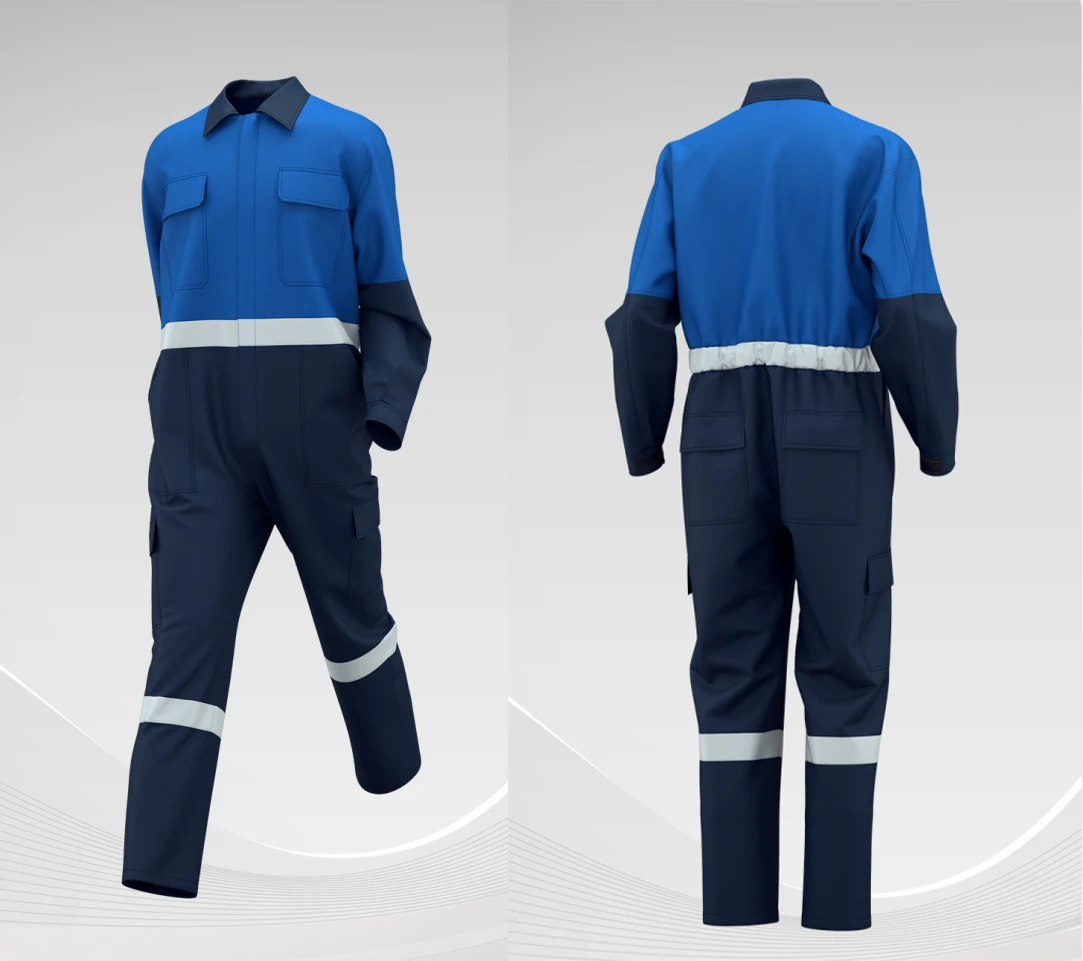
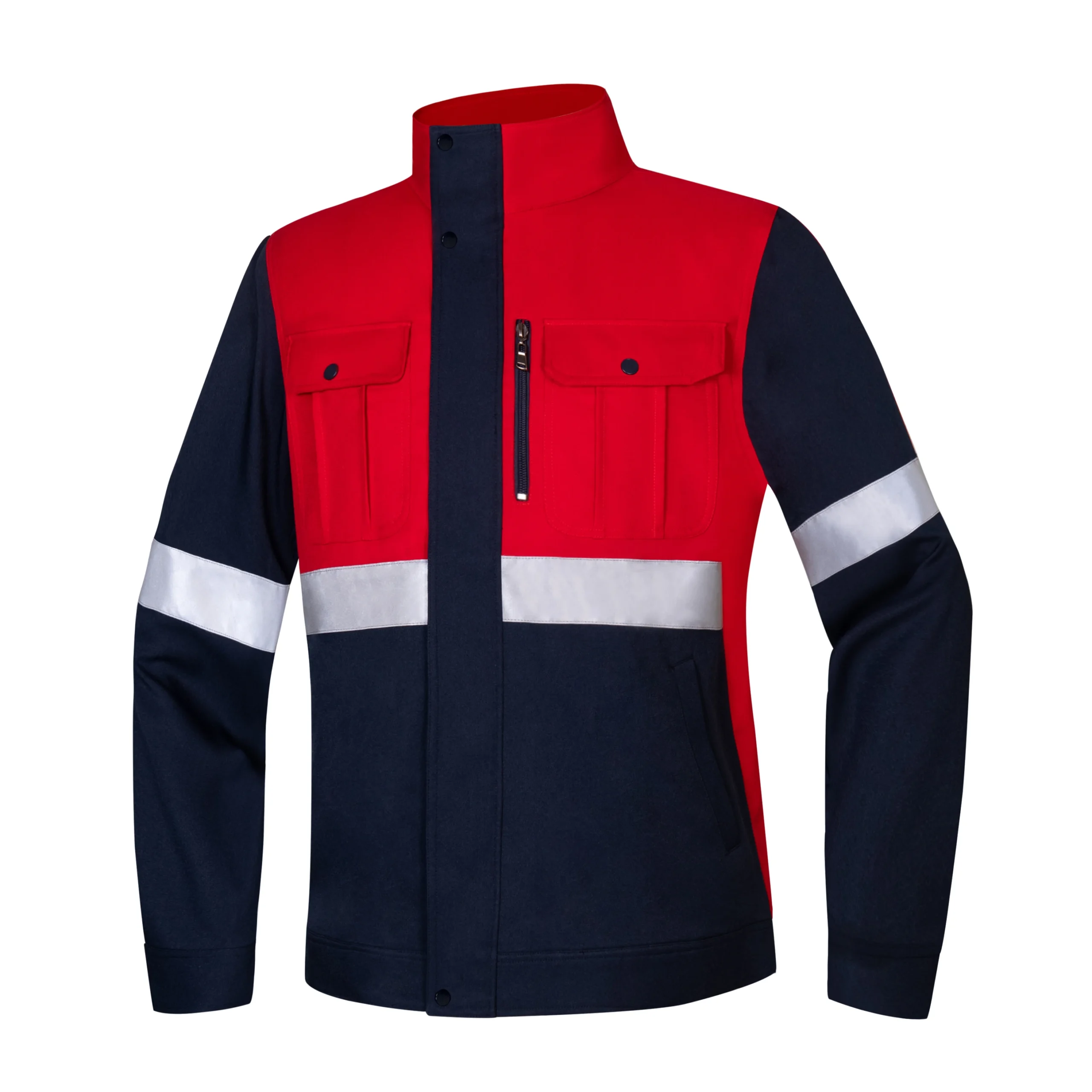
Shield Wings manufactures anti-static workwear within its body protection range, including coveralls and jacket options developed for electronics, petrochemical and industrial environments, with material testing and care instructions supplied for procurement files. For the difference between the two terms most often mixed up in purchase orders, the site’s explanation of ESD versus anti-static clothing is the page that owns that distinction.
The decision that matters most is not which garment has the lowest surface resistance. It is whether the garment, the footwear, the floor and the site’s procedures together create the controlled path the assessment assumes — and whether the paperwork proves it.
For the wider topic and related decisions, see our Hi-Vis, Anti-Static & Cold Weather Workwear.
Frequently Asked Questions
Does anti-static clothing protect the wearer from electric shock?
No. Anti-static clothing is designed to avoid accumulating and discharging static charge; it is not insulation and it does not provide shock protection. Clothing for live electrical work is a different specification, with its own testing and its own requirements. Treating a dissipative garment as shock protection is a serious misreading of the marking, and the two properties should never be substituted for each other in a specification.
Does an anti-static garment work on its own?
Only as part of a path. Charge has to be able to leave the body and reach a controlled ground, which means the garment works together with footwear, flooring and, in electronics assembly, wrist or heel straps. A dissipative garment worn with insulating footwear on an insulating floor still leaves charge on the person, so the protection is designed and verified as a whole system rather than as a single item.
Why does humidity matter for static control?
Low humidity reduces the rate at which charge dissipates from surfaces, so static problems worsen in winter and in air-conditioned or heated areas with dry air. Humidity control is an engineering measure that reduces charge generation and accumulation before clothing is considered, and it is usually cheaper than specifying higher-performing garments to compensate for a dry environment.
Can anti-static clothing be laundered like ordinary workwear?
Only according to the garment’s care instructions. The anti-static property depends on the fabric construction and the way it is maintained; fabric conditioners, some detergents, high-temperature drying and repairs that add insulating materials can all affect the performance. The manufacturer’s care label controls, and the site’s laundering procedure should be written to match it. Repairs and alterations outside the instructions should be avoided.
What evidence should a buyer request with anti-static clothing?
Ask for the test report or declaration that names the standard the garment is tested to, the product line it covers, the production site, and the care conditions under which the property is maintained. Where the end user has to satisfy an internal ESD programme or a site ignition assessment, the garment documentation is only part of the set: the footwear, flooring and monitoring records belong to the end user’s programme.
Specifying for a classified area or an ESD programme?
Describe the environment and the complementary measures already in place. Shield Wings technical support confirms which garment properties the specification can be documented against, and what the test paperwork will cover.
External references: CEN-CENELEC standards portal, Regulation (EU) 2016/425 on personal protective equipment, 29 CFR 1910 Subpart I, 29 CFR 1910.132, UK HSE personal protective equipment guidance, CCOHS PPE answers.