

The most predictable non-compliance in eye protection is a worker who needs corrective lenses. Without a programme, that worker wears ordinary spectacles in an area where everyone else wears safety eyewear, or wears a loose over-spectacle that fogs and slides, or takes the safety eyewear off whenever a task needs close vision. A prescription programme is the control that removes that choice, and it works when the specification, the fitting and the issue process are designed together.
Why the Programme Outlives the Product Choice
There is also a fairness dimension that shows up in audits and in staff surveys. Where corrective protection is provided, it should be provided on the same terms across the group: the same entitlement, the same turnaround, the same replacement rule. Sites that handle requests informally end up with different outcomes for workers in identical roles, which is both a management problem and, in some jurisdictions, a question of equal treatment that the employer would rather resolve in advance.
Frames are discontinued, lens materials change, and workers move between sites and roles. The programme is what survives: the assessment that identifies who needs corrective protection, the specification that says what counts as compliant, the dispensing arrangements that make it practical, and the records that show who has what. Sites that treat prescription eyewear as an occasional purchase end up with a mix of products, some of which are compliant and some of which merely look similar.
The commercial argument is not about the cost of a pair of spectacles. It is about the cost of the alternative, which is either an injury or a workforce that quietly works without the protection. Both outcomes are more expensive than a defined entitlement with a clear specification, and the second is the more common of the two.
Assessment, Selection and Issue
Fit deserves particular attention because it is where prescription eyewear differs from standard eyewear. A prescription frame has to hold the optical centre in the right place while also staying in position during the task, which means the frame, the bridge width, the temple length and the side protection all have to suit the individual. Dispensing should therefore include a check of the eyewear in the working position — looking down at a bench, looking up at equipment, wearing a helmet or hearing protection — rather than a check in front of a mirror.
Where the task requires a full-face assembly, an insert kept behind the outer protection is often the more practical route, because the outer product remains a standard, replaceable item and the correction travels with the wearer between tasks. Where the task allows spectacles alone, prescription safety eyewear with side protection is usually the better answer. Either way, the decision should be recorded against the worker, together with the hazard it was made for.
Eye and face protection requirements sit in 29 CFR 1910.133 in the United States, with selection obligations in 29 CFR 1910.132; European sites work through the PPE Regulation and the applicable eye and face protection standards. The assessment identifies the hazard and the required performance, and it also identifies who needs corrected vision to work safely.
Selection then has to answer a practical question: which form of corrective protection suits this person and this task? Three routes are commonly available, and they are not interchangeable.
- Prescription safety eyewear — a frame and lens combination made and tested to the eye and face protection standard, with side protection where the task requires it.
- Over-spectacle designs — protective eyewear intended to be worn over ordinary spectacles, useful for visitors and for immediate cover, but dependent on fit over the specific frames a worker wears.
- Prescription inserts — a corrective carrier worn behind protective eyewear or inside a full-face assembly, which keeps the outer protection intact and the correction inside it.
Issue is where the programme has to be honest about time. A worker who cannot see clearly will not wait three weeks for a compliant pair, so a programme should define a temporary provision — typically an over-spectacle arrangement for low-hazard areas combined with a restriction on task allocation until the correct product arrives. The alternative, which is to leave the worker unprotected in the interim, is the most common failure in this category.
Training and Competence Evidence
It is worth including the prescription change in the same conversation as the issue. Workers need to know how a change in their vision is reported, how quickly it triggers a replacement, and what they should do in the meantime. Without that route, the natural response to blurred vision is to stop wearing the eyewear, and the reason for the removal is rarely recorded anywhere.
Training for a prescription programme covers the same ground as general eye protection, plus the specifics of the individual’s product. The wearer should know what hazard the eyewear is specified for, when it must be worn, how it is cleaned, what condition would make it unsuitable, and what to do if the prescription changes. For those using inserts, the training includes fitting the insert and confirming that the outer protection is still in place.
Supervisors need their own briefing, because the questions arrive at the workstation. What should a supervisor do when a worker says their prescription spectacles are fine for a task? What is the route for a replacement when a frame breaks? Who approves an over-spectacle as temporary cover? A short written answer to those three questions prevents most daily disputes.
Inspection Frequency by Hazard Class
| Item | Inspection arrangement | Who performs it | Record |
|---|---|---|---|
| Prescription safety eyewear in daily use | Pre-use check of clarity, frame condition, side protection and fit; replacement when damaged or when the prescription changes | Wearer | Issue record and replacement history |
| Side shields and accessories | Checked with the frame, since the protection depends on the assembly as supplied | Wearer, with supervisor checks | Configuration noted with the issue record |
| Over-spectacle designs | Checked for fit over the specific spectacles in use, and for gaps at the sides and brow | Wearer, with supervisor checks | Issue record noting the intended use |
| Prescription inserts | Checked for secure seating inside the outer protection and for cleanliness | Wearer | Recorded with the outer protective equipment |
| Goggles used with corrective eyewear | Seal and compatibility checked in the combination worn | Wearer, with periodic check | Inspection record where shared |
The recurring inspection issue in this category is that the protection is a combination. A frame, a lens and a side shield supplied together are one product, and a replacement component from elsewhere may not maintain the performance the assembly was tested for. The specification should say that components are replaced as supplied, and the issue record should note the configuration.
Record Keeping for Audits and Incidents
The record set has a safety element and a personal-data element, and they should be kept distinct. The safety record shows that the requirement was identified, that compliant eyewear was provided, and that it was inspected and replaced as needed. It does not need the prescription itself beyond what is required to order a replacement. Prescription details are personal data and should be held with restricted access rather than circulated with the issue list.
Two further records pay for themselves. Note the date of issue for each pair, so that a replacement cycle can be planned rather than triggered by a failure. And record the reason for replacement, because a pattern of damaged frames in one area usually points to a storage or handling problem that a new pair will not fix.
Retirement, Replacement and Stock Control
Multi-site programmes need one further decision: whether a worker’s eyewear is replaced at the site where they are based or through a central process. Local replacement is faster and usually better for the worker, while central specification keeps the products consistent. A workable arrangement is a centrally defined specification with a local ordering route against an agreed entitlement, which keeps the technical content identical while removing the delay that drives non-compliance.
It is also worth planning for the worker who leaves or changes role. Eyewear issued to an individual does not transfer, and the equipment should either be withdrawn or returned for disposal under the site’s policy, with the issue record closed. That single administrative step prevents the storeroom from accumulating anonymous prescription eyewear that nobody can verify or reissue.
Prescription eyewear is retired when it is damaged, when the prescription changes, when the coating or lens clarity is compromised, or when the task changes and a different performance is required. The programme should also define who is responsible for periodic re-examination, since corrective protection only works while the prescription matches the wearer’s vision.
Stock control is different from non-prescription eyewear because prescriptions are individual. A practical arrangement is to hold a small stock of over-spectacle designs for immediate use and visitors, keep a defined entitlement per worker, and schedule replacements rather than waiting for a breakage. Where a site operates several locations, centralising the specification and the supplier while dispensing locally usually gives the best balance of consistency and turnaround.
Making the Programme Survive Contact With Operations
The options available, including prescription safety eyewear and the inserts used with it, are described in Shield Wings’ article on safety glasses with prescription options, which owns that topic. What makes a programme work in practice is the administration around it: one appointment for the examination and the dispensing, a temporary provision that is actually available, a replacement route that does not require the worker to explain the situation twice, and a written entitlement that applies the same way at every site in the group.
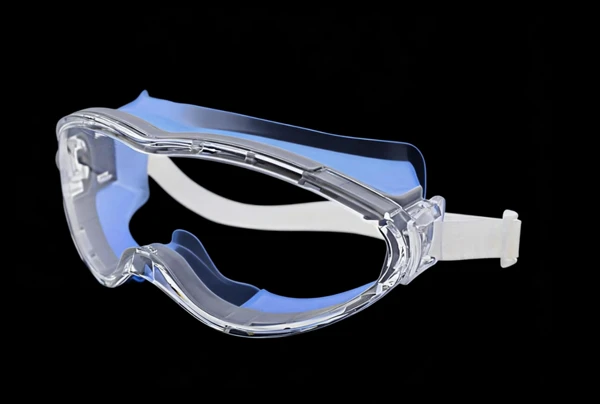
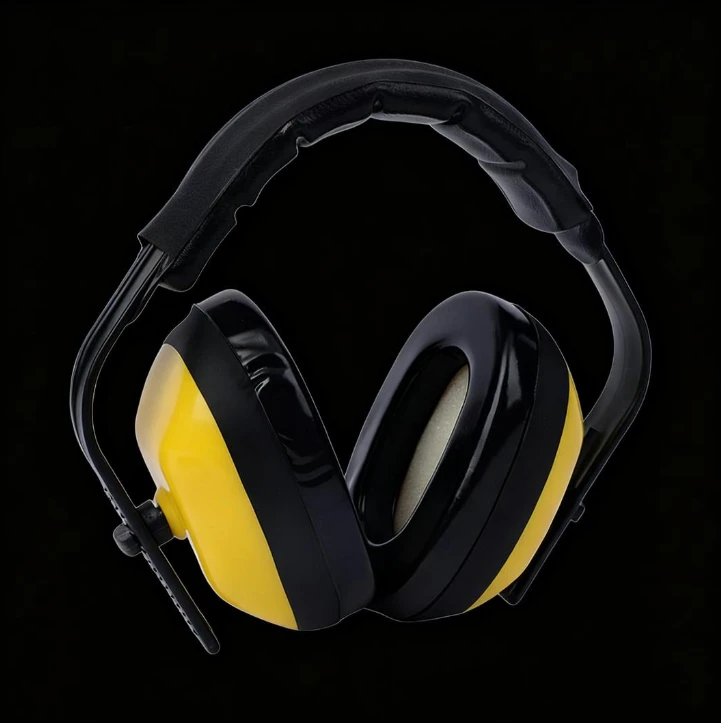
Shield Wings manufactures eye and ear protection at a Guangdong production base, including the safety spectacles that prescription programmes are built around, and supports distributors and site teams with product information and documentation for the specifications involved. The full range sits in the eye and ear protection category, with the spectacles listed on the safety glasses page.
The test of a prescription programme is whether anyone in a hazardous area is wearing eyewear that was not specified for the task. If the answer is yes, the programme is missing a route rather than a product.
For the wider topic and related decisions, see our Head, Face & Eye Protection.
Frequently Asked Questions
Are ordinary prescription glasses acceptable as eye protection?
No. Ordinary spectacles are not made or tested to the eye and face protection standard, and their frames and lenses are not designed to resist impact in the way the standard requires. Where a worker needs correction in a hazardous area, the options are prescription safety eyewear, an over-spectacle design intended for that use, or a prescription insert worn behind protective eyewear. The choice depends on the hazard and on fit.
Should the employer provide prescription safety eyewear?
In the United States, where an employer is required to provide eye protection, the requirement applies to the protection needed for the hazard, which in practice includes corrective protection for workers who cannot wear non-prescription eyewear. European practice and local agreements vary, and the site should confirm its own obligation. Whichever route applies, the programme works better when the entitlement is defined in writing rather than settled case by case.
What makes a prescription safety frame different?
The frame and lens combination is made and tested to the eye and face protection standard, which affects the frame material, the lens thickness and material, the side protection and the marking. A fashionable frame with safety lenses fitted is not the same product. Where a specification demands side protection and impact performance, the frame, lens and side shield have to come from a product made to that standard as a unit.
How long should a prescription eyewear programme take to issue?
The programme should define a turnaround and a temporary provision, because the delay between ordering and issue is the period when workers wear something else. A meaningful approach is to combine the eye examination and dispensing into one appointment, keep a small stock of over-spectacle designs for immediate use, and record the date of issue so that a replacement cycle can be planned rather than discovered.
What records should the programme keep?
The assessment that requires corrective protection, the issue record linking each worker to the product supplied, the prescription details needed for replacement, the inspection and replacement history, and the equality of treatment across sites. Prescription information is personal data and should be held accordingly, with access limited to those who need it for ordering and replacement rather than circulated with the issue list.
Setting up a prescription eyewear programme?
Send the tasks, the hazards and the number of workers involved. Shield Wings confirms the eyewear families available, the marking each carries and the documentation a programme needs to record what was issued.
External references: 29 CFR 1910.133 eye and face protection, 29 CFR 1910.132, CCOHS PPE answers, UK HSE personal protective equipment guidance, CEN-CENELEC standards portal, Regulation (EU) 2016/425.
{“@context”:”https://schema.org”,”@type”:”FAQPage”,”mainEntity”:[{“@type”:”Question”,”name”:”Are ordinary prescription glasses acceptable as eye protection?”,”acceptedAnswer”:{“@type”:”Answer”,”text”:”No. Ordinary spectacles are not made or tested to the eye and face protection standard, and their frames and lenses are not designed to resist impact in the way the standard requires. Where a worker needs correction in a hazardous area, the options are prescription safety eyewear, an over-spectacle design intended for that use, or a prescription insert worn behind protective eyewear. The choice depends on the hazard and on fit.”}},{“@type”:”Question”,”name”:”Should the employer provide prescription safety eyewear?”,”acceptedAnswer”:{“@type”:”Answer”,”text”:”In the United States, where an employer is required to provide eye protection, the requirement applies to the protection needed for the hazard, which in practice includes corrective protection for workers who cannot wear non-prescription eyewear. European practice and local agreements vary, and the site should confirm its own obligation. Whichever route applies, the programme works better when the entitlement is defined in writing rather than settled case by case.”}},{“@type”:”Question”,”name”:”What makes a prescription safety frame different?”,”acceptedAnswer”:{“@type”:”Answer”,”text”:”The frame and lens combination is made and tested to the eye and face protection standard, which affects the frame material, the lens thickness and material, the side protection and the marking. A fashionable frame with safety lenses fitted is not the same product. Where a specification demands side protection and impact performance, the frame, lens and side shield have to come from a product made to that standard as a unit.”}},{“@type”:”Question”,”name”:”How long should a prescription eyewear programme take to issue?”,”acceptedAnswer”:{“@type”:”Answer”,”text”:”The programme should define a turnaround and a temporary provision, because the delay between ordering and issue is the period when workers wear something else. A meaningful approach is to combine the eye examination and dispensing into one appointment, keep a small stock of over-spectacle designs for immediate use, and record the date of issue so that a replacement cycle can be planned rather than discovered.”}},{“@type”:”Question”,”name”:”What records should the programme keep?”,”acceptedAnswer”:{“@type”:”Answer”,”text”:”The assessment that requires corrective protection, the issue record linking each worker to the product supplied, the prescription details needed for replacement, the inspection and replacement history, and the equality of treatment across sites. Prescription information is personal data and should be held accordingly, with access limited to those who need it for ordering and replacement rather than circulated with the issue list.”}}]}