

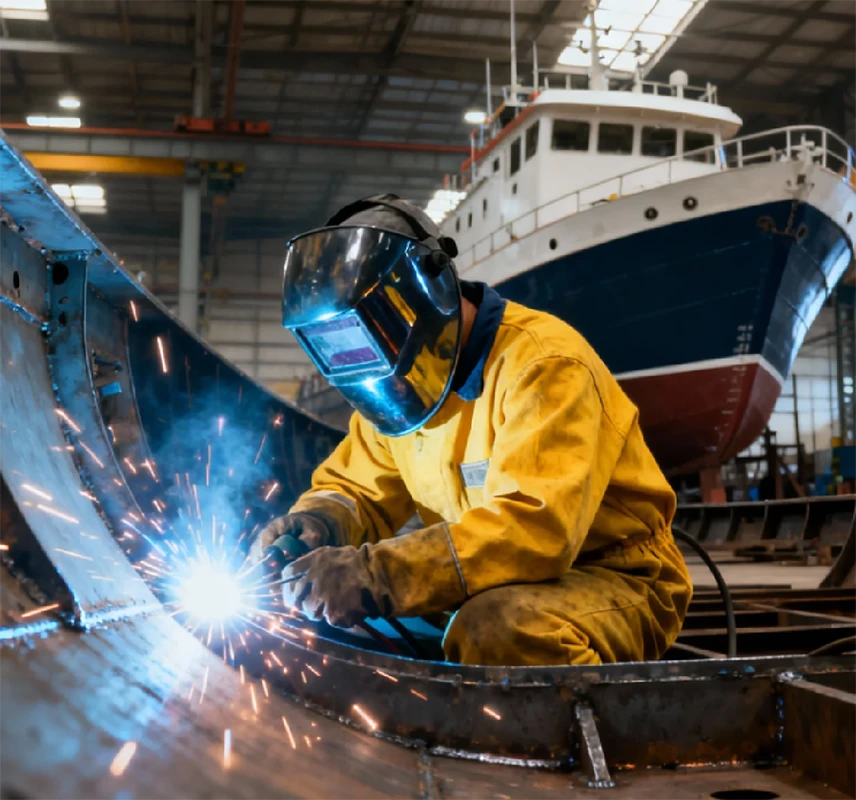
Welding safety equipment fails in two predictable ways: the welder takes the helmet off to see the joint, and nobody notices the fume because the arc is the obvious danger. Both are specification problems, not discipline problems — the shade was wrong for the current, or the extraction was never sized to the work. This guide covers the full kit and the numbers that decide each part of it.
(Last modified date: October 2, 2026)
Key Takeaways
- Welding exposes a worker to five separate hazards — arc radiation, spatter and molten metal, heat, fume, and noise — and each one has its own control.
- Filter shade is set by the process and the current, not by the process alone. OSHA 1910.252 Table J-1 gives the minimum shade by operation and electrode size.
- Fume extraction is sized in air flow, not by whether the extractor “looks adequate”. 1910.252 Table 2 ties required air flow to the distance from the arc.
- Critical items need certification on the exact model: EN 379 or ANSI Z87.1 for helmets and eye protection, the applicable FR standard for clothing, heat and cut ratings for gloves.
- Start from the hazard assessment and the welding process, then match shade, FR level, glove type and ventilation to the task.
What Has to Be Protected, and From What
Welding safety products are the PPE and controls — helmets, FR clothing, gloves, eye and hearing protection, and ventilation — that stand between a welder and arc radiation, heat, spatter, fume and noise.
The five hazards behave differently, which is why no single item covers them. Arc radiation is light and ultraviolet energy that damages the eye and burns exposed skin, so it is answered by the helmet lens and by clothing that covers what the helmet does not. Spatter and molten metal are physical projectiles that need a barrier rather than a filter. Heat accumulates through the garment during sustained work. Fume is a respiratory exposure that PPE cannot fix at the source and has to be extracted. Noise comes from the process itself and from grinding between passes.
Grouping them matters because the specification for one frequently constrains another: a heavier FR garment for heat changes the fit over the gloves, a larger helmet for a face shield changes the wearer’s downward vision, and extraction positioned between the welder and the work changes how the welder stands. The kit is a system.
Which Filter Shade Does the Job Require?
Shade is set by the operation and the electrode or material thickness — not by a single number for “welding”.
In the United States the minimum is set by regulation. OSHA 1910.252, Table J-1 gives filter lens shades by operation and electrode size. The values below are the minimums from that table; a site procedure or a risk assessment may require more.
| Operation | Minimum shade |
|---|---|
| Soldering | 2 |
| Torch brazing | 3 or 4 |
| Light cutting, up to 1 inch | 3 or 4 |
| Gas welding (light), up to 1/8 inch | 4 or 5 |
| Medium cutting, 1 to 6 inches | 4 or 5 |
| Gas welding (medium), 1/8 to 1/2 inch | 5 or 6 |
| Heavy cutting, 6 inches and over | 5 or 6 |
| Gas welding (heavy), 1/2 inch and over | 6 or 8 |
| Shielded metal-arc welding, 1/16 to 5/32 inch electrodes | 10 |
| Atomic hydrogen welding | 10–14 |
| Gas-shielded arc welding (nonferrous), 1/16 to 5/32 inch electrodes | 11 |
| Gas-shielded arc welding (ferrous), 1/16 to 5/32 inch electrodes | 12 |
| Shielded metal-arc welding, 3/16 to 1/4 inch electrodes | 12 |
| Carbon arc welding | 14 |
| Shielded metal-arc welding, 5/16 to 3/8 inch electrodes | 14 |
Two practical consequences follow. The first is that an auto-darkening helmet whose shade range does not span the operation has to be replaced, not adjusted — a passive helmet with a fixed shade is chosen around the process, and an ADF helmet earns its price by covering every process in the shop. The second is that shade and optical class are separate properties: a lens can be the right shade and still distort the view at the edges, which is what the optical class in EN 379 and ANSI Z87.1 measures.
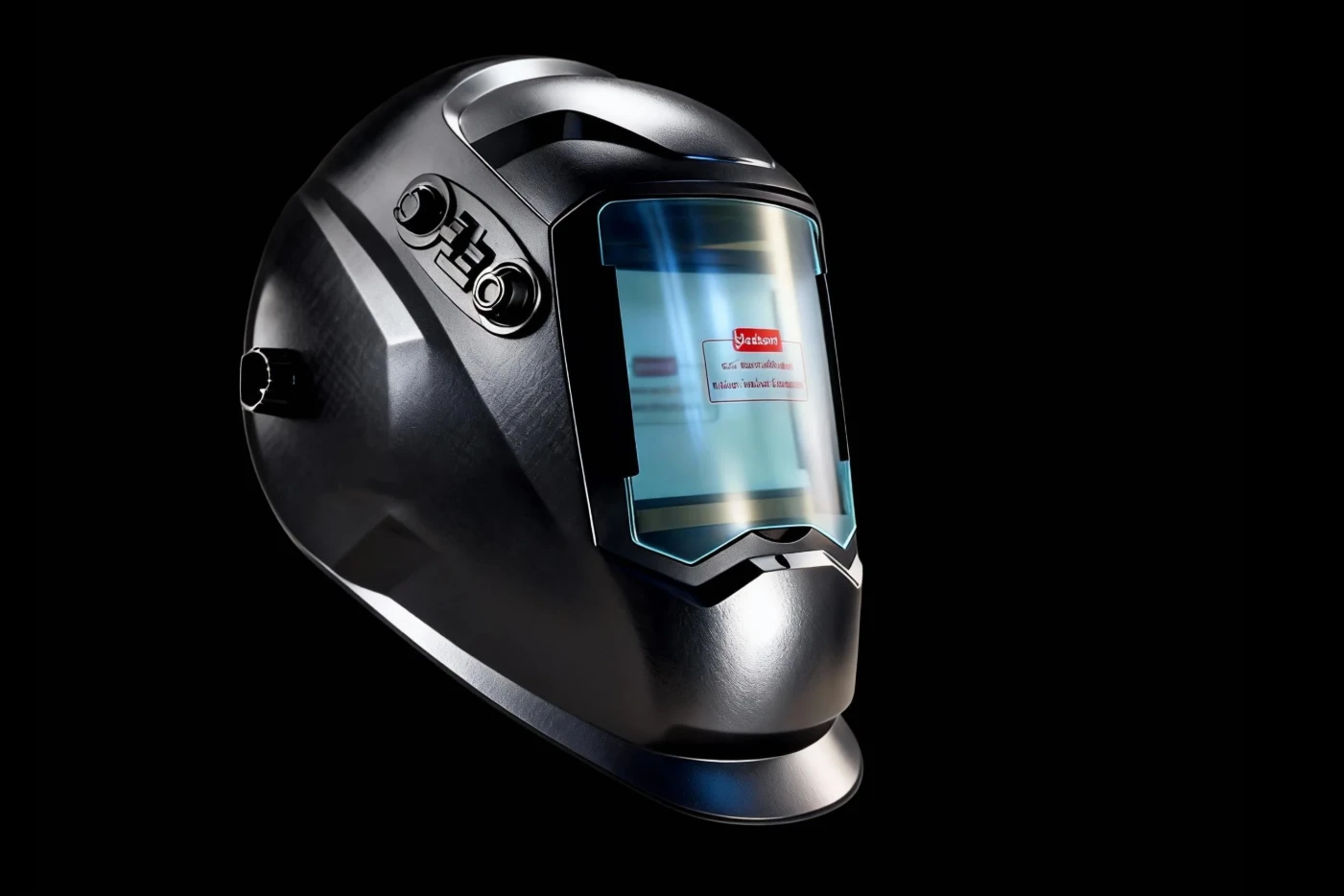
An adjustable shade range is what lets one helmet cover several processes.
Fume Control: the Part That Gets Sized Last and Matters Most
Fume extraction is specified in air flow at a given distance, not chosen by eye.
Welding fume is the exposure that protective clothing does nothing about, and it is the one most often handled with a general ventilation assumption. OSHA 1910.252 sets the requirement in measurable terms: for the ventilation to be adequate, the air flow has to increase as the extraction hood moves further from the arc, and the duct has to be sized to carry it. This is the table behind that requirement:
| Distance from arc or torch | Minimum air flow (cfm) | Duct diameter (inches) |
|---|---|---|
| 4 to 6 inches | 150 | 3 |
| 6 to 8 inches | 275 | 3½ |
| 8 to 10 inches | 425 | 4½ |
| 10 to 12 inches | 600 | 5½ |
The operational lesson is in the shape of the numbers: moving the hood from four inches to twelve inches multiplies the required flow by four. An extractor that worked on the bench can be inadequate the moment the work moves somewhere the hood cannot follow — which is exactly what happens on site, in a confined space, or on a large fabrication. That is a planning problem to solve before the job, not a PPE problem to solve afterwards.
The Rest of the Kit
Helmet, FR clothing, gloves, eye and hearing protection, and extraction — each specified against the hazard it answers, not chosen as a set.
FR clothing covers the forearms, torso and legs that the helmet does not, and the fabric family matters for how it survives its service life — inherent versus treated is covered in FR clothing fabrics explained. Gloves have to answer two hazards at once, heat and cut, and a glove that is rated for one is not automatically rated for the other — the selection logic sits in welding gloves: types, heat ratings and selection. Safety glasses with side shields are worn under the helmet for the moments the helmet is raised — chipping, grinding and inspection. Hearing protection is set by the noise of the process and the surrounding shop rather than by the welding alone.
Underneath all of it is the same obligation that governs every PPE decision: 1910.132(d) requires a hazard assessment, selection of equipment that protects against the hazards identified, communication of that selection to each affected employee, proper fit, and a written certification of the assessment.
Do Welding Safety Products Need Certification?
Yes, for the items where failure is not survivable, and the certificate has to cover the exact model you are buying.
Helmets and eye protection should meet EN 379 or ANSI Z87.1; FR clothing should meet the applicable flame-resistance standard; gloves should carry heat and cut ratings from the relevant test methods. The distinction that matters in procurement is between a product family that holds a certificate and the specific model, size and production batch you are receiving. Ask for the test report for the model, not the range.
Two habits make that easy to enforce. Put the standard and the certificate reference against each line in the specification, so a substitution is visible immediately. And order a sample before a bulk commitment, then use the sample to confirm the shade range, the fit over the gloves and the optical class on real work rather than in a meeting room.
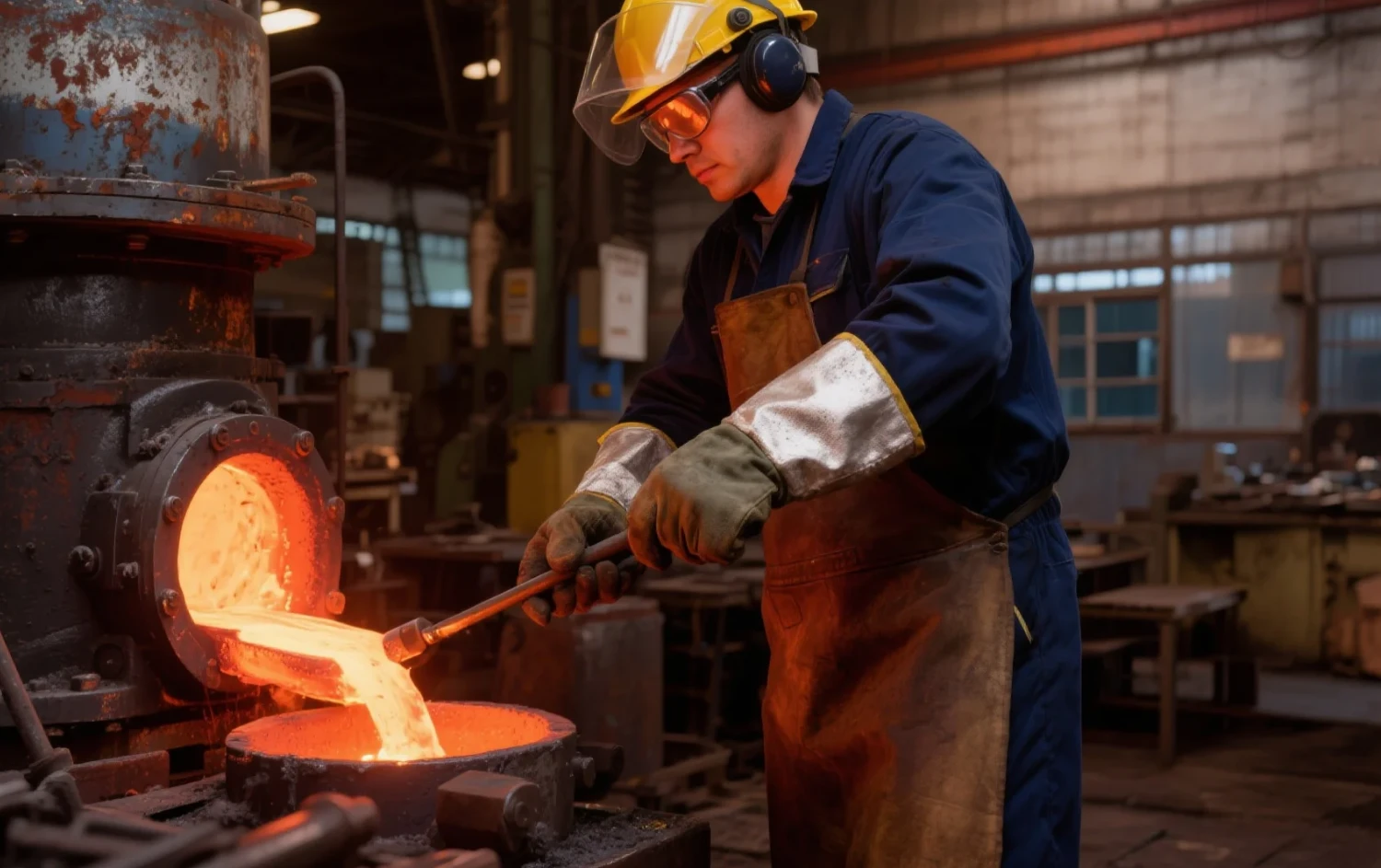
Gloves have to answer heat and cut at the same time; one rating does not imply the other.
Choosing Welding Safety Products for a Team
Start from the hazard assessment and the welding process, then match shade, FR level, glove type and ventilation to the task — and ask the supplier for test reports on the exact models.
A mixed shop usually needs two or three configurations rather than one uniform: the shade range that suits thin TIG work is not the range that suits heavy stick welding, and the extraction that suits a bench is not the extraction that suits a site job. Write the process list against the shade ranges first, because that single decision eliminates helmet models faster than any other. Then standardise the rest around it.
Our engineering team can work from your process list and hazard assessment and supply the helmet, glove, FR clothing and documentation together, so the equipment and the paperwork arrive as one package. See the auto-darkening welding helmet, the related eye protection for welders, or send the specification through the contact page.
For the wider topic and related decisions, see our Welding Safety & Welding PPE.
FAQs
What welding safety products should every welder have?
At minimum: an auto-darkening or passive welding helmet with the correct shade, FR clothing, welding gloves, safety glasses with side shields, hearing protection, and a ventilated or fume-extraction setup.
Do welding safety products need certification?
Yes for critical items — welding helmets and eye protection should meet EN 379 / ANSI Z87.1, FR clothing should meet the applicable flame-resistance standard, and gloves should be rated for heat and cut hazards.
How do I choose welding safety products for a team?
Start from the hazard assessment and the welding process (MIG/TIG/stick), then match helmet shade, FR level, glove type, and ventilation to the task; ask the supplier for test reports on the exact models.
Related Articles
- Auto-Darkening vs Passive Welding Helmets
- Auto-Darkening Welding Helmet Buying Guide: DIN Shades and Lens
- Welding Helmet Standards: EN 379 and ANSI Z87.1
- Welding Gloves: Types, Heat Ratings and Selection
- Essential Welding Safety Rules for Beginners
Official Resources
- Auto Darkening Welding Helmet
- High-Temperature Gloves
- Eye Protection for Welders: Helmets, Goggles and Filters
- Contact Shield Wings
References
- 29 CFR 1910.252 — Welding, cutting, and brazing; Table J-1 filter lenses for protection against radiant energy, and the ventilation requirements for welding zones. Electronic Code of Federal Regulations.
- 29 CFR 1910.132 — General requirements: hazard assessment, PPE selection and written certification. Electronic Code of Federal Regulations.
- Choosing the right PPE for welding safety. American Welding Society.
- ANSI Z87.1 — occupational and educational personal eye and face protection devices. American National Standards Institute.