

A high-visibility garment that still looks fine can already be failing. Retroreflective tape loses its return long before it cracks, fluorescent dye fades with every wash, and the class printed on the label only holds if the garment is still inside its tested condition. Visibility is a measured property with an expiry — not a colour you put on.
(Last modified date: October 1, 2026)
Key Takeaways
- Hi-vis works through two separate mechanisms: fluorescent fabric for daylight and dusk, retroreflective tape for headlights. A garment needs both because each fails for half the shift.
- ANSI/ISEA 107 classes 1–3 are set by the area of background and reflective material, and the class follows the risk assessment — traffic speed, light conditions, proximity to vehicles.
- EN ISO 20471 uses the same two-material principle with its own class system; multi-region buyers should specify garments certified to both.
- Under OSHA 1910.132, the employer must perform a hazard assessment and certify it in writing before selecting PPE — the class is an output of that process, not a preference.
- Washing, UV and contamination retire a garment before the fabric wears out. Inspect quarterly and track the certificate, not the look.
Why Is Visibility a Measurable Property, Not a Feeling?
Visibility is measurable because the eye responds to two things the garment can be tested for: colour contrast against the background, and the amount of light returned to its source. Fluorescent fabric converts high-energy light into bright visible colour; retroreflective tape sends headlights back to the driver. Both have defined performance limits, and both can be measured on a bench.
A driver’s ability to see a worker depends on how much the worker contrasts with what is behind them, and how much light the garment returns at night. Fluorescent material works because it absorbs high-energy light and re-emits it in the visible range, which is why the garment appears to glow in daylight and at dusk. Retroreflective tape works because microprisms or glass beads return light directly to its source — the headlights — which is why tape reflectivity is measured rather than estimated. When either property degrades, the worker becomes invisible even though the garment still looks like a vest.
The two mechanisms cover different hours of the day, and that is the whole reason the standard demands both. Fluorescent material delivers its effect in daylight and twilight but does almost nothing at night, when there is no high-energy light to convert. Retroreflective tape delivers its effect only when a light source points at it — headlights, work lights, vehicle beams — and is effectively invisible in daylight. A garment with only one of the two fails for half the working day.
What Do ANSI/ISEA 107 Classes Mean?
ANSI/ISEA 107 defines three classes by the area of fluorescent background and retroreflective material on the garment, with Class 3 providing the highest visibility for the highest-risk situations.
| Class | Minimum background area | Typical use |
|---|---|---|
| Class 1 | 0.14 m² | Away from traffic, low risk |
| Class 2 | 0.50 m² | Near roadways, moderate traffic |
| Class 3 | 0.80 m² | High-speed traffic, poor visibility |
Class 1 suits parking attendants and warehouse staff working away from moving vehicles. Class 2 covers construction crews and roadside workers. Class 3 is for high-speed or night work where maximum visibility is essential, and it is usually achieved with a full garment — vest plus trousers, or a coverall — rather than a vest alone. Choosing a lower class to save money on a highway shoulder is choosing invisibility.
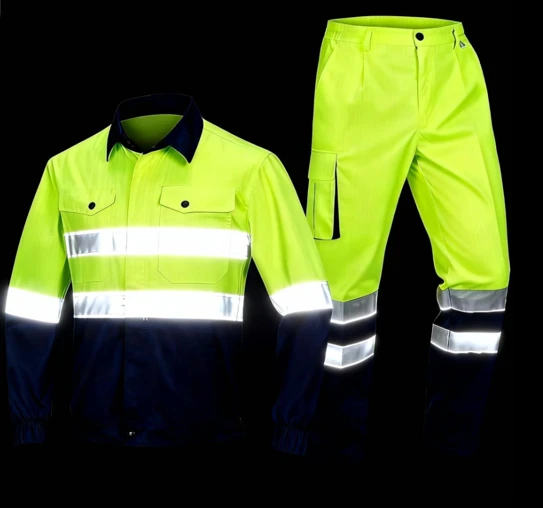
A Class 3 configuration: shirt and trousers carry the background and reflective area a vest alone cannot.
How Does EN ISO 20471 Compare?
EN ISO 20471 is the European standard for high-visibility clothing, built on the same two-material principle with its own class system — so global buyers should map both standards to the markets they sell into.
EN ISO 20471 classes 1–3 measure comparable areas of background and reflective material, and the practical specification is identical: match the class to the risk. The standards differ in measurement detail, test method and labelling, so a garment’s certificate should state the standard and the edition it was tested to. Where projects span regions, specify garments tested and documented to both systems so one inventory covers every site. The label and the certificate together define what the garment can be relied on to do — neither is decoration.
How Does Tape Placement Affect Visibility?
Tape placement is designed by the standard to make the human shape readable — shoulders, torso, arms and legs — because drivers recognise a moving person faster than they recognise a patch of colour.
The reflective pattern is not a design choice. Horizontal torso stripes read as a human silhouette; sleeve and trouser stripes let a driver judge where the worker is and how they are moving. That motion recognition is what buys the extra seconds to brake. When a garment is customised with a logo, the certified tape layout has to stay intact: moving or adding tape outside the tested design can void the certification. The same logic applies to colour — fluorescent yellow-green and orange-red are chosen for contrast against common backgrounds, and the exact shade matters as much as the area.
How Do You Choose the Right Class?
Choose by reading the three variables that set the class — traffic speed, light conditions, and proximity to vehicles — then confirm the garment style and any combined properties the environment demands.
In the United States, that process is not optional. OSHA 1910.132(d) requires the employer to assess the workplace for hazards that necessitate PPE, select equipment that protects against the hazards identified, communicate the selection to each affected employee, and verify the whole assessment through a written certification. A hi-vis class is an output of that assessment — which is why the class, the standard and the certificate should be recorded per style rather than decided at the point of order.
Start from the required class, then layer the environment on top. Cold outdoor sites need hi-vis jackets and trousers; hot climates need breathable mesh; wet sites need water-resistant fabric. Workers who move between day and night shifts, and between sun and rain, need a garment that performs in every condition rather than one that peaks in one of them. When in doubt, choose the higher class — the weight difference is small compared with the margin of visibility it buys. For a closer look at how the classes map to road speed, see class selection by traffic speed.
When Do You Need FR and Hi-Vis Together?
You need both whenever the risk assessment identifies a thermal hazard and a vehicle or visibility hazard at the same time — utilities, oil and gas, and fire response are the classic cases — and the combined garment has to be tested for both properties.
An FR hi-vis garment is not a standard vest worn over FR clothing. The fluorescent fabric and the reflective tape themselves have to be flame resistant, or they become the weak point in a flash fire: a tape that melts defeats the whole system. Certification should cover both properties with separate test reports, including the tape’s FR rating. Electrical utility crews working near roadways, gas plant operators and emergency responders are typical users. The full decision path is covered in FR and hi-vis workwear: when you need both, and a class-by-class breakdown sits in hi-vis classes 1, 2 and 3 explained.
How Do You Keep Hi-Vis Working and Know When to Retire It?
Wash with mild detergent and no bleach or fabric softener, store away from UV and chemicals, inspect quarterly, and retire any garment that has faded or lost reflectivity — because a worn garment no longer meets its class.
Dirt is the enemy. Grease and dust reduce fluorescent colour intensity, and a dirty tape can lose most of its reflectivity without looking damaged. Follow the laundering guidance that comes with the certificate, and never dry-clean or iron a garment carrying retroreflective tape. Inspect quarterly for tape cracking and peeling, fabric fading, and seam integrity, and compare retired garments against the certificate rather than a colleague’s opinion.
One procurement rule prevents most field failures: stock slightly more than headcount so laundering rotation never sends a worker into a hazard zone without a clean, certified garment. Storage belongs in the same programme — keep garments away from bright UV and chemicals, and never leave them on a vehicle dashboard where sunlight accelerates fading. Set the replacement cycle from laundering frequency and UV exposure, because a garment laundered weekly can retire well before one worn occasionally. Post the care instructions at the laundry point and treat hi-vis performance as a measured property, not a fashion choice.
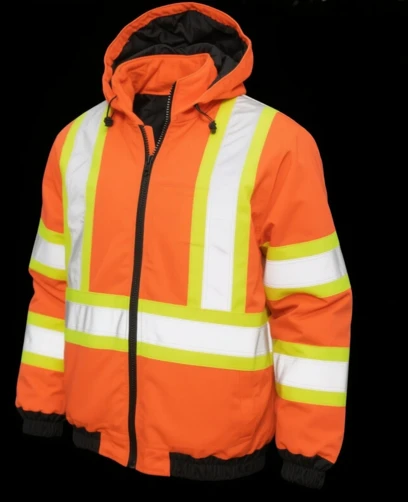
Cold-weather hi-vis has to keep the certified tape layout intact through insulation and layering.
Specifying Hi-Vis for a Team
Write the class, the standard and the certificate number against each style, and reorder only against that record. Where a single style has to serve day and night, sun and rain, and a thermal hazard, the specification gets harder rather than simpler — which is when it is worth building the sample and testing it on the actual site before committing the order. Our team can supply the class documentation, the combined FR and hi-vis test reports, and a sample for approval through the contact page or the hi-vis workwear page.
For the wider topic and related decisions, see our Hi-Vis, Anti-Static & Cold Weather Workwear.
Additional guidance retained during consolidation
Consolidated guidance from hi-vis-classes-1-2-and-3-explained.
What Do the Hi-Vis Classes Mean?
ANSI/ISEA 107 defines three classes based on the area of fluorescent background and retroreflective material: Class 1 provides the least coverage, Class 3 the most, and the class is chosen by the risk of the work situation.
| Class | Minimum background | Typical use |
|---|---|---|
| Class 1 | 0.14 m² | Away from traffic, low risk |
| Class 2 | 0.50 m² | Near roadways, moderate traffic |
| Class 3 | 0.80 m² | High-speed traffic, poor visibility |
The class sets the minimum area of visible material, and the reflective tape must meet its own performance requirement. Class 1 suits parking attendants and warehouse workers away from moving vehicles; Class 2 covers construction crews and roadside workers; Class 3 is for high-speed or night work. The class is a floor — more material is always acceptable.
How Is the Class Decided?
The class is decided by the risk assessment, which weighs traffic speed, light conditions, and the worker’s proximity to vehicles — the three variables that determine how much visibility is needed.
Higher traffic speed means the driver has less time to react, so more visible material is required. Poor light and night work increase the need for retroreflection. Closer proximity to vehicles increases the risk of a collision. The assessment combines these factors into the required class, and the garment is selected to meet it. Choosing a lower class to save money on a high-speed site is choosing invisibility.
How Do EN ISO 20471 Classes Compare?
EN ISO 20471 uses the same principle — fluorescent background plus retroreflective material — with classes 1 to 3, and global buyers should map the standards to their markets.
The two standards measure similar areas and assign similar classes, but the details and labeling differ. A garment’s certificate should state the standard and edition, and where projects span regions, choose garments tested and documented to both systems. The practical specification is the same: match the class to the risk. The label and certificate together define what the garment can be relied on to do.
What Garment Styles Fit Each Class?
Class 1 often uses a vest; Class 2 uses a vest or vest with sleeves; Class 3 typically requires a full garment — vest plus trousers or a coverall — to carry the larger area of material.
The garment style must provide the area the class demands. A Class 3 requirement is rarely met by a vest alone, because the torso area is limited; adding trousers or a full coverall supplies the extra background and reflective material. Sleeve stripes and trouser stripes also help drivers read the worker’s movement. The style follows the class, and the class follows the risk.
How Do You Verify the Class on a Garment?
Verify the class through the label and the certificate: the class, the standard, and the edition must match the garment, and the reflective and background materials must meet their performance values.
Check the garment style provides the class area the risk requires before ordering.
Select visibility garments according to traffic speed, lighting, work-zone control, and the applicable visibility standard.
Which Hi-Vis Class Questions Do Buyers Ask Most?
Is Class 3 always required for highway work?
For high-speed and night work, Class 3 is typical; the risk assessment for the specific site and task decides the requirement.
Can a vest meet Class 3?
Usually not — Class 3’s larger material area typically needs a full garment with trousers or a coverall.
Do the classes differ between ANSI and EN standards?
The principles and levels are similar, but the standards differ in detail; specify the standard your market requires.
How do we get hi-vis garments at the right class?
Tell us your risk profile, and we will recommend the class and style with documentation via our contact page, or ask Shield Wings’ factory team on the hi-vis page.
For the wider topic and related decisions, see our Hi-Vis, Anti-Static & Cold Weather Workwear.
FAQs
How long does hi-vis clothing keep its performance?
Performance fades with washing and UV exposure. Follow the care label, inspect quarterly, and replace garments that no longer meet their class.
Can reflective tape be added to any garment?
No. To claim a standard, the garment must be manufactured and tested with the tape as part of its tested design.
Is a hi-vis vest enough at night?
Only if the class matches the risk. High-speed and night work usually requires Class 3, which often means a full garment, not a vest alone.
Do you supply combined FR and hi-vis garments?
Yes. We supply dual-tested garments with FR-rated fluorescent and reflective materials, documented with separate test reports — confirm the class your risk assessment requires and request documentation via our contact page or the hi-vis page.
Related Articles
- Hi-Vis Classes 1, 2 and 3 Explained
- FR and Hi-Vis Workwear: When You Need Both
- Choosing Hi-Vis Workwear for Night Work
- Cold Weather Work Clothing: Layering and Materials
- FR Clothing Certifications: NFPA 2112, ASTM F1506 and EN ISO 11612
Official Resources
- High Visibility Workwear
- Custom FR Workwear: Branding, Sizing and Fit for Teams
- Contact Shield Wings
References
- 29 CFR 1910.132 — General requirements: hazard assessment and PPE selection, including the written certification requirement. Electronic Code of Federal Regulations.
- ANSI/ISEA 107 — high-visibility safety apparel and accessories: class requirements for background and retroreflective material. American National Standards Institute; published by the International Safety Equipment Association.
- EN ISO 20471 — high-visibility clothing: test methods and requirements (standard designation; full text is not publicly available). International Organization for Standardization.