

Oil and gas workers face a hazard mix unlike any other industry — flash fire, toxic gas, crushing loads, falls, noise, and extreme weather — and a complete PPE program covers every exposure with tested, documented equipment. This guide maps the hazards and the protective gear for each role, with factory insight from Shield Wings’ oil and gas safety equipment.
(Last modified date: October 2, 2026)
Quick definition: The main hazards are flash fire, toxic gas and oxygen deficiency, chemical exposure, falls, struck-by and crushing risks, noise, and extreme weather — each with its own PPE requirement.
Key Takeaways
- PPE is critical in oil and gas because multiple life-threatening hazards exist simultaneously at every site — hydrocarbons that can ignite, gases that can poison, and heavy equipment that can crush — and the equipment…
- Roles need different combinations: drilling crews lead with FR and head protection, production operators add eye, ear, and hand protection, electrical technicians add arc-rated clothing, and confined-space entrants add…
- Choose FR clothing against the site’s hazard assessment: NFPA 2112 or EN ISO 11612 for flash fire, arc-rated options for electrical tasks, and layered systems that match the climate without weakening protection.
- Head, eye, and hand protection in oil and gas means Type II helmets with chin straps and the right electrical class, impact-rated safety glasses or goggles, and gloves matched to the task — from FR and…
- Respiratory protection ranges from filtering masks for nuisance dust to SCBA for entry into oxygen-deficient or toxic atmospheres — and the level is decided by the gas test and the task, never by guesswork.
- Turnarounds multiply the PPE challenge — more contractors, more simultaneous tasks, and more open equipment — so the program needs a surge plan: pre-issued kits, spare stock on site, and a permit system that links each…
Why Is PPE Especially Critical in Oil and Gas?
PPE is critical in oil and gas because multiple life-threatening hazards exist simultaneously at every site — hydrocarbons that can ignite, gases that can poison, and heavy equipment that can crush — and the equipment is often the only barrier between the worker and the hazard.
An oil and gas site concentrates risks that other industries separate: flammable atmosphere, toxic exposure, high-pressure equipment, falls from height, and rotating machinery. Engineering controls reduce but never eliminate these hazards, so PPE carries the final responsibility. The standards and the discipline are correspondingly strict — a worker entering a classified zone without the right FR clothing, or a confined space without gas detection, is not just unsafe but out of compliance. For buyers, every PPE purchase is part of a documented safety case, not a uniform order.
What Are the Main Hazards and Their Primary PPE?
The main hazards are flash fire, toxic gas and oxygen deficiency, chemical exposure, falls, struck-by and crushing risks, noise, and extreme weather — each with its own PPE requirement.
| Hazard | Typical exposure | Primary PPE |
|---|---|---|
| Flash fire | Wellsites, processing | FR clothing, FR hood and gloves |
| Toxic gas / oxygen | Confined spaces, tanks | SCBA, gas detection |
| Chemical splash | Mud systems, chemicals | Chemical suits, goggles, gloves |
| Falls | Derricks, platforms | Harness, lanyards, anchors |
| Struck-by / crush | Rig floor, lifting | Helmets, safety boots |
| Noise | Engines, compressors | Earmuffs, earplugs |
| Weather | Offshore, arctic sites | Insulated FR outerwear |
The table is the starting point for a site-specific assessment. The assessment should be written by people who know the site, not copied from a template: walk the facility with the safety team, interview the crews, and review incident history and chemical inventories. The output is a hazard register that names each hazard, its location, the exposed roles, and the required controls including PPE — the backbone of procurement, because every purchase traces back to a line in the document.
Which PPE Does Each Role Need?
Roles need different combinations: drilling crews lead with FR and head protection, production operators add eye, ear, and hand protection, electrical technicians add arc-rated clothing, and confined-space entrants add respiratory gear.
| Role | Core equipment |
|---|---|
| Drilling crew | FR coveralls, helmet, glasses, metatarsal boots |
| Production operator | Full FR system, eye, ear, and hand protection |
| Electrical technician | FR plus arc-rated clothing |
| Confined-space entrant | SCBA, gas detection, retrieval gear |
| Visitor or supervisor | Baseline FR, helmet, glasses, boots |
The matrix should also cover support roles that are easy to forget — catering, cleaning, and transport staff move through classified zones and need at least the baseline FR and head protection. Visitors and supervisors on walk-downs need the same baseline, enforced at the gate. When every role is listed with its equipment, procurement can order by role and the gatehouse can check by role — two mechanisms that close the gaps where incidents hide.
How Do You Choose FR Clothing for the Site?
Choose FR clothing against the site’s hazard assessment: NFPA 2112 or EN ISO 11612 for flash fire, arc-rated options for electrical tasks, and layered systems that match the climate without weakening protection.
Start with the flash fire standard your region or operator requires, then confirm whether any roles also need arc ratings — dual-tested garments solve that overlap. Fit the layers to the climate: breathable FR fabrics for hot climates, insulated FR under layers and weatherproof FR outerwear for cold sites. The system must include the hood, gloves, and any FR underwear layers, because a gap at the neck or wrist defeats the garment. Procurement should standardize the FR system across the operation rather than letting each site buy its own: one tested, documented product range simplifies training, spares, and documentation, and it lets the operator negotiate volume pricing. At Shield Wings, we supply operators with the complete layered system — base layers, coveralls, outerwear, hoods, and gloves — documented as a package.
Every layer should carry its certificate, and the combination should be documented so the audit file matches what workers wear. When contractors arrive with their own gear, the gatehouse check should compare it against the site standard — a worker in a sub-standard garment is a gap in the program no matter whose payroll they are on. Standardize the check, publish it, and apply it equally to employees and contractors, because the flash fire does not read the employment contract.
What About Head, Eye, and Hand Protection?
Head, eye, and hand protection in oil and gas means Type II helmets with chin straps and the right electrical class, impact-rated safety glasses or goggles, and gloves matched to the task — from FR and chemical-resistant to cut and impact-resistant.
The helmet protects against falling objects and overhead equipment, and the electrical class matters where live gear is nearby. Safety glasses are the baseline, with goggles or face shields for chemical and grinding tasks, and shade lenses for welding. Gloves are task-specific: FR gloves for flash fire exposure, chemical-resistant gloves for mud and solvents, cut-resistant options for sharp materials, and impact-protected gloves for heavy manual work. Because hands touch everything, the glove spec changes with the job — a single glove type across the site is a common and costly shortcut. Store the specialty eyewear at the workstations where it is used, so the worker does not have to cross the site for the right pair.
What Respiratory Protection Do Workers Need?
Respiratory protection ranges from filtering masks for nuisance dust to SCBA for entry into oxygen-deficient or toxic atmospheres — and the level is decided by the gas test and the task, never by guesswork.
Confined-space entry is the highest-risk scenario: tanks, vessels, and pits can contain oxygen deficiency, hydrogen sulfide, or hydrocarbon vapors, and SCBA or supplied-air breathing apparatus is required alongside gas detection. Routine work near vents and sample points may need filtering respirators against specific vapors. Fit testing, training, and cartridge selection are mandatory parts of the program, and spare units must be maintained and inspected on schedule. Choose respiratory protection from the atmospheric testing results, and never let convenience override the reading.
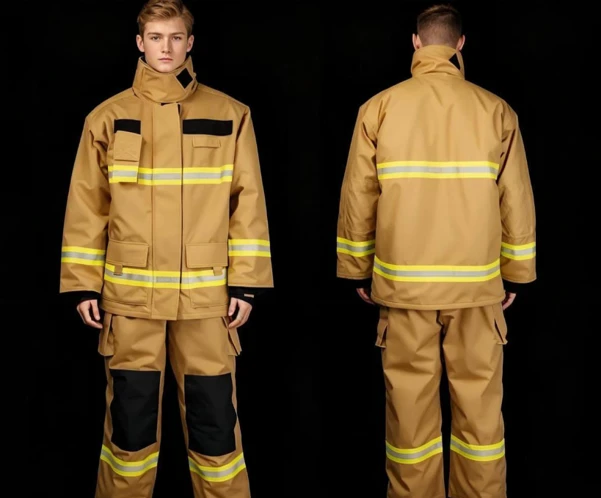
A single site can present thermal, chemical and impact hazards at once, which is why the assessment has to cover all of them.
How Do You Manage PPE During Turnarounds and Shutdowns?
Turnarounds multiply the PPE challenge — more contractors, more simultaneous tasks, and more open equipment — so the program needs a surge plan: pre-issued kits, spare stock on site, and a permit system that links each task to its required equipment.
During a turnaround, normal crews are joined by hundreds of contractors working in parallel, and the risk profile rises because lines are broken and vessels are opened. Issue PPE against the role matrix at induction, keep spare stock for the sizes and items that run out first, and make the permit system the enforcement point — no permit, no entry, no exceptions. Assign a dedicated PPE coordinator for the duration, because the routine program assumes a scale that turnarounds do not meet. Review the matrix after the turnaround and feed the lessons back into the permanent program, since the incidents and near-misses of the shutdown are the best teacher the site has.
How Do You Manage PPE in Extreme Weather?
Extreme weather tests the whole system: arctic operations need insulated FR layers that do not compromise flash fire protection, while desert and tropical sites need breathable FR fabrics that prevent heat stress.
Cold sites layer under the FR system — thermal FR underwear, insulated FR mid-layers, and weatherproof FR outerwear — so protection and warmth work together rather than against each other. Hot climates create the opposite problem: workers shed layers to cool down, so breathable FR fabrics and scheduled rest breaks are part of the control. Rain adds its own risk, because wet fabric behaves differently and reflective and static properties change. Plan the seasonal changeover of the PPE program, train crews on the weather rules, and keep the same certification standards across every layer regardless of climate.
Which Standard Applies to Which Hazard?
An oil and gas site presents several hazards at the same time, and each one is governed by a different standard. Getting this mapping right is what stops a buyer from specifying an FR garment that answers the thermal hazard but not the arc, or the reverse.
| Hazard | Standard to specify against | What the certificate has to state |
|---|---|---|
| Flash fire | NFPA 2112 (US) or EN ISO 11612 (EU/international) | The standard and edition the garment was tested to |
| Electric arc | ASTM F1506 or IEC 61482 | The arc rating, and that it meets or exceeds the task’s incident energy |
| Chemical splash | Chemical permeation data for the specific substance | Breakthrough time against the chemical actually handled, not a generic “chemical resistant” |
| Head impact and arc | ANSI Z89.1 for head protection; a separate arc certification where live work exists | Both certifications on the same helmet — one does not imply the other |
| Foot impact, puncture, electrical | ASTM F2412 / F2413, including the EH rating where relevant | Which rated properties the specific model carries |
| Respiratory | The assigned protection factor for the atmosphere and escape requirement | That the device is approved for the contaminant and the duration of the task |
The regulatory floor underneath all of this is the same on every site. 29 CFR 1910.132(d) requires the employer to assess the workplace for hazards that necessitate PPE, to select equipment that protects against the hazards identified, to communicate those decisions to each affected employee, to select PPE that properly fits, and to certify the assessment in writing.
On a multi-hazard site the practical consequence is that one assessment has to cover all of the hazards in the table above, not just the dominant one. A wellsite where the flash-fire risk is obvious may also present arc exposure at the switchgear, chemical exposure at the mud system, and noise at the compressors — and a programme built around a single hazard will leave the others unaddressed until the first incident reveals them. The role-by-role mapping above is the point at which the assessment turns into a purchase order, and the documentation per item is what proves it afterwards.
Two habits keep the mapping honest. First, record the standard and the certificate reference against each line of the specification, so a substitution during procurement is visible rather than silent. Second, keep the certificate for the exact model and batch, because a certificate for a product family does not cover the specific garment the worker is wearing.
How Do You Build the Program Around the Equipment?
Build the program in five steps: a site hazard assessment, a role-to-equipment matrix, procurement from qualified, documented suppliers, training and fit, and auditing with documentation — repeated on a cycle.
The hazard assessment identifies what is actually present; the role matrix assigns equipment to every worker and contractor; procurement standardizes tested, documented products and keeps batch records; training covers wear, care, and limits; and audits verify that the paperwork matches the field. Review the program after incidents, near-misses, and changes in process or standards. Auditing is where programs succeed or quietly decay: a field audit should check that the equipment on the worker matches the matrix, that certificates are current and match the models in use, and that training records are complete — and the findings should feed back into procurement and training. Make the audit schedule public to the workforce so crews know the program is real.
Continuous improvement is the difference between a program that exists and one that works. Track the data — audit findings, near-misses, PPE failures, and wear patterns — and let it drive the next specification. A glove that fails on a specific task, a boot that wears out in three months, a hood that crews avoid: each is a signal to review the spec rather than reorder the same item. Operators who run this loop continuously keep the program coherent across sites, contractors, and seasons, and they build the evidence that regulators and clients look for.
What Should Your Next Step Be?
Run your site hazard assessment, build the role-to-equipment matrix, and standardize tested, documented PPE from a qualified supplier before the next work window.
Our team at Shield Wings can help you map oil and gas roles to the right equipment — FR systems, helmets, eye and hand protection, and footwear — with certificates and batch documentation for every product. Wholesale and operator buyers can discuss programs through our contact page or the oil and gas safety equipment page. For the FR foundation, review our FR clothing range and anti-static workwear options.
Confirm equipment selection against the site hazard register and the applicable standards; this guide is a starting point, not a site-specific decision.
For the wider topic and related decisions, see our PPE by Industry.
FAQs
Do contractors need the same PPE as employees?
Yes. Anyone entering the hazard zone, including contractors and visitors, must meet the same standards as employees.
Is FR clothing enough for electrical work on site?
No. Electrical work also needs arc-rated clothing with the correct cal/cm² rating; dual-tested garments cover both.
How often should the PPE program be reviewed?
After any incident or near-miss, after process or standard changes, and on a scheduled annual cycle at minimum.
Can one supplier cover the whole site?
Yes. A qualified manufacturer can supply the full equipment matrix with consistent certification, which simplifies procurement and documentation.
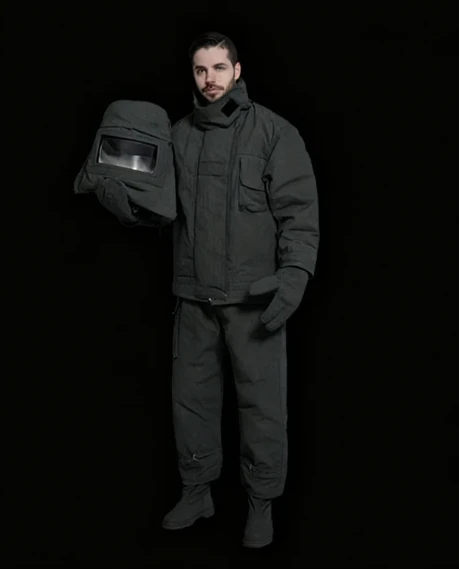
Each property carries its own certificate on the exact model, so the specification has to name the standard.
Related Articles
- Firefighting Gloves: NFPA 1971 and EN 659
- Welding Gloves: Types Heat Ratings and Selection
- PPE for Construction Workers: The Complete Guide
- PPE for Manufacturing: The Complete Guide
- PPE for Electrical Workers: The Complete Guide
Official Resources
- Oil Gas Safety Equipment
- Why Do Oil And Gas Workers Need Fr Clothing
- Welding Safety Ppe The Complete Checklist
- Understanding Arc Flash Hazards In Industrial Environments
- Safety Shoes And Boots The Complete Buying Guide
- Safety Glasses The Complete Buying Guide
- Safety Glasses With Prescription Options For Workers
- Welding Gloves Types Heat Ratings And Selection