

Cut resistance levels only make sense if you know what the test actually does: EN 388 and ANSI/ISEA 105 measure cut resistance with different methods, and the numbers cannot be compared directly without understanding the physics. This guide explains both systems and how to read them together, with reference to Shield Wings’ cut resistant gloves.
Last updated:
Quick definition: The EN 388 coupe test measures how many cycles a rotating blade takes to cut through the fabric, scored 1 to 5 — but the blade dulls as it cuts, so abrasive materials can inflate the result.
Key Takeaways
- The two standards use different test methods and different scales — EN 388 combines a rotating-blade test with a straight-blade test, while ANSI/ISEA 105 uses the straight-blade method alone — so a level in one system…
- The straight-blade test (TDM) measures the force, in grams, required to cut through the fabric with a single blade — scored as EN 388 letters A to F or ANSI/ISEA 105 levels A1 to A9.
- The mapping is approximate, not exact, because the standards set their own level boundaries — but the shared TDM method means EN letters and ANSI levels move in the same direction.
- Use the TDM letter or A-level for sharp-edge hazards such as glass and sheet metal, and read the full code for abrasion, tear, and puncture — because a glove that excels in cut can fail completely on another property.
- Verify the rating through the test report, not the label: confirm the standard and edition, the achieved levels, and the model and production batch, and compare the whole code against your task spec.
Why Can’t You Compare EN 388 and ANSI/ISEA 105 Numbers Directly?
The two standards use different test methods and different scales — EN 388 combines a rotating-blade test with a straight-blade test, while ANSI/ISEA 105 uses the straight-blade method alone — so a level in one system does not equal the same level in the other.
A glove rated 5 in EN 388’s old coupe test and a glove rated A5 in ANSI are different measurements of different physics. The EN 388 coupe test uses a rotating circular blade that can be dulled by abrasive materials, which can overstate or understate real protection. The straight-blade test measures how much force is needed to cut through the material with a single blade, which better reflects many real-world cutting hazards. Comparing numbers across systems without knowing the method produces exactly the wrong glove for the job.
What Does the EN 388 Coupe Test Measure?
The EN 388 coupe test measures how many cycles a rotating blade takes to cut through the fabric, scored 1 to 5 — but the blade dulls as it cuts, so abrasive materials can inflate the result.
The test runs a circular blade back and forth over the fabric until cut-through, and the number of cycles maps to levels 1–5. The problem: the blade loses sharpness while cutting abrasive materials such as glass or concrete, so a glove that blunts the blade quickly can score high even if a sharp single-edge cut would pass through easily. That is why EN 388 introduced the letter rating — it uses the straight-blade test to give a more reliable picture for sharp-edge hazards.
What Does the Straight-Blade Test Measure?
The straight-blade test (TDM) measures the force, in grams, required to cut through the fabric with a single blade — scored as EN 388 letters A to F or ANSI/ISEA 105 levels A1 to A9.
The TDM method is the same physics in both standards: a straight blade moves across the material under increasing load until cut-through, and the result is a force value that maps to a level. EN 388 reports this as letters A (lowest) through F (highest); ANSI/ISEA 105 reports levels A1 through A9. Because the method is shared, the levels roughly correlate across systems — which is why a buyer can compare an EN F glove with an ANSI A8–A9 glove with some confidence. The letter or A-level is the number to use for glass, sheet metal, and other sharp-edge hazards.
How Do the Two Systems Map to Each Other?
The mapping is approximate, not exact, because the standards set their own level boundaries — but the shared TDM method means EN letters and ANSI levels move in the same direction.
| Hazard intensity | EN 388 (TDM letter) | ANSI/ISEA 105 (level) |
|---|---|---|
| Light handling | A–B | A1–A3 |
| Moderate metal work | C–D | A4–A5 |
| Heavy fabrication | E | A6–A7 |
| Extreme blade hazards | F | A8–A9 |
Use the table as a starting point, then check the test report for the actual force values rather than relying on the level alone. The full EN 388 code also includes abrasion, tear, and puncture digits, and ANSI/ISEA 105 includes separate puncture levels — so a complete spec names all the properties, not just cut.
Which Rating Should You Use for Which Task?
Use the TDM letter or A-level for sharp-edge hazards such as glass and sheet metal, and read the full code for abrasion, tear, and puncture — because a glove that excels in cut can fail completely on another property.
For glass handling and metal fabrication, the straight-blade rating leads the decision. For abrasive work such as rough concrete or heavy panels, the abrasion score matters as much as cut. For wire and needle hazards, puncture is the deciding property. Write the requirement as a full spec — minimum cut level, minimum abrasion, and any puncture need — so the supplier quotes against the whole job, not a single number. A task map that names the sharpness, force, and contact pattern of each job produces the right glove; a level picked from a chart without context produces the wrong one.
How Do You Verify the Rating on a Glove?
Verify the rating through the test report, not the label: confirm the standard and edition, the achieved levels, and the model and production batch, and compare the whole code against your task spec.
Labels summarize a test report, and the report holds the detail — the exact level, the method, and the standard edition. Ask the supplier for the report on the exact model, and check that the delivered batch matches it. Re-check on reorders, because production changes and standards move. Keep the reports with your task map so every glove in service has a justification behind it. A supplier who provides the full documentation and answers technical questions in writing is a supplier worth scaling with.
Cut ratings do not cover puncture, crush, thermal, chemical, or machine-entanglement risks; assess the full task and confirm with the manufacturer’s instructions and the applicable standard.
Comparing EN 388 and ANSI/ISEA 105 Without Chasing the Number
The two cut scales are built from different test methods, so a number from one cannot be read as the same number from the other. What can be compared is the measured result and the test that produced it — which is what makes a supplier comparison repeatable.
| Scale | Derived from | Safe to do with it | Not safe to do with it |
|---|---|---|---|
| EN 388 cut digit (1–5) | Rotating circular blade test | Compare within the same test method | Assume level 5 equals an ANSI level 5 |
| EN 388 ISO 13997 letter (A–F) | Straight-blade test at a set load | Compare with ANSI values for the same method | Mix the letter with the older digit |
| ANSI/ISEA 105 cut level (A1–A9) | Straight-blade test, result reported in grams | Ask for the measured gram result behind the level | Treat the level as a pass mark rather than a band |
| Puncture score | Separate probe, separate test | Match it to the needle or wire hazard | Assume a cut-rated glove covers it |
Worked example: comparing two quotes on evidence
Illustrative. Two suppliers quote a cut-resistant glove for the same task; one states “EN 388 level 5” and the other “ANSI A4, measured 1,700 g”. Both are cut-rated, and the headlines look comparable. The second answer is the usable one, because the test method and the measured value are named — the first tells you which blade test was run but not how much cut force the glove actually withstood. Where the task sits near a band boundary, the measured result is the only thing that shows how much margin you have, and it is the number to put in the specification so the next order is checked against the same figure.
Where either scale stops answering the question
Neither scale covers puncture, abrasion or grip, so a glove chosen on cut alone can still fail on the hazard the operator actually meets — an oily blade or a needle. Both are laboratory results: a glove that performs dry can behave differently wet, and the coating matters more than the cut digit when grip is the failure. And the result belongs to the glove as tested, so a change of liner, gauge or coating is a different article until someone measures it.

For the wider topic and related decisions, see our Hand, Cut & Impact Protection.
Additional selection checks from the consolidated guide
The following checks were retained while consolidating overlapping coverage into this primary guide.
What Does ANSI/ISEA 105 Cover?
ANSI/ISEA 105 rates hand protection across multiple hazards — cut, puncture, abrasion, and others — using alphanumeric levels, with A1 to A9 for cut resistance and separate scales for the rest.
| Property | Scale |
|---|---|
| Cut resistance | A1–A9 |
| Puncture resistance | 1–5 |
| Abrasion | 1–6 |
| Other properties | Separate scales |
The standard replaced the older numeric cut scale with the alphanumeric A1–A9 system, and each property is tested and reported separately. A glove’s full spec names the level for each relevant property, not just the cut rating. The certificate for the exact model states the values.
How Is Cut Resistance Tested?
Cut resistance is tested with the straight-blade TDM method, which measures the force required to cut through the material — the higher the force, the higher the A-level from A1 to A9.
The TDM (Tomodynamometer) test moves a straight blade across the material under increasing load until cut-through, and the force maps to the A-level. The method reflects how sharp edges cut in practice, and it is the relevant rating for blades, glass, and metal edges. Because the same physics underlies EN 388’s straight-blade letter, the two scales roughly correlate — EN F corresponds to roughly ANSI A8–A9. Use the A-level for sharp-edge tasks.
What Do the A-Levels Mean for Selection?
The A-levels map to task intensity: A2–A3 for light handling, A4–A5 for moderate metal and glass work, A6–A7 for heavy fabrication, and A8–A9 for extreme blade hazards.
| Task intensity | ANSI/ISEA 105 level |
|---|---|
| Light handling | A2–A3 |
| Moderate metal and glass | A4–A5 |
| Heavy fabrication | A6–A7 |
| Extreme blade hazards | A8–A9 |
The level is matched to the sharpness and force of the task, not chosen by the highest number. Over-rated gloves reduce dexterity and get removed, creating a different risk. The task map names the level per job, and the glove is selected against it. Match the level, not the maximum.
How Do You Read the Puncture and Other Ratings?
Puncture resistance has its own scale, and abrasion and other properties are rated separately — so a glove that excels on cut can fail on puncture, and the full spec must cover the task’s hazards.
Wire, needles, and sharp debris demand a puncture-rated glove, and the puncture level is reported separately from cut. Abrasion matters for rough surfaces, and other properties have their own scales. When you specify, list every hazard the task presents and confirm the glove’s rating for each. The certificate for the exact model states all the values, and the report is the evidence behind the label.
How Do You Verify the ANSI/ISEA 105 Rating?
Verify the rating through the test report for the exact model, confirming the standard edition, the achieved levels, and the delivered batch — and compare gloves on the identical specification.
Confirm all the ANSI/ISEA 105 values on the exact model and keep the reports with the task matrix so every glove has a justification in the file.
Cut ratings do not cover puncture, crush, thermal, chemical, or machine-entanglement risks; assess the full task and confirm with the manufacturer’s instructions and the applicable standard.
How to Read a Cut Report Before You Trust a Level
ANSI/ISEA 105 is the standard behind the A1–A9 cut bands, and the band is only as good as the report it comes from. Two things make a report usable: it covers the exact glove model, and it states the test method and the measured result, not only the letter that resulted from it. Where a task sits near a band boundary, the measured value is what tells you which side of the line the glove actually lands on.
| Question | Why it decides the purchase | What a weak answer looks like |
|---|---|---|
| Is the test method named? | Different methods are not interchangeable, so the number only means something with the method attached | “Tested to ANSI level A4” with no method |
| Is the tested glove the one we are buying? | A rating applies to a construction — liner, coating and gauge all change the result | A rating for the family, not the model |
| What was the measured result? | Near a band boundary the measured value tells you how much margin there is | Only the letter, never the number |
| Which hazards were tested? | Cut, puncture and abrasion are separate properties with separate tests | One level quoted as if it covered everything |
| How does it behave wet or oily? | The task conditions are part of the selection decision (29 CFR 1910.138(b)) | A dry-condition result applied to a wet task |
Worked example: levels by task, not by maximising the rating
Illustrative assignment for a 60-person plant with three task groups: light handling and packing (30 people), moderate sheet-metal and glass handling (20), and heavy fabrication with an extreme blade hazard (10). If each group is issued the level matched to its task rather than the site running a single maximum-rated glove, the purchase divides roughly 33 / 22 / 11 pairs once a 10% float and rounding are applied. The group that benefits most is the first: a high-level glove on a packing line is thicker, and the glove that gets taken off for a fiddly task is protecting nobody.
Where the level stops answering the question
Cut level does not predict puncture resistance, and a cut-rated glove can still be the wrong glove for impact or for chemical exposure — 29 CFR 1910.138(b) asks for selection based on the performance characteristics of the glove against the task, the conditions, the duration of use and the hazards identified, which is deliberately broader than one number. Cut tests are also run under defined conditions, so a glove that performs well dry can behave differently when wet or oily; validate the choice on the actual task before standardising it across the site.
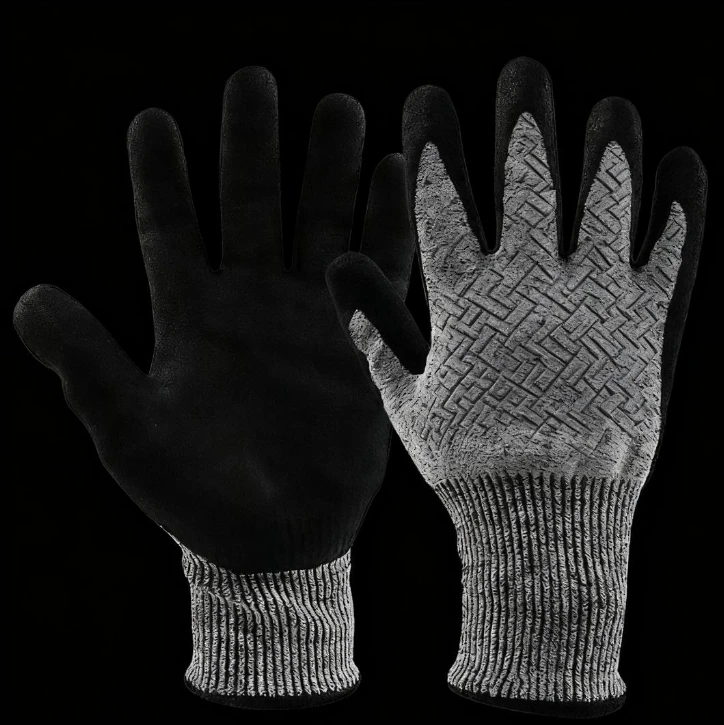
For the wider topic and related decisions, see our Hand, Cut & Impact Protection.
Additional guidance retained during consolidation
Consolidated guidance from en-388-explained-cut-resistance-testing-for-gloves.
What Does the EN 388 Code Mean?
The EN 388 code reports four digits and a letter: abrasion, cut (coupe), tear, and puncture as digits from 1 to 4 or 5, plus a letter for straight-blade cut resistance — each property tested separately.
| Property | Scale | Test |
|---|---|---|
| Abrasion | 1–4 | Cycles to wear-through |
| Cut (coupe) | 1–5 | Rotating blade cycles |
| Tear | 1–4 | Force to tear |
| Puncture | 1–4 | Force to puncture |
| Cut (ISO 13997) | A–F | Straight-blade force |
The code is read in order, and each digit describes one mechanical property. The letter, added in the 2016 edition, covers straight-blade cut resistance, which matters for sharp-edge hazards. A complete EN 388 label states all five values, and the test report holds the detail behind them.
How Does the Coupe Cut Test Work?
The coupe test uses a rotating circular blade that moves across the fabric until cut-through, scoring cut resistance from 1 to 5 — but the blade dulls as it cuts, which can inflate results on abrasive materials.
The test counts the cycles the blade takes to cut through, and the number maps to levels 1–5. Because the rotating blade dulls while cutting abrasive materials such as glass or concrete, a glove that blunts the blade quickly can score high even if a sharp single-edge cut passes through easily. That is why the letter rating was added: it uses the straight-blade method for a more reliable picture of sharp-edge hazards. For glass and metal edges, read the letter, not just the digit.
How Does the Straight-Blade Test Work?
The straight-blade test (ISO 13997) measures the force, in newtons, required to cut through the fabric with a single blade, scoring the result as a letter from A to F.
The test moves a straight blade across the material under increasing load until cut-through, and the force maps to the letter: A for the lowest resistance up to F for the highest. The method reflects how sharp edges cut in practice, and it is the rating to use for glass, sheet metal, and other sharp-edge hazards. When the two cut values disagree, the straight-blade letter is the more relevant number for edge work.
How Do You Read the Full Code?
Read the code left to right: abrasion, coupe cut, tear, puncture, then the straight-blade letter — and match each value to the task’s actual hazards.
An abrasive job needs a high abrasion digit; a sharp-edge job needs a high letter; a wire or needle job needs a high puncture digit. A glove that scores well on cut can fail on puncture or tear, so the whole code is part of the specification. Compare gloves on the identical code, because two gloves with the same label may differ in the test report. The label is a summary; the report is the evidence.
How Do You Verify the EN 388 Rating?
Verify the rating through the test report for the exact model, confirming the standard edition, the achieved levels, and the delivered batch — and re-check on reorders.
Check the full EN 388 code on the exact model and keep the test report with the task matrix, so every glove has a justification. The code that is verified is the code that protects.
Cut ratings do not cover puncture, crush, thermal, chemical, or machine-entanglement risks; assess the full task and confirm with the manufacturer’s instructions and the applicable standard.
For the wider topic and related decisions, see our Hand, Cut & Impact Protection.
FAQs
Is EN 388 level 5 the same as ANSI A5?
No. EN 5 refers to the coupe test; ANSI A5 refers to the straight-blade test. Compare the TDM-based ratings (EN letters and ANSI A-levels) instead.
Why do the old and new EN 388 labels look different?
The 2016 edition added the letter rating for straight-blade cut resistance , so a complete new label shows digits plus a letter.
Does a higher cut level mean a safer glove?
Not automatically. Over-rated gloves reduce dexterity and may be removed by workers; match the level to the task.
How do we get gloves with verified ratings?
Request the test reports for the exact models via our contact page or the cut resistant gloves page .
Is EN 388 level 5 the same as ANSI cut level 5?
No. The two scales come from different test methods, so a digit or letter from one is not convertible into the other. Compare the measured result and the test method named on the report; where a supplier only quotes a level, ask for the underlying value before treating two quotes as equivalent.
How do I choose between EN 388 and ANSI/ISEA 105 gloves?
Follow the market you are buying for and the report you can obtain, then match the level to the task rather than to the highest number available. Most international buyers end up specifying one scale in the purchase specification and asking for the measured result, so a re-order can be checked against the same figure.
Related Articles
- Aluminum Foil Hoods: Heat Protection Applications
- EN ISO 11612: Heat and Flame Protection Clothing Standard
- High Temperature Gloves: Types Ratings and Selection
- Hand Safety in Manufacturing: Injuries Prevention and PPE
- EN 388 Explained: Cut Resistance Testing for Gloves
- Cut Resistant Gloves: The Complete Buying Guide