

Colour coding is the head protection topic that everyone asks about and no standard requires. It exists because sites are complex, congested places where knowing who is who at a glance has real value, and because a helmet is the most visible part of a person on a site. Treating it as a management scheme rather than a compliance requirement is what makes it useful.
Why the Programme Outlives the Product Choice
It is worth being clear about what a colour scheme is not. It is not a substitute for site induction, supervision or access control, and it cannot tell anyone whether a helmet is serviceable or whether a person is competent for the task they are doing. Where a site relies on colour to answer those questions, the scheme is carrying a weight it was never designed to carry, and the failure shows up in an emergency when the assumption turns out to be wrong.
Helmets are replaced every few years, contractors come and go and sites change their organisation. A colour scheme survives that turnover only if it is written down and issued, because each generation of supervisors otherwise reinvents it: a new manager buys blue helmets for a new crew, the old blue meaning quietly changes, and within a season nobody can state the scheme confidently.
The programme value is straightforward in three situations. On large or congested sites, colour helps people locate the right person quickly, which matters in an emergency. In high-turnover environments, it distinguishes people who know the site from people who do not. And where visitors are escorted through operating areas, a distinct helmet makes them visible to everyone, including plant operators who need to know that a stranger is present.
Assessment, Selection and Issue
Issue is where most schemes are won or lost, because the correct colour has to be available at the moment someone arrives. A visitor who waits twenty minutes for a helmet is a visitor who will be taken through a plant without one, and a subcontractor whose crew arrives with the wrong colour will be sent in anyway if the alternative is a delay. Keeping the pooled colours at the point of entry, in the sizes people need, removes the practical excuse.
The assessment does not choose a colour, because colour has no bearing on protection. The class and type of the helmet come from the hazard, exactly as they do for any other task, and the colours are then assigned to roles once the protection requirement is settled. Confusing the two produces the classic error of a site buying one model in several colours when different areas actually need different classes.
| Element | Driven by the hazard | Driven by the site scheme |
|---|---|---|
| Class and type of helmet | Impact, electrical, molten metal and heat exposure | Not applicable |
| Colour | Not applicable | Role, trade or visitor status |
| Marking | The standard and the class the product carries | Additional site identification, where permitted |
| Accessories | The task: retention, hearing, face protection, lighting | Anything the scheme requires for identification |
| Issue record | The requirement it was purchased against | Who received it and which area they work in |
Read across the table, the two columns answer different questions. The hazard decides what the helmet is; the scheme decides who wears which colour, and the two should be documented separately so that a change in one does not silently alter the other.
Training and Competence Evidence
Where a site operates a scheme that distinguishes visitors, the briefing should also cover what the visitor is expected to do: stay with the escort, keep away from marked areas, and follow instructions from anyone working there. Colour identifies them; the briefing is what keeps them out of the areas the identification was meant to highlight. The two belong together in the visitor induction rather than in separate documents.
Training for a scheme is short but it has to be delivered. Workers need to know what the colours mean, where the scheme applies, and what to do when they move between areas that use different conventions. Supervisors need the same understanding plus the authority to enforce it, since a scheme that is not enforced at the gate rapidly becomes decorative.
Two practical limits belong in the briefing. Colour perception varies between individuals, so where identification is genuinely important — identifying a visitor in a hazardous area, for example — the scheme should be supported by something in addition to colour, such as a printed badge or an escort. And contractors who work across several sites should be told explicitly that colours differ between projects, so they do not carry an assumption from one site to the next.
Inspection Frequency by Hazard Class
Where pooled helmets are concerned, the inspection should also confirm that the size range still fits the people who use them and that the cleaning arrangements are actually being followed in practice rather than only described.
Colour is a condition to inspect as well as a designation. Sunlight fades shells, contamination dulls them, and a helmet that has been used in a furnace area may darken to the point where it is hard to distinguish from a different colour. Where a scheme matters, the inspection routine should include colour condition alongside the usual checks.
- Pre-use checks by the wearer, as for any helmet, including any accessories fitted for identification.
- Periodic inspection at the site’s stated interval, adding colour condition and marking legibility.
- Inspection of pooled visitor helmets more frequently, because they are shared, stored in the open and used by people with no local knowledge.
- Withdrawal criteria that include fading, staining and any labelling that has come loose or obscures the marking.
- Event-based checks after any impact or exposure, with the helmet withdrawn until assessed.
The pool of visitor and contractor helmets is usually the weakest part of a scheme. It is stored at reception or in a container, inspected rarely, and used by people who cannot judge whether it is serviceable. Bringing that pool into the same inspection and replacement routine as the rest of the head protection is a small change with a disproportionate effect.
Record Keeping for Audits and Incidents
Three records pay for themselves in this area. The scheme document, so that enforcement does not depend on memory; the issue record, so that a helmet can be traced to a person and a requirement; and the visitor register, which records who was on site, at what time, and with what equipment. In an emergency, those three answer the questions that matter most: who is in the area, and how many.
Records for a colour scheme are simple: the scheme document, the issue record linking each helmet to a person or a role, and the visitor register for pooled helmets. Together they answer the questions that arise after an incident: who was in the area, what were they wearing, and was the equipment serviceable.
Where identification labels are used, the record should note what is attached and where the manufacturer permits it. That detail matters because the marking on the shell is the evidence of what the product is, and a scheme that covers it has removed evidence in the course of adding information. The relationship between the marking and the requirement is covered in Shield Wings’ guide to safety helmets under ANSI Z89.1 and EN 397, which owns that topic.
Retirement, Replacement and Stock Control
Where the workforce is large, it is also worth tracking how the scheme behaves over time. If one colour is constantly short, or if one area is issuing a different colour to everyone, the scheme is not matching the organisation, and the useful review is of the scheme rather than of the store. Schemes that survive are the ones that are corrected when the reality of the site changes.
Retirement follows condition as it does for any helmet: shell damage, impact history, exposure beyond specification and compromised retention. Fading and staining are colour-scheme criteria rather than protection criteria, but where a scheme is relied on they should trigger replacement as well, because a helmet whose colour can no longer be read has lost the function it was bought for.
Stock control has a scheme dimension: holding the colours the scheme requires in the sizes the workforce needs, and keeping a pool of visitor helmets that is large enough, clean enough and in good condition. Where a site cannot supply the correct colour on the day, the scheme is abandoned in practice for that person, which is how informal schemes collapse.
Making the Programme Survive Contact With Operations
Finally, a scheme should be reviewed whenever the organisation changes. A new contractor, a merged department, a change in shift structure or a new client requirement can all make the previous mapping obsolete, and the review is a conversation rather than a document exercise. Where the review happens before the first crew arrives under the new arrangement, the scheme continues to be a control; where it happens afterwards, it becomes a source of confusion.
The failure mode to design against is the scheme that exists only in a poster at the gate. It works when the colours are issued rather than described, when the reception point can equip a visitor in the correct colour immediately, when supervisors use the scheme in their daily work, and when it is reviewed whenever the organisation or the site layout changes.
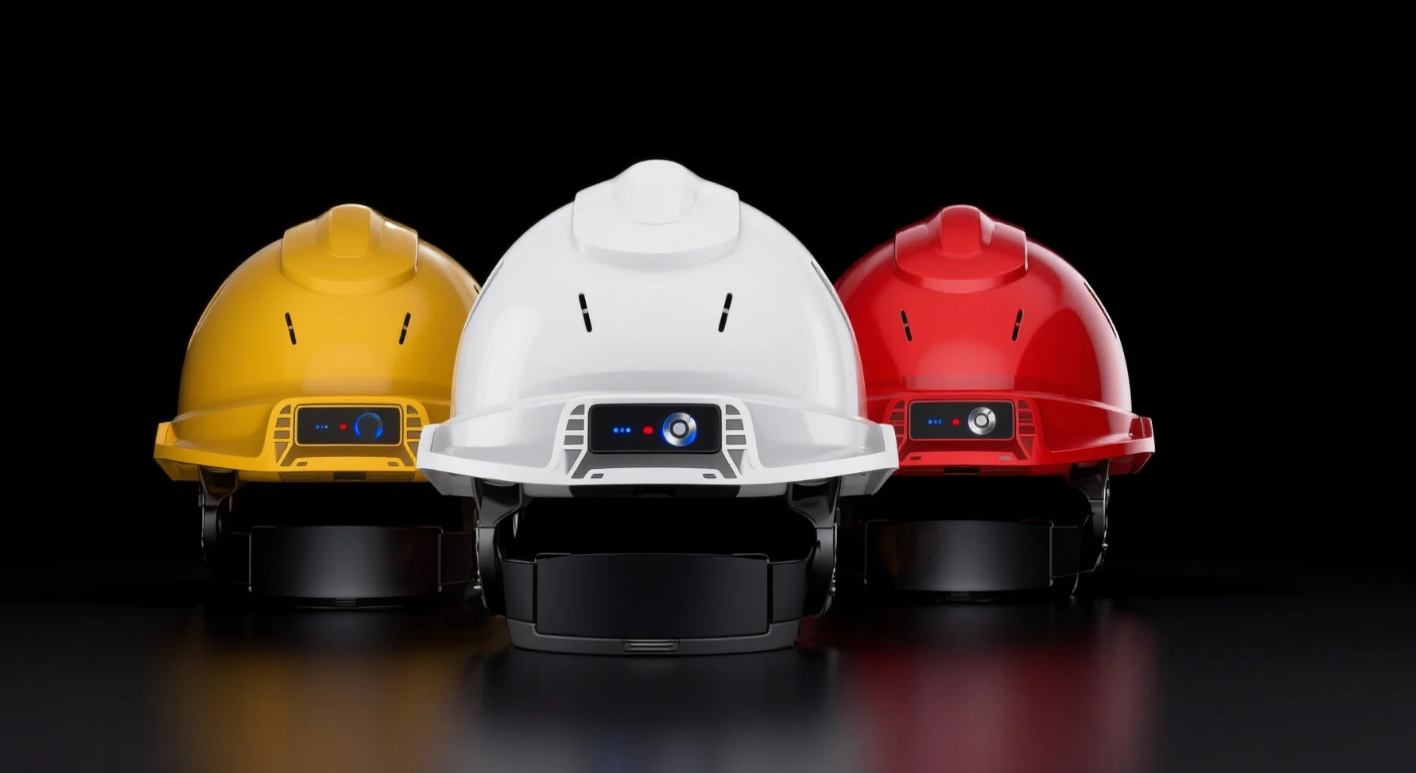
Shield Wings manufactures safety helmets and head protection at a Guangdong production base across the head and face protection range, and supports contractors, site teams and distributors with colour options, size ranges and the documentation each product carries. Where a site uses connected helmets for monitoring or communication, the options are described on the smart safety helmet page.
Where colour coding is used, it should be described as what it is: a site identification aid that helps people recognise roles and visitors quickly. The protection comes from the class and the condition of the helmet, and no colour has ever stopped a falling object.
Frequently Asked Questions
Are hard hat colours required by regulation?
Colour coding is a site convention rather than a performance requirement in the head protection standards. The standards describe what a helmet must do, and the marking states the class it carries; nothing in that framework assigns meaning to a colour. Where colour coding exists, it is a management scheme adopted by the site or the client, and it should be documented as such rather than presented as a compliance requirement.
What does a colour scheme actually achieve?
It helps people identify who is who at a glance in an environment where that matters: distinguishing visitors from workers, supervisors from operatives, or one trade from another in a congested area. It is a communication aid, and its value depends on everyone understanding the scheme and on the colours being maintained in a condition where they can still be distinguished.
What are the limitations of colour coding?
Colour does not describe protection, so a scheme says nothing about whether a helmet suits the hazard. Colour perception varies between individuals, colours fade with sunlight and contamination, and different sites use different conventions, which creates confusion for contractors working across several projects. Any scheme therefore needs to be published, simple, and backed up by something other than colour alone where the distinction matters.
Can helmets be painted or covered to match a scheme?
Only where the manufacturer permits it. Solvents in paint and adhesives can affect the shell, and anything applied over the original marking removes the evidence that the product meets the requirement. Where identification is needed, the manufacturer’s permitted method, such as designated labels or labels in specified positions, is the appropriate route, and the standard marking has to remain legible.
What should a site scheme include?
The colours and what each represents, the areas in which the scheme applies, the rule for visitors and contractors, the way helmets are issued and recorded, the inspection and replacement criteria including fading and contamination, and the process for reviewing the scheme when the site or the organisation changes. Without those elements the scheme becomes a preference rather than a control.

Setting up a site identification scheme?
Send the roles, the areas and the visitor arrangements. Shield Wings confirms the helmet options and colours available, the size ranges and the marking each product carries.
External references: 29 CFR 1910.135 head protection, 29 CFR 1926 Subpart E personal protective equipment in construction, CCOHS guidance on headwear, UK HSE personal protective equipment guidance, CEN-CENELEC standards portal, Regulation (EU) 2016/425.
{“@type”:”FAQPage”,”@context”:”https://schema.org”,”mainEntity”:[{“@type”:”Question”,”name”:”Are hard hat colours required by regulation?”,”acceptedAnswer”:{“@type”:”Answer”,”text”:”Colour coding is a site convention rather than a performance requirement in the head protection standards. The standards describe what a helmet must do, and the marking states the class it carries; nothing in that framework assigns meaning to a colour. Where colour coding exists, it is a management scheme adopted by the site or the client, and it should be documented as such rather than presented as a compliance requirement.”}},{“@type”:”Question”,”name”:”What does a colour scheme actually achieve?”,”acceptedAnswer”:{“@type”:”Answer”,”text”:”It helps people identify who is who at a glance in an environment where that matters: distinguishing visitors from workers, supervisors from operatives, or one trade from another in a congested area. It is a communication aid, and its value depends on everyone understanding the scheme and on the colours being maintained in a condition where they can still be distinguished.”}},{“@type”:”Question”,”name”:”What are the limitations of colour coding?”,”acceptedAnswer”:{“@type”:”Answer”,”text”:”Colour does not describe protection, so a scheme says nothing about whether a helmet suits the hazard. Colour perception varies between individuals, colours fade with sunlight and contamination, and different sites use different conventions, which creates confusion for contractors working across several projects. Any scheme therefore needs to be published, simple, and backed up by something other than colour alone where the distinction matters.”}},{“@type”:”Question”,”name”:”Can helmets be painted or covered to match a scheme?”,”acceptedAnswer”:{“@type”:”Answer”,”text”:”Only where the manufacturer permits it. Solvents in paint and adhesives can affect the shell, and anything applied over the original marking removes the evidence that the product meets the requirement. Where identification is needed, the manufacturer’s permitted method, such as designated labels or labels in specified positions, is the appropriate route, and the standard marking has to remain legible.”}},{“@type”:”Question”,”name”:”What should a site scheme include?”,”acceptedAnswer”:{“@type”:”Answer”,”text”:”The colours and what each represents, the areas in which the scheme applies, the rule for visitors and contractors, the way helmets are issued and recorded, the inspection and replacement criteria including fading and contamination, and the process for reviewing the scheme when the site or the organisation changes. Without those elements the scheme becomes a preference rather than a control.”}}]}