

Safety shoes and boots protect feet from impact, compression, puncture, slips, and electrical hazards. Buying them well means matching toe protection, sole design, and standards such as ASTM F2413 or EN ISO 20345 to each job. This guide walks through every decision, with factory guidance from Shield Wings’ safety footwear.
(Last modified date: October 2, 2026)
Quick definition: Beyond the toe cap, safety footwear can add puncture-resistant plates, electrical hazard insulation, static dissipation, metatarsal guards, slip resistance, and waterproofing — and the right combination depends on the…
Key Takeaways
- Workers need safety footwear because feet are among the most frequently injured body parts — struck by falling objects, crushed between loads, pierced by nails, or exposed to electrical and chemical hazards — and the…
- Steel toe caps offer maximum impact and compression protection at a low price, while composite toe caps are lighter, non-conductive, and comfortable in cold conditions — so the right choice depends on the environment.
- ASTM F2413 is the North American standard and EN ISO 20345 the international benchmark; both set impact, compression, and puncture requirements, with additional codes for EH, SD, and other protections.
- Choose by mapping the job’s hazards to the shoe’s protections, then weigh fit, comfort, climate, and compliance — and test the final choice with a real wear trial before bulk ordering.
- Durable safety shoes combine treated leather or engineered textile uppers, cushioned midsoles, and rubber or polyurethane outsoles — and each material choice trades weight, breathability, durability, and chemical…
- The table below maps common working environments to the protections to look for.
Why Do Workers Need Safety Footwear?
Workers need safety footwear because feet are among the most frequently injured body parts — struck by falling objects, crushed between loads, pierced by nails, or exposed to electrical and chemical hazards — and the right footwear prevents most of those injuries.
In construction, warehousing, manufacturing, and logistics, feet face impact and compression every shift. A dropped pallet or rolling load can crush a toe in a second. Nails and sharp debris can pierce an unprotected sole. Wet and oily floors cause slips, and electrical work adds shock risk. Safety footwear is engineered against each of these specific hazards — and, equally important, a comfortable pair gets worn. That is why modern safety shoes combine protection with ergonomics rather than trading one for the other.
The business case mirrors the safety case. Foot injuries rank among the most common lost-time injuries in industry, and each one carries medical, compensation, and replacement costs that dwarf the price of a good boot. Slips and falls alone account for a large share of workplace injuries every year, and the outsole of a safety shoe is the first line of defense against them. For procurement teams, this means the cheap boot is rarely the economical boot.
Which Is Better: Steel Toe or Composite Toe?
Steel toe caps offer maximum impact and compression protection at a low price, while composite toe caps are lighter, non-conductive, and comfortable in cold conditions — so the right choice depends on the environment.
| Feature | Steel toe | Composite toe |
|---|---|---|
| Impact protection | Excellent (200 J class) | Excellent (200 J class) |
| Weight | Heavier | Lighter |
| Conductivity | Conducts heat and cold | Non-conductive |
| Metal detectors | Triggers alarms | Safe in security areas |
| Cold environments | Conducts cold | Better insulation |
| Price | Lower | Higher |
For general construction and heavy industry, steel toe boots remain the value standard. For airport, electrical, and cold-environment work, composite toes solve problems that steel cannot. Both must meet the same impact and compression standards, so the decision is about the environment, not about which is “safer.”
There is also a middle option: aluminum toe caps, which are lighter than steel but not suitable for every environment, and alloy toes that sit between steel and composite on weight and cost. The lesson for buyers is to specify the hazard first and let the material follow. If workers pass through metal detectors daily, composite saves everyone time; if the budget is tight and the environment is dry and temperate, steel remains the workhorse.
What Other Protections Should Safety Shoes Offer?
Beyond the toe cap, safety footwear can add puncture-resistant plates, electrical hazard insulation, static dissipation, metatarsal guards, slip resistance, and waterproofing — and the right combination depends on the workplace hazards.
Puncture plates (steel or composite) protect against nails and sharp debris underfoot. Electrical hazard (EH) footwear insulates against live circuits up to a tested voltage, while static dissipative (SD) footwear prevents static buildup in flammable or electronics environments. Metatarsal guards cover the top of the foot, and slip-resistant outsoles matter on wet or oily surfaces. A foundry needs heat and molten splash resistance; a cold warehouse needs insulation. List the hazards first, then build the shoe around them.
A useful way to think about the feature list is to walk the job with the worker: where do they stand, what do they step on, what can fall, and what happens if it does? A warehouse picker on a concrete floor needs cushioning and slip resistance more than a metatarsal guard; a demolition crew stepping through debris needs puncture protection first. Features that do not match the real work add cost and weight without adding safety — which is why the best specs come from observation, not from a checklist.
Which Standards Apply to Safety Footwear?
ASTM F2413 is the North American standard and EN ISO 20345 the international benchmark; both set impact, compression, and puncture requirements, with additional codes for EH, SD, and other protections.
In North America, ASTM F2413 is the reference, with codes for impact, compression, puncture, electrical hazard, and static dissipation. In Europe and most international markets, EN ISO 20345 governs, and its S1, S2, and S3 classes layer in antistatic, water resistance, and penetration protection. Canada uses CSA Z195. Buyers supplying global teams should ask for dual or cross-listed certifications, so one product range covers every market without re-approval — and the certificate, not the label, is the evidence to keep on file.
Standards also move, so check the edition on the certificate. A model certified years ago may not meet the current edition your market requires, and a label that looks identical can hide an older test. When you buy in volume, ask the supplier to confirm the certificate edition and the production date, and keep a file that ties each delivery to its documentation. That discipline converts a simple purchase into a defendable compliance record.
How Do You Choose the Right Safety Shoe for the Job?
Choose by mapping the job’s hazards to the shoe’s protections, then weigh fit, comfort, climate, and compliance — and test the final choice with a real wear trial before bulk ordering.
Start with the floor: concrete, gravel, wet surfaces, or metal grating? Then the hands: what falls, rolls, or pierces? Then the environment: heat, cold, chemicals, or electricity? Each answer points to a feature — puncture plate, metatarsal guard, EH rating, insulation, or waterproofing. Fit comes next: safety shoes should be tried on at the end of the day when feet are largest, with the socks workers will actually wear. A comfortable, correctly sized boot is a compliance tool; an uncomfortable one ends up in the locker.
Before the bulk order, run a structured wear trial. Issue the candidate models to a representative group for two weeks, then collect feedback on fit, weight, comfort, and slip performance on the actual floors they work on. Wear trials catch problems that spec sheets miss — a boot that feels fine in the office may be unbearable on a hot concrete floor by noon. Most factories support trials with sample pairs, which is exactly the kind of evidence-based buying that keeps a program alive.
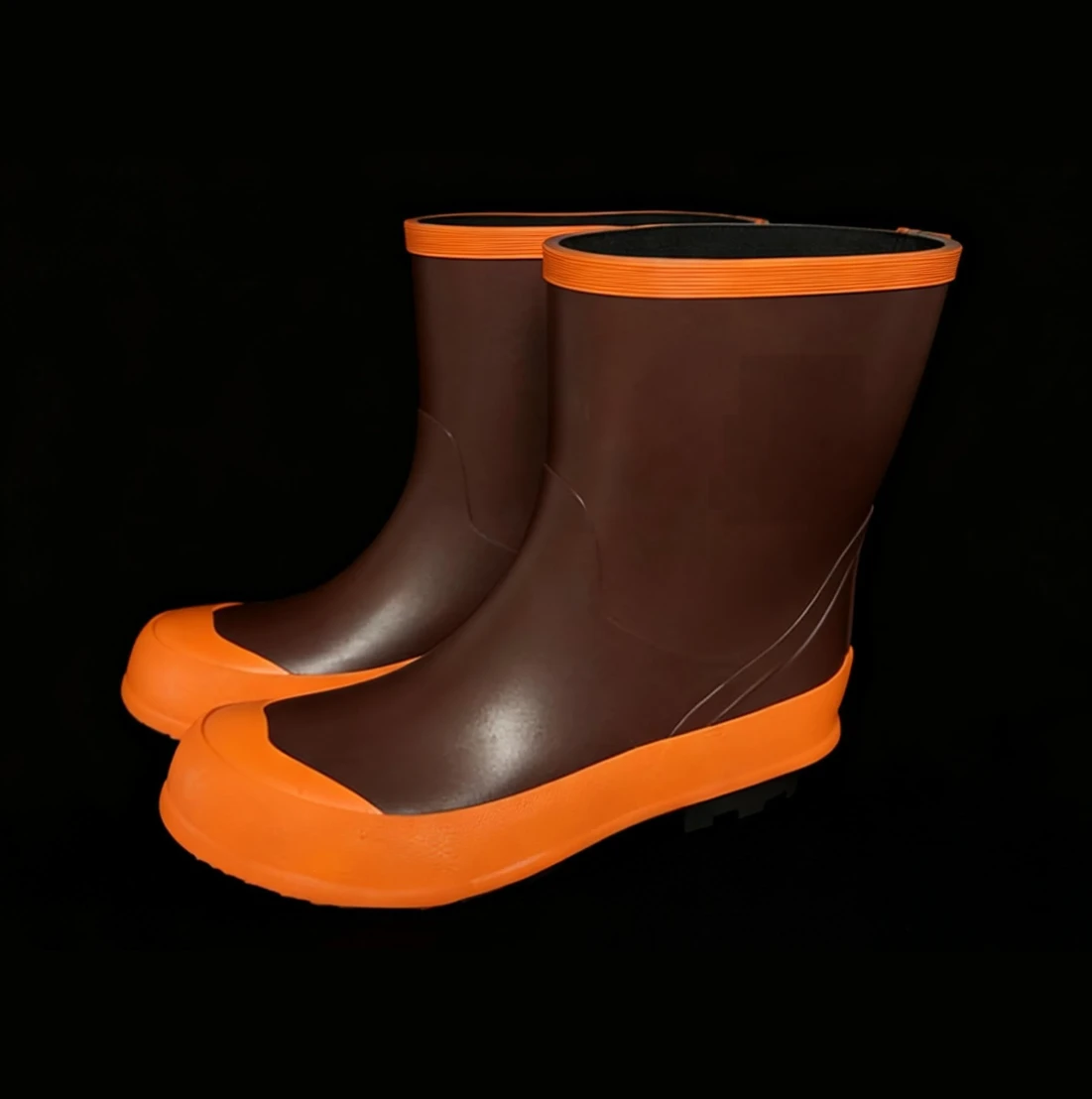
Different tasks need different models; the specification is what keeps them apart.
What Materials Make a Durable Safety Shoe?
Durable safety shoes combine treated leather or engineered textile uppers, cushioned midsoles, and rubber or polyurethane outsoles — and each material choice trades weight, breathability, durability, and chemical resistance for the job at hand.
Full-grain leather resists abrasion and looks professional but weighs more and breathes less. Split leather and textiles are lighter and more breathable, which suits warm warehouses. Outsoles come in rubber, which grips well and resists heat, and polyurethane, which is light and comfortable but less resistant to oils and hydrolysis in humid storage. A safety shoe is a system of materials, so the honest question is not “what is the best material” but “what is the best combination for these floors, this climate, and this duty cycle.”
Safety Footwear Ratings at a Glance
The table below maps common working environments to the protections to look for. Confirm final requirements with your site risk assessment.
| Environment | Toe type | Additional protection |
|---|---|---|
| Construction site | Steel or composite | Puncture plate, slip-resistant outsole |
| Warehouse and logistics | Composite | SD rating, comfort cushioning |
| Electrical work | Composite or EH-rated | EH insulation, dielectric options |
| Foundry and welding | Steel with heat-resistant outsole | Heat and molten splash resistance |
| Cold storage | Composite | Insulation, waterproof membrane |
For specialized electrical environments, dielectric footwear is a separate category with its own testing — covered in more depth in our high voltage dielectric boots guide.
How Should Safety Boots Fit?
A safety boot should fit like a well-broken-in shoe on day one: a thumb’s width of space beyond the longest toe, a snug heel that does not slip, and no pinching across the instep — because a boot that starts tight will not improve.
Try boots on at the end of the day, wear the same socks used on the job, and test both feet — most people have different-sized feet. Walk, kneel, and climb a short ladder in the candidate boot to feel the flex and the heel hold. Remember that safety footwear has a break-in period, but it should not take weeks; if a boot still hurts after a few shifts, it is the wrong last. Sizing programs across a diverse workforce are exactly where OEM footwear suppliers add value.
What Belongs in the Specification
A safety footwear specification is only useful if it is written per role rather than per site. The fields below are the ones that have to be filled in before a quotation means anything — and the ones an auditor will ask to see afterwards.
| Field | What to record | Why it is there |
|---|---|---|
| Role or task | The actual job, not the department | Two people in the same department can face different exposure |
| Hazards identified | Impact, penetration, electrical, heat, slip, chemical — as separate lines | Each one is a different rated property; a single “protective” label covers none of them specifically |
| Standard and code | The standard and the edition, plus the specific rating code or class | An older edition can fail a current audit even when the product is unchanged |
| Toe type | Steel or composite, with the impact rating | Both meet the same impact requirement; the choice turns on weight and conductivity |
| Sole protection | Penetration plate yes/no, and slip rating | Penetration is tested separately from toe impact and is not implied by it |
| Electrical rating | Whether an EH rating is required for this task | Only applies where a hazard remains after other controls — but then it is decisive |
| Size range and fit | The range needed across the crew, including half sizes and width options | Poor fit is the most common reason footwear gets removed or worn out early |
| Replacement cycle | The inspection interval and the replacement trigger | Turns a buying decision into a maintenance plan |
| Documentation | Certificate for the exact model, batch record, and the approved sample | The three items that answer “why this boot on this worker” |
The point of writing it down this way is that it separates the questions that are genuinely different. “Which safety shoe should we buy?” has no answer. “For the night-shift yard crew, which model carries penetration protection, an EH rating and sizes down to 38?” has exactly one — and if no single model covers it, that is a procurement finding worth knowing before the order rather than after it.
Two habits make the specification survive first contact with the site. Put the standard and the code against each line, so a substitution during procurement is visible rather than silent. And use the wear trial to test the specification, not just the boot: if the trial crew reports that they took the footwear off for a task, the specification is wrong for that task, and no amount of documentation will fix it.
Can You Customize Safety Footwear for Your Team?
Yes. Shield Wings supplies safety shoes and boots through wholesale and OEM programs, including custom branding, sizing programs, and task-specific sole and material options.
Customization ranges from simple logo work for uniformed teams to engineered changes like softer compound soles for concrete floors or wider lasts for comfort programs. Distributors can request private-label packaging; operators can standardize a single model across sites to simplify inventory. Because we manufacture the footwear, design adjustments happen before production, and samples confirm fit before bulk. Wholesale pricing is direct, and every batch ships with its test documentation.
For large teams, ask about extended sizing and width programs — a workforce that includes women, tall workers, and workers with wide feet needs more than a standard size run. Custom branding, from logo stitching to heat-sealed marks, turns the safety program into a uniform program, which improves compliance and makes the team instantly identifiable on site. Lead times for custom runs are typically longer than stock orders, so plan the season and confirm the schedule in writing.
How Do You Care for Safety Shoes?
Clean safety shoes regularly, dry them away from direct heat, inspect the sole, toe cap, and stitching, and replace them when protection is compromised — a worn sole or cracked toe cap no longer meets its rating.
Leather uppers need conditioning; waterproof membranes need to stay intact. Never dry boots on radiators or in direct sun, which cracks materials. Inspect weekly in heavy industries: check for sole delamination, worn tread, exposed plates, and cracks in the toe area. Footwear should also be replaced on a schedule — many operators retire safety shoes every 6 to 12 months depending on use, because protection degrades even when the shoe looks acceptable.
Sole care deserves attention because the outsole is the first thing to wear. Check tread depth against a coin or gauge, watch for uneven wear that signals a gait or last problem, and confirm the outsole compound matches the floor — soft compounds grip dry floors but wear fast on concrete, while harder compounds last longer but slip on polished surfaces. Rotation between pairs, where the job allows, extends life and keeps feet drier.
Expert Views
“Footwear is where safety programs quietly fail, because a boot that hurts will not be worn and a worn boot protects nobody. In my experience, the two biggest mistakes are buying the cheapest certified shoe without testing fit, and ignoring the environment — putting steel toes on airport workers who clear metal detectors daily, or standard shoes in wet processing areas where slip resistance should be the first requirement. My advice is to build a hazard profile for each job site, choose the protections in order of risk, and run a two-week wear trial before committing to a full order. Check the standard certificate, check the outsole compound, and check the fit at the end of a shift. When protection, comfort, and environment line up, compliance stops being a fight and becomes standard practice.” — Footwear Product Engineer, Shield Wings
What Should Your Next Step Be?
List the hazards on each site, assign the required protections, and request sample pairs in the sizes your team actually needs before bulk ordering.
Our team can review your site profiles and recommend safety footwear — toe type, sole compound, standards, and customization — with samples for wear testing and wholesale pricing confirmed in writing. Contact us through our contact page or browse the safety footwear range to start. For teams working around live electrical equipment, also review our dielectric boot options.
For the wider topic and related decisions, see our Safety Footwear & Boots.
FAQs
Can one safety shoe fit every job?
No. A warehouse logistics boot is different from a foundry boot or an electrical worker’s boot. Match the model to the site’s hazard profile.
How do I know if a shoe is really certified?
Check the label for the standard mark and request the test certificate from the supplier; the certificate must match the specific model and production.
Do safety shoes need break-in time?
Some leather boots do. Allow for break-in in your planning and use the wear trial to catch sizing problems before the bulk order.
What is the typical replacement cycle?
Depends on use, typically 6 to 12 months in heavy industries. Inspect weekly and replace when tread, toe, or stitching is compromised.
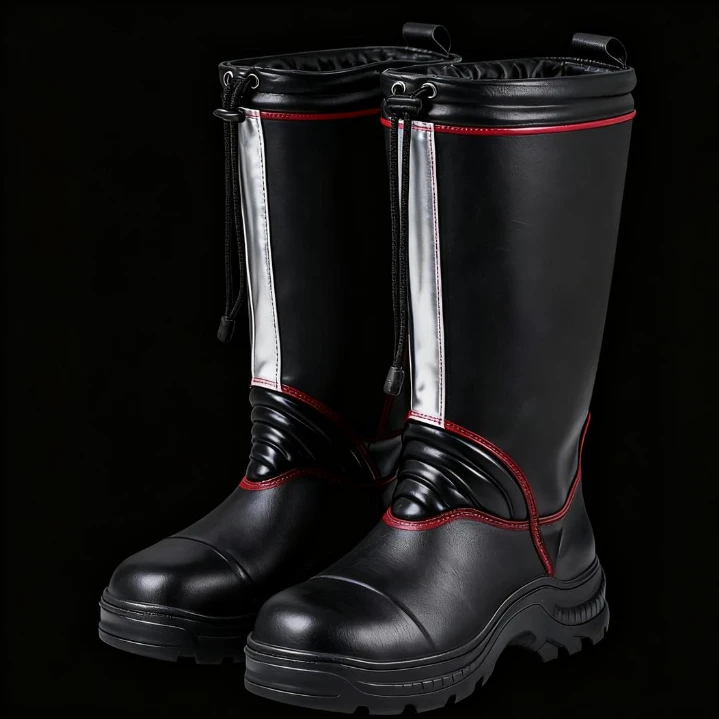
Where heat and impact meet, the boot is specified for both rather than for the more obvious hazard.
Related Articles
- PPE for Electrical Workers: The Complete Guide
- Hand Safety in Manufacturing: Injuries Prevention and PPE
- Welding Fumes and Ventilation: Health Risks and Controls
- How to Choose Work Boots for Construction Sites
- Safety Footwear Standards: ASTM vs EN ISO 20345
- Puncture Resistant Safety Shoes: Standards and Applications
Official Resources
- Steel Toe Puncture Resistant Safety Shoes
- The Role Of Ergonomic Design In Modern Protective Equipment
- Puncture Resistant Safety Shoes Standards And Applications
- Ppe Procurement Guide How To Buy Safety Equipment For Your Team
- Thermal Protective Clothing For Steel Mills
- Steel Toe Vs Composite Toe Boots Which Should You Choose
- Smart Safety Helmets Features Benefits And Roi
- Safety Footwear Standards Astm Vs En Iso 20345