

The winter workwear that fails a crew is rarely the jacket that was too thin. It is the system that let sweat cool against the skin, or the outer layer that was warm but not visible, and the worker is already deep into a shift before anyone notices. Cold-weather workwear for outdoor workers is a system decision — layers, extremities, and safety properties have to be specified together, for the actual temperature, work rate, and exposure on site.
(Last modified date: October 2, 2026)
Key Takeaways
- Build the system in three parts: a moisture-wicking base, an insulating mid layer, and a wind- and water-resistant shell.
- Wool and synthetics keep insulating when damp; cotton does not — that single material choice causes most cold-weather complaints.
- Hands, feet, and head lose heat fastest, so they belong in the specification, not in the afterthought column.
- Where the job requires FR, hi-vis, or anti-static properties, those properties have to be built into the winter layers themselves.
- Active and stationary tasks need different insulation levels; one fixed kit rarely suits a mixed crew.
What Should Outdoor Winter Workwear Actually Provide?
Outdoor winter workwear has to deliver warmth, moisture management, weather protection, and mobility at the same time — the combination is what keeps a worker safe, not any single garment. A worker standing still in the wind needs a very different build from one shovelling or carrying loads, even at the same air temperature.
Start from the five requirements and treat them as a checklist rather than a wish list. If any one of them is missing, the system fails in the field: warmth without moisture management produces a chilled worker, and protection without mobility produces a worker who takes the garment off.
| Requirement | What to look for |
|---|---|
| Warmth | Insulation matched to the temperature and the work rate |
| Moisture | Wicking base layers that move sweat away from the skin |
| Weather | Wind- and water-resistant outer shell |
| Mobility | A fit that allows the real range of movement on site |
| Safety | FR, hi-vis, anti-static, or other required properties |
What Materials Should You Look For?
Look for moisture-wicking base layers, insulating mid layers, and a waterproof-breathable shell — with wool or synthetics against the skin and insulation rated for the cold the crew actually works in.
Each layer has one job. The base layer manages sweat; the mid layer traps air to hold warmth; the shell blocks wind and water while letting vapour escape. Wool and synthetics continue to insulate when damp, which is why they belong next to the skin — cotton holds moisture, and wet cotton pulls heat out of the body far faster than dry fabric of any kind. Down and synthetic fills differ in warmth for the weight, in how they pack, and in what happens when they get wet, so the fill choice follows the weather risk on site rather than the price tag.
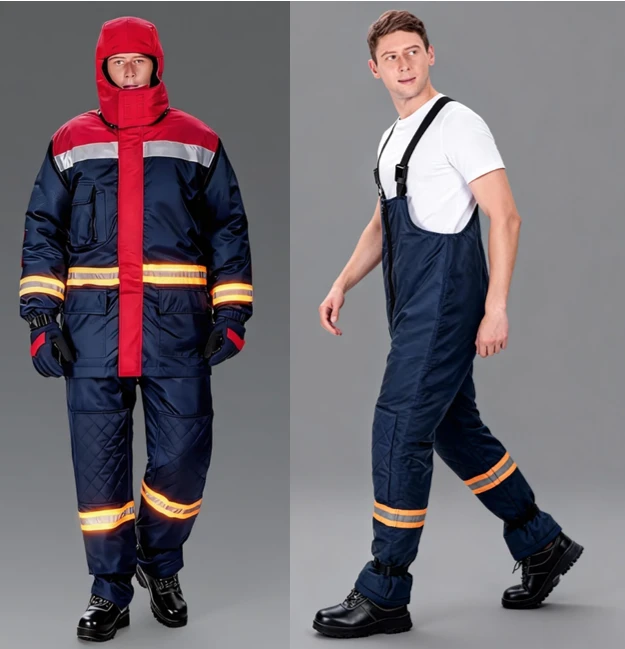
Cold weather workwear built as a layered system rather than separate garments.
Hands, Feet, and Head: Where Cold Injuries Happen First
Hands, feet, and head lose heat fastest, so the system includes insulated gloves or mitts, insulated or heated footwear, and a warm hat or hood — each matched to the task rather than to the season.
The hands need insulation that still allows the dexterity the job demands; a warm glove the worker cannot grip with is a glove that comes off. Feet need insulation plus moisture management, because a worker standing or walking for hours generates sweat that destroys insulation from the inside. The head accounts for a large share of heat loss, which is why a hood or hat is part of the specification rather than a personal preference.
This is also the layer where cutting and impact risk usually appears alongside cold, so glove selection often has to answer two questions at once — warmth and mechanical protection. If cut risk is present, it is worth checking why cut injuries happen before choosing a glove purely on insulation.
Adding FR and Hi-Vis to a Winter System
Where the job requires flame resistance, visibility, or anti-static behaviour, those properties are built into the winter layers themselves — they are not added on top of them.
An FR winter system uses certified insulating layers, so the warmth properties do not compromise the arc or thermal rating. Visibility follows the same logic: hi-vis outerwear has to carry the correct class for the road speed and traffic pattern the crew works in, and reflective trim for night work has to stay visible when the garment is worn over thick insulation. Add-on vests worn over a non-compliant jacket do not solve this — they leave gaps and they cover the outer layer the standard applies to.
Where thermal hazard and cold occur together — winter shifts on oil and gas sites, for example — the two requirements are specified in the same document. That is the case the oil and gas FR clothing guide covers, and it is why FR cold weather clothing has to be engineered rather than layered. Each property carries its own certification on the exact model, so both lists — cold-weather requirements and safety requirements — have to be confirmed on the same garment.
How Do You Fit and Care for Winter Workwear?
Fit the layers together so they insulate without binding, and maintain the system to the labels — dry the insulation properly, re-treat the shells, and inspect for damage through the season.
Validate the fit with the complete system worn, not layer by layer, because a jacket that fits over a base layer may restrict movement once the mid layer is added. Care is what keeps the system at its rated performance: wet insulation loses warmth, a contaminated shell loses its water repellency, and a damaged closure lets cold air straight through. Put the layers on an inspection schedule and replace worn pieces before the season rather than during it.
Specifying Winter Workwear for a Team
Specify the temperature range, the work rate, the moisture exposure, and any required FR or hi-vis properties together, then confirm the selected garments against the applicable standard.
A mixed crew usually needs more than one configuration, because the insulation that suits a stationary spotter is too much for someone loading by hand. The practical approach is to define two or three roles rather than one uniform, and to keep the layers compatible so workers can adjust through the shift. For bulk orders and private-label programs, the specification can be closed out with a sample before production. Talk to our team through the contact page to build the specification, or review the cold weather clothing range first.
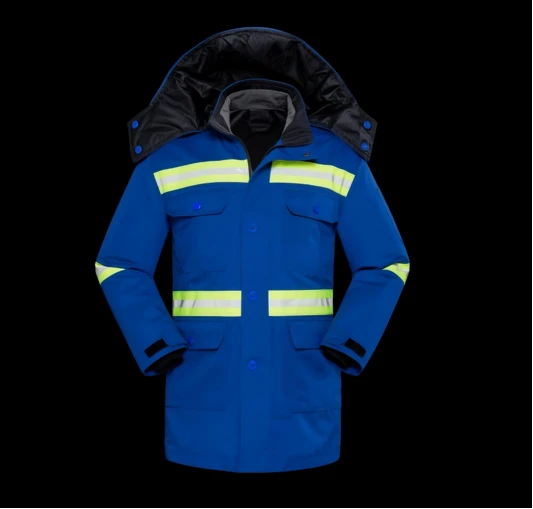
An insulated work jacket acts as the mid and outer layer in a three-part winter system.
For the wider topic and related decisions, see our Hi-Vis, Anti-Static & Cold Weather Workwear.
Additional guidance retained during consolidation
Consolidated guidance from cold-weather-work-clothing-layering-and-materials.
Why Is Layering the Foundation of Cold Weather Work Clothing?
Layering traps insulating air between layers and lets the worker manage warmth by adding or removing them — the same system works from a mild morning to a deep-freeze afternoon.
| Layer | Role |
|---|---|
| Base | Wicks moisture from the skin |
| Mid | Traps insulating air |
| Outer | Blocks wind, water, and abrasion |
The base layer moves sweat away so the worker does not get cold from moisture; the mid layer traps air for insulation; the outer layer stops the wind and precipitation. The worker adjusts the system as activity and temperature change. Layering is the engineering answer to changing conditions, and it is the foundation of every cold weather clothing program.
What Materials Work Best in the Cold?
The best materials manage moisture and trap air: wool and synthetics for the base, fleece and insulation for the mid layer, and waterproof-breathable shells for the outer layer — with cotton avoided for active work.
Wool and synthetic base layers wick moisture and keep insulating when damp; cotton holds moisture and makes the worker cold. Fleece and insulated mid layers trap air; down and synthetic insulation differ in weight, warmth, and wet performance. The outer shell must block wind and water while letting sweat escape. The material choice follows the temperature, the activity level, and the weather, and the combination is what keeps the worker warm.
How Do You Choose the System for the Job?
Choose by the temperature, the activity level, and the exposure: active workers generate heat and need breathable layering, while stationary workers need more insulation — and the system must allow movement and grip.
An active worker in a heavy parka sweats and then freezes; a stationary worker in a light system gets cold. Match the insulation to the work rate and add or remove layers as conditions change. The clothing must allow the job to be done — reaching, lifting, and handling tools — so fit and flexibility are part of the spec. Include the hands, feet, and head in the system, because heat loss concentrates there.
What About FR and Hi-Vis Requirements in the Cold?
Where the job requires flame resistance or visibility, the cold weather layers must carry those properties too — FR insulation for thermal hazards and hi-vis outerwear for traffic.
The base and mid layers must be FR where the worker faces flash fire or arc hazards, and the outer layer must be hi-vis where vehicles are present. The layers are specified together so the protection is not lost when the worker dresses for the cold. Make sure the certification of each layer for the exact model, because a non-FR base layer melts even under an FR outer. The cold weather system protects warmth and safety at the same time.
How Do You Care for Cold Weather Work Clothing?
Care for the layers per their labels — waterproof shells need their own treatment, insulation needs proper drying, and FR layers follow the FR laundry rules.
Select cold-weather layers for temperature, work rate, moisture, wind, and any required FR or hi-vis properties, and confirm them against the applicable standard.
For the wider topic and related decisions, see our Hi-Vis, Anti-Static & Cold Weather Workwear.
FAQs
What is the most important layer?
The base layer — moisture management prevents the chilling that happens when sweat cools against the skin.
Does cotton work as a winter base layer?
No — cotton holds moisture, and wet cotton pulls heat away from the body. Use wool or a synthetic base layer next to the skin.
Can winter workwear include hi-vis and FR?
Yes, when the job requires them — specify the safety properties together with the warmth.
Do we need a different system for different tasks?
Yes. Active and stationary tasks need different insulation; the system should be adjustable.
How do we get winter workwear for our team?
Tell us your conditions and tasks, and we will recommend the system via our contact page.
Related Articles
- Cold Weather Work Clothing: Layering and Materials
- FR Cold Weather Clothing: Staying Warm and Safe
- Hi-Vis Classes 1, 2 and 3 Explained
- Anti-Static Workwear: The Complete Guide
- Why Do Oil and Gas Workers Need FR Clothing?
Official Resources
- Cold Weather Clothing
- High Visibility Workwear
- Why Do Cut Injuries Happen and How Do Cut Resistant Gloves Help
- Choosing Hi-Vis Workwear for Night Work
- Contact Shield Wings
References
- Regulation (EU) 2016/425 on personal protective equipment — conformity requirements for PPE placed on the EU market. EUR-Lex.
- Personal protective equipment — EU market requirements and harmonised standards. European Commission.
- EN ISO 20471 — high-visibility clothing test methods and requirements (referenced as a standard designation; full text is not publicly available).