

Welding PPE protects against arc radiation, sparks, molten metal, heat, fumes, and noise — and a gap in any layer becomes the injury site. This checklist covers every body area, with process-specific guidance from Shield Wings’ welding safety products at our factory.
(Last modified date: October 2, 2026)
Quick definition: A real audit walks the workstation, watches a weld from strike to clean-up, and checks the whole body — helmet, eyes, neck, hands, body, feet, and breathing — because welders rarely miss the helmet but routinely miss…
Key Takeaways
- The eyes and face are protected by a welding helmet with the correct shade lens worn over approved safety glasses, with a flame-resistant hood or cap closing the gap at the scalp and neck.
- Gloves are matched to the process by thickness and dexterity: thin, supple leather for TIG; thicker, reinforced leather for MIG and stick; and gauntlet cuffs for high-heat and overhead work.
- Fire safety is part of welding PPE: clear combustibles from a 35-foot radius or shield them, assign a fire watch for hot work, keep extinguishers within reach, and check for hidden ignition points — sparks travel…
- Welders need flame-resistant clothing covering the body — FR jacket or coverall over FR base layers, with no synthetics, closed collars, buttoned sleeves, and covered pockets.
- Leather safety boots with metatarsal protection where heavy parts are handled, closed laces, and slip-resistant soles — with FR trouser legs over the boot top so no gap exposes the ankle.
- Respiratory protection is required whenever welding fume cannot be controlled by ventilation — confined spaces, coated or galvanized metal, stainless steel, and sustained production — and ranges from filtering masks to…
What Does a Real Welding PPE Audit Look Like?
A real audit walks the workstation, watches a weld from strike to clean-up, and checks the whole body — helmet, eyes, neck, hands, body, feet, and breathing — because welders rarely miss the helmet but routinely miss everything else.
Stand beside a welder for one complete cycle and you will see the pattern: the helmet goes down for the arc, then up for inspection, while hands, wrists, and ankles stay exposed to sparks that land from every direction. The audit also checks what is underneath — the T-shirt, the trousers, the socks — because layers worn under the FR system can melt or ignite even when the outer layer is correct. Finally, the audit looks at the environment: ventilation, fire watch, and housekeeping, since PPE is the last layer of a system, not the first.
The audit should be repeated on a schedule and after any change to the process, the materials, or the crew. A shop that adds plasma cutting or switches to stainless steel changes its fume and radiation profile, and the PPE specification must move with it. Record the audit findings per station and follow up on the gaps — a checklist that is never acted on is worse than no checklist, because it creates the illusion of control. Assign responsibility for each corrective action and verify completion in the next audit cycle.
What Protects the Eyes and Face During Welding?
The eyes and face are protected by a welding helmet with the correct shade lens worn over approved safety glasses, with a flame-resistant hood or cap closing the gap at the scalp and neck.
Shade selection follows the process: light TIG work needs roughly DIN 9–10, MIG and stick welding need DIN 10–12, and heavy arc work needs DIN 12–13. Auto-darkening lenses keep the view clear until the arc strikes, which improves positioning and reduces neck fatigue; passive helmets remain a sound budget choice when used correctly. Under the helmet, safety glasses add a second barrier for the moments the helmet is raised. The hood or cap matters more than it looks: sparks and UV that reach the scalp and back of the neck cause burns that take welders out of work for days.
How Do You Match Gloves to the Welding Process?
Gloves are matched to the process by thickness and dexterity: thin, supple leather for TIG; thicker, reinforced leather for MIG and stick; and gauntlet cuffs for high-heat and overhead work.
TIG welders need finger feel for filler rod control, so thin goatskin or deerskin gloves are standard. MIG and stick welding throw more spatter and heat, calling for cowhide or split-leather gloves with padded palms and longer cuffs. Heavy fabrication and overhead welding benefit from gauntlets that protect the forearm, and leather aprons or sleeves add another layer where spatter concentrates. Gloves must stay dry and free of oil — damp or greasy leather conducts heat and can ignite. Inspect gloves before each use and replace them when the leather cracks or the stitching burns through, because a failed glove fails mid-task.
What Fire Safety and Housekeeping Rules Protect Welders?
Fire safety is part of welding PPE: clear combustibles from a 35-foot radius or shield them, assign a fire watch for hot work, keep extinguishers within reach, and check for hidden ignition points — sparks travel through gaps, cracks, and open doors.
The classic welding fire starts away from the visible work: a spark rolls through a floor gap into a storeroom, or lands in an open bin of rags two stations over. The hot-work permit system exists to force the walk-around — identify combustibles, protect or remove them, and post the fire watch until the work and the cooldown are complete. Housekeeping supports the whole PPE system: a clean floor means fewer slip hazards for the boots, a tidy bench means fewer sparks landing on rags, and clear access means the extinguisher is actually reachable. Include the fire watch in the PPE checklist, because it protects the welder and everyone nearby.
What Body Protection Should Welders Wear?
Welders need flame-resistant clothing covering the body — FR jacket or coverall over FR base layers, with no synthetics, closed collars, buttoned sleeves, and covered pockets.
The rule is absolute: nothing that melts or ignites near the body. Synthetic T-shirts and polyester jackets melt into the skin on contact with sparks, so every layer must be FR or non-flammable. A stationary welder wears an FR jacket; a welder who crawls or works in confined spaces wears FR coveralls. Keep collars up, cuffs buttoned, and pockets closed so sparks cannot collect. For heavy work, leather aprons, sleeves, and bibs add protection over the FR layer. The FR clothing range covers these layers for welding environments.
Clothing is also equipment and needs the same inspection discipline. Check FR garments before each shift for thin spots, holes, and missing closures — the collar button that is missing becomes the spark entry point. Launder FR clothing per the care label with no fabric softeners or bleach, and replace damaged pieces immediately rather than patching them. In hot shops, choose the lightest FR fabric that still meets the standard, because a jacket that is too hot gets unzipped and the protection leaves with it. Comfort is a compliance factor, not a luxury.
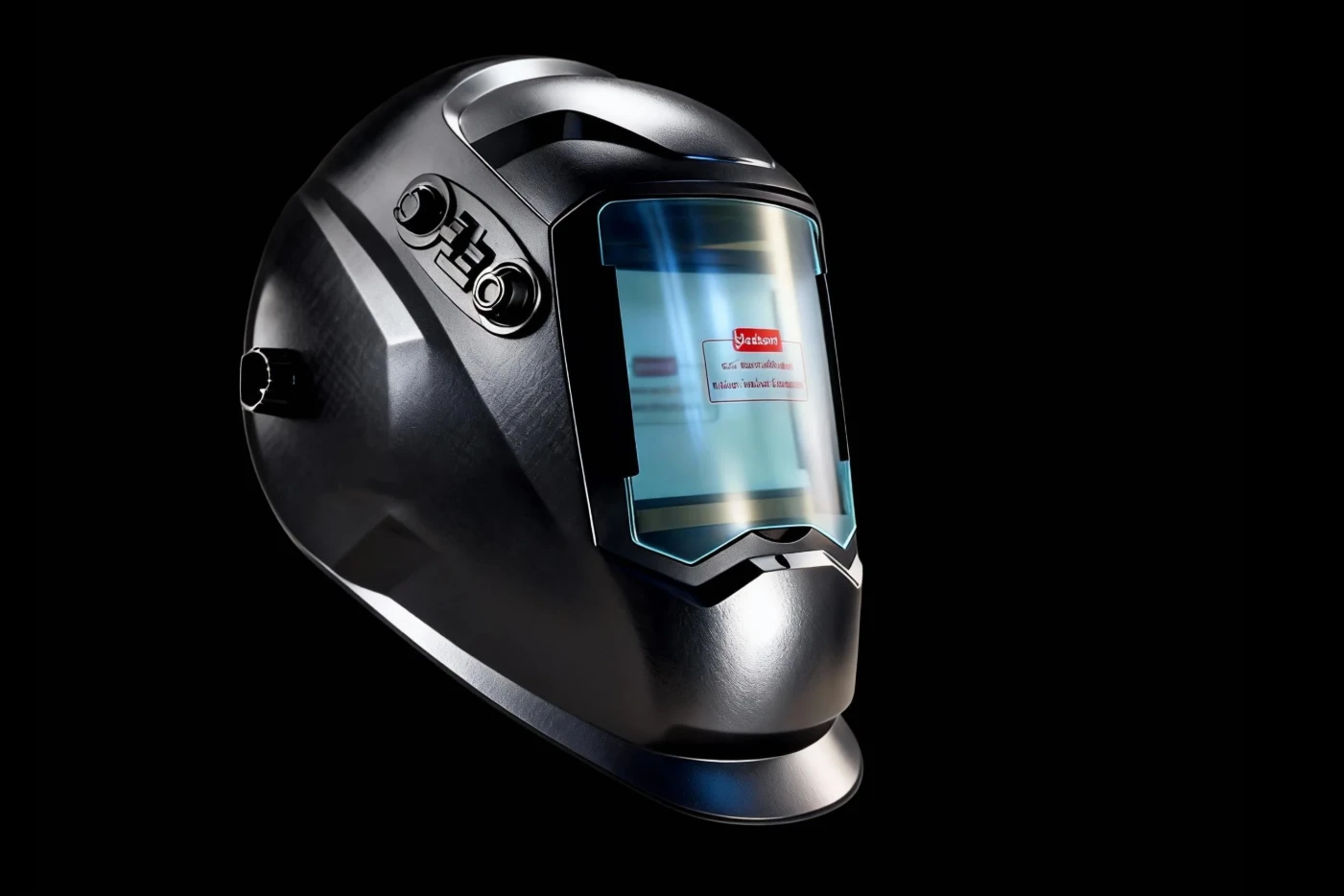
An adjustable shade range is what lets one helmet cover several processes on the same shop floor.
Which Footwear Works in a Welding Shop?
Leather safety boots with metatarsal protection where heavy parts are handled, closed laces, and slip-resistant soles — with FR trouser legs over the boot top so no gap exposes the ankle.
Welding floors are hot, oily, and full of falling metal. Leather uppers resist sparks better than synthetics; metatarsal guards or boots protect the instep from dropped plate; slip-resistant soles manage oil and grinding dust. Tuck trouser legs over or inside the boots and avoid quick-release laces that snag or melt. Where heavy plate handling is routine, metatarsal protection should be a requirement, not an option. Inspect soles and stitching regularly, because a boot that fails on a hot floor fails under load.
When Is Respiratory Protection Required?
Respiratory protection is required whenever welding fume cannot be controlled by ventilation — confined spaces, coated or galvanized metal, stainless steel, and sustained production — and ranges from filtering masks to powered air-purifying respirators.
Welding fume contains metals and gases with cumulative health effects: manganese, hexavalent chromium in stainless steel, zinc oxide from galvanized coatings. General ventilation reduces exposure but does not eliminate it, and confined spaces can reach hazardous concentrations in minutes. A filtering half-mask helps in light outdoor work; production welders benefit from powered air-purifying respirators that deliver clean air under the helmet. Match the filter class to the fume analysis and fit-test every respirator, because a leaking seal protects no one. Noise is the second invisible hazard — grinding and chipping require hearing protection measured against the site’s noise levels.
What Belongs on the Daily Pre-Shift Check?
The daily check takes two minutes and covers the whole system: lens, clothing, gloves, boots, ventilation, and no synthetic layers under the FR clothing.
- Helmet lens clean, unbroken, correct shade; headband secure.
- FR clothing covering all skin; collars and cuffs closed; no synthetics underneath.
- Gloves dry, intact, matched to the process.
- Boots closed, laces tucked, trouser legs over boots.
- Ventilation running; respirator fitted where required.
- Fire watch and hot-work controls in place for the task.
Post the list at the bench and make it part of the start routine. Assign PPE per welder where practical — helmets, gloves, and boots fit differently per person — and keep spares for the items that wear fastest. When the gear is assigned, checked, and available, the checklist stops being paperwork and becomes protection.
Select eye and face protection for the process, radiation level, impact hazard, and compatibility with other PPE; confirm against the applicable standard.
What the Regulation Actually Sets for Filter Shade
The shade guidance above is a working rule of thumb. In the United States the minimum is set by regulation, and it is tied to the electrode or material size rather than to the process name alone.
OSHA 1910.252, Table J-1 gives filter lens shades by operation. The values below are the minimums from that table; a site procedure or risk assessment may require more.
| Operation | Minimum shade |
|---|---|
| Soldering | 2 |
| Torch brazing | 3 or 4 |
| Light cutting, up to 1 inch | 3 or 4 |
| Gas welding (light), up to 1/8 inch | 4 or 5 |
| Medium cutting, 1 to 6 inches | 4 or 5 |
| Gas welding (medium), 1/8 to 1/2 inch | 5 or 6 |
| Heavy cutting, 6 inches and over | 5 or 6 |
| Gas welding (heavy), 1/2 inch and over | 6 or 8 |
| Shielded metal-arc welding, 1/16 to 5/32 inch electrodes | 10 |
| Atomic hydrogen welding | 10–14 |
| Gas-shielded arc welding (nonferrous), 1/16 to 5/32 inch electrodes | 11 |
| Gas-shielded arc welding (ferrous), 1/16 to 5/32 inch electrodes | 12 |
| Shielded metal-arc welding, 3/16 to 1/4 inch electrodes | 12 |
| Carbon arc welding | 14 |
| Shielded metal-arc welding, 5/16 to 3/8 inch electrodes | 14 |
The reason the table is organised by electrode size is that the shade requirement follows the intensity of the arc, and electrode diameter is the field-usable proxy for that. Two welders on the same process, one running 1/8-inch electrodes and one running 3/8-inch, are not exposed to the same radiation and are not correctly protected by the same lens.
The same regulation carries the ventilation requirement that the fume section above depends on. It sets minimum air flow that increases as the extraction hood moves away from the arc, with a matching duct diameter — which is why an extractor that works at the bench can be undersized the moment the work moves somewhere the hood cannot follow. A welder is also entitled to the engineering controls the standard implies, not just the PPE, and the broader list of what those controls are for a fabrication shop is covered in welding safety products.
For the wider topic and related decisions, see our Welding Safety & Welding PPE.
FAQs
Can regular work clothes be worn under an FR jacket?
No. Any layer that can melt or ignite defeats the system — all layers near the body must be FR or non-flammable.
Does a welder need a different helmet for each process?
Not necessarily. An auto-darkening helmet with an adjustable shade range can cover TIG, MIG, and stick work when sensitivity and delay are set correctly.
What is the most overlooked piece of welding PPE?
Respiratory protection. Fume exposure is invisible, so it is easy to skip until symptoms appear — plan ventilation and filters before the work starts.
How often should welding gloves be replaced?
Replace when leather cracks, stitching burns through, or the glove becomes wet or oily, and inspect them before every use.
How do we source a complete welding PPE package?
Audit your stations against the checklist, then request package documentation via our contact page or the welding safety products page.
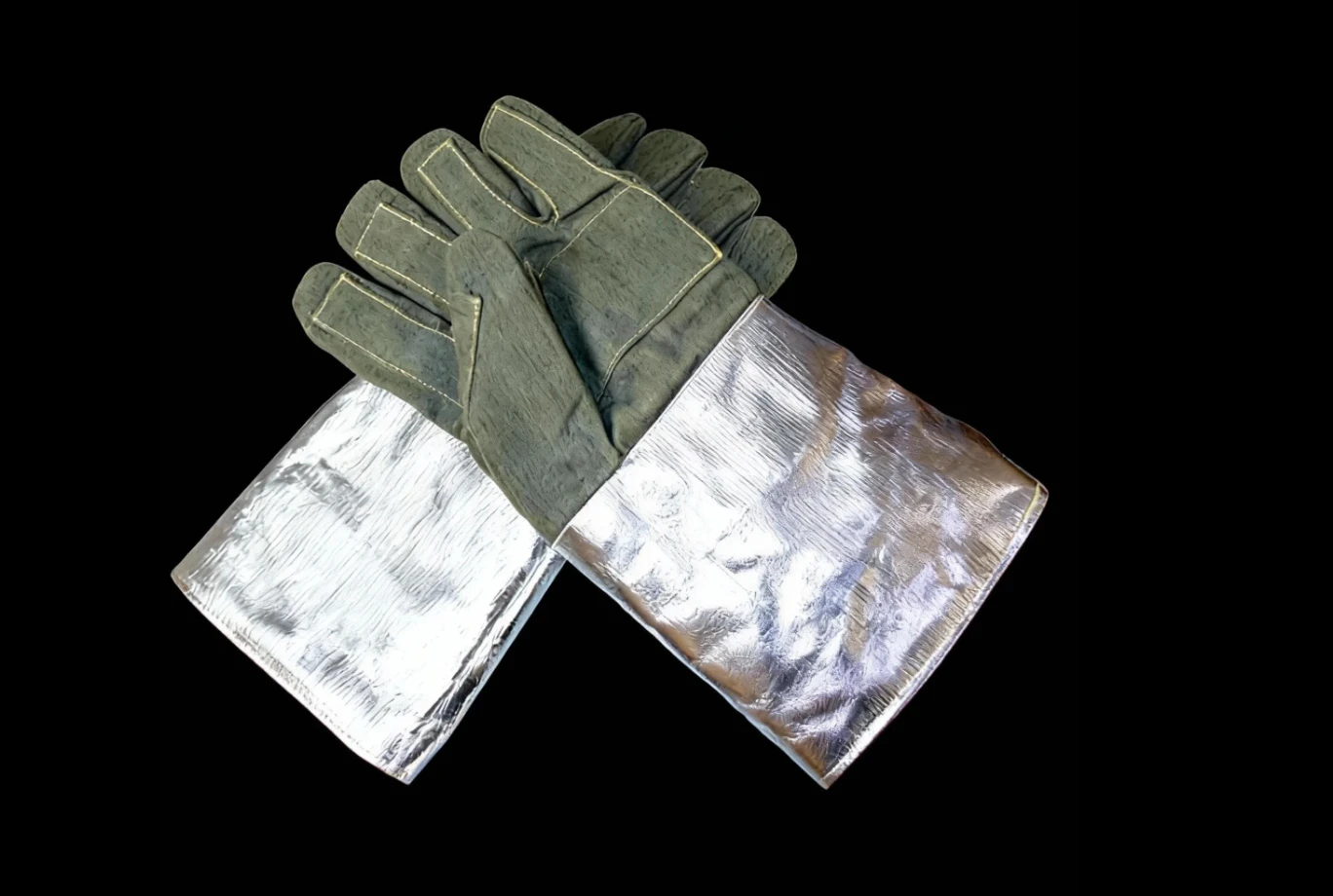
Gloves have to answer heat and cut together; one rating does not imply the other.
Related Articles
- Dielectric Boots vs EH Rated Boots: What’s the Difference
- How to Choose a PPE Manufacturer: 15-Point Checklist
- Flame Resistant Clothing for Oil and Gas: Standards and Selection
- Essential Welding Safety Rules for Beginners
- Eye Protection for Welders: Helmets Goggles and Filters
- Auto-Darkening Welding Helmet Buying Guide: DIN Shades and Lens
Official Resources
- Welding Safety Products
- Welding Safety Products
- Auto Darkening Vs Passive Welding Helmets
- Smart Safety Helmets Features Benefits And Roi
- Welding Gloves Types Heat Ratings And Selection
- Ppe Procurement Guide How To Buy Safety Equipment For Your Team
- Ppe Compliance Checklist For Manufacturers And Importers
- Fr Clothing For Welders What You Actually Need